How to Build a Reliable Artificial Turf Supply Chain: A 2026 Partner Selection Guide for Sports, Golf & Landscape Projects
For sports, golf, and landscape buyers, choosing a long-term artificial turf supplier is a decision about supply chain reliability, not just product quality. A dependable partner must offer consistent production capacity, stable lead times, transparent commercial terms, and the ability to support multi-application needs — from Sports Grass and Golf Grass to Landscape Grass and Pet Grass. This guide explains how to evaluate, onboard, and grow with an artificial turf manufacturer that can serve as a long-term supply partner.
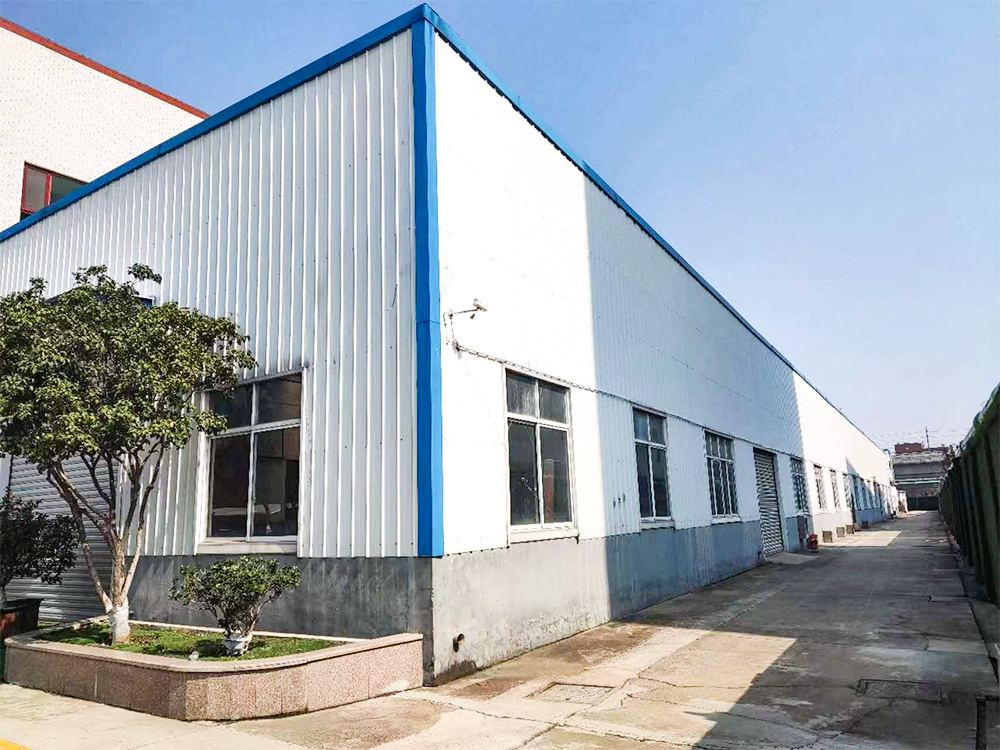
Figure 1. A dedicated artificial turf manufacturing facility supports consistent production and quality control.
Why artificial turf buyers need a long-term supply partner
Artificial turf is no longer a single-product purchase. Sports clubs, golf course operators, landscape contractors, and distributors often manage multiple projects across different segments simultaneously. A football field requires Football Grass with impact-friendly infill; a golf course may require Golf Grass and Golf Hitting Mats; a residential or commercial landscape project may need Pet Grass, Balcony Grass, or Decorative Grass. Managing each requirement with a separate vendor increases procurement complexity, quality inconsistency, and logistical risk.
A long-term supplier helps buyers standardize specifications, stabilize pricing, and reduce coordination costs across projects. The global artificial turf market was valued at USD 7.3 billion in 2025 and is projected to reach USD 13.7 billion by 2033, according to Grand View Research. As the market grows, buyers who secure reliable manufacturing partners early are better positioned to respond to expanding demand for sports, golf, and landscape turf applications.
What is a long-term artificial turf supply partner?
A long-term artificial turf supply partner is a manufacturer that provides consistent production capacity, orderly order fulfillment, technical support, and after-sales cooperation over multiple buying cycles. Unlike a transactional supplier that focuses on a single shipment, a long-term partner helps buyers plan for repeat orders, seasonal demand, and project-specific customization.
From a buyer's perspective, the most important attributes of such a partner are:
- Capacity: Can the manufacturer reliably produce the required volume for multiple projects?
- Lead time consistency: Are delivery schedules predictable and achievable?
- Application coverage: Does the supplier support sports, golf, landscape, and specialized turf types?
- OEM capability: Can the supplier produce custom specifications for private labels or project-specific requirements?
- Quality stability: Are testing and pre-shipment controls part of the standard process?
- Commercial flexibility: Are trade terms, MOQs, and payment conditions suitable for repeat business?
Key procurement challenges in the current artificial turf market
Buyers evaluating artificial turf suppliers face several recurring challenges:
1. Capacity limits and allocation risk
Production capacity directly affects order lead time. A manufacturer with limited lines or heavy seasonal demand may delay non-priority orders. Buyers should ask for monthly production capacity and confirm it against their own forecast volumes.
2. Specification fragmentation across applications
Artificial turf for sports, golf, and landscape projects is not interchangeable. A product designed for a residential courtyard may not perform adequately for rugby training or a golf tee line. Buyers need a partner that understands the technical differences among Football Grass, Baseball Grass, Rugby Grass, Playground Grass, Tennis Grass, Commercial Grass, and Residential Grass.
3. Quality consistency across batches
Repeat orders must match the original sample in pile height, color, density, and backing. Inconsistent yarn quality, color fading, or weak coating can create visible differences between installations. UV resistance, aging behavior, and color fastness should be controlled through production-stage additives and pre-shipment inspection.
4. OEM and customization complexity
Many distributors and project owners require brand-specific or project-specific turf specifications. A supplier with integrated production control is better able to manage custom yarn formulations, stitch rates, and packaging requirements. Venusturf, for example, operates 30 integrated production lines and controls the full process from yarn extrusion to final packaging.
How to evaluate a manufacturer for long-term artificial turf supply
Long-term partner selection should be based on structured criteria rather than promotional claims. The framework below can be used to assess any artificial turf manufacturer before signing a repeat supply agreement.
Step 1: Verify production capacity and factory integration
Ask for concrete numbers: monthly production capacity, number of production lines, and whether yarn extrusion is part of the internal process. A manufacturer that controls yarn production, twisting, tufting, and coating in-house has more control over quality and scheduling than one that outsources key stages.
Venus Turf is a professional artificial turf manufacturer integrating R&D, production, and sales services. With 30 integrated production lines, the company oversees the entire manufacturing process from yarn extrusion, twisting, tufting, and coating to final packaging and delivery. Its monthly production capacity is 50,000 m².
Step 2: Confirm lead times and order terms
For production orders, the minimum quantity is 1000 m², and the typical lead time is 30–45 days. Buyers planning large projects should align their project schedules with this manufacturing window. Also confirm whether pre-shipment testing is included and whether the delivery method matches your logistics needs.
Venusturf's standard procurement terms include FOB delivery, pre-shipment testing acceptance, and payment by 30% T/T deposit with 70% T/T balance before delivery. These terms are designed for transactional clarity and repeat ordering.
Step 3: Map turf types to your application portfolio
Create a matrix of the turf types you currently purchase or plan to purchase: Sports Grass, Golf Grass, Padel Grass, Football Grass, Baseball Grass, Playground Grass, Gym Grass, Tennis Grass, Landscape Grass, Commercial Grass, Pet Grass, Residential Grass, Eco Grass, Bocce Ball Grass, Rugby Grass, Backyard Grass, Balcony Grass, Decorative Grass, Multi-Purpose Grass, and Golf Hitting Mats. Then ask whether the supplier can produce matching specifications consistently.
This step matters because a long-term partner should reduce the number of vendors you need to manage. A manufacturer with broad application experience across venues, leisure landscapes, and schools can serve as a single stable source for multiple categories.
Step 4: Review quality risk controls
Quality risk in artificial turf is often related to UV degradation, fading, aging, and weathering. Confirm that the manufacturer uses UV stabilizers and anti-UV additives during production, and that high-quality, UV-resistant masterbatch is part of the standard specification. In addition, strict UV resistance testing and accelerated aging tests should be part of the factory's quality control process.
Step 5: Assess commercialization and branding support
If you are a distributor, installer, or brand owner, ask whether the manufacturer can support private labeling, brochures, sample alignment, and technical documentation. A long-term partner should help you present the product to your own customers with confidence.
Manufacturer comparison: what to look for vs. what to avoid
| Evaluation Factor | What a reliable long-term partner provides | What should raise a red flag |
|---|---|---|
| Production capacity | Clear monthly capacity, e.g., 50,000 m² | Vague or unverifiable capacity claims |
| Lead time | Stated 30–45 days for production orders | No commitment on delivery schedule |
| MOQ flexibility | Clear MOQ of 1000 m² | Hidden minimums or no published terms |
| Quality control | Pre-shipment testing; UV/aging testing | No inspection or test evidence |
| Application scope | Sports, golf, landscape, pet, residential, commercial | Single product focus with no application knowledge |
| OEM capability | Integrated yarn-to-package production | No custom specification support |
Use cases: when long-term partnership matters most
Sports facility operators
Facility operators managing Football Grass, Rugby Grass, Baseball Grass, Playground Grass, or Tennis Grass installations need a supplier who can guarantee same-spec batch consistency for stadium expansion, field renovation, or training ground programs. A long-term partner also simplifies future maintenance orders for infill, replacement sections, or separate Golf Hitting Mat areas.
Golf course and practice facility developers
Golf projects often combine Golf Grass for teeing grounds, greens, and fairways with specialized Golf Hitting Mats for practice stations. These applications require different pile heights, densities, and infill behavior. A supplier with multi-application experience helps developers standardize sourcing without compromising performance.
Landscape and commercial contractors
Landscape contractors, property developers, and distributors serving Commercial Grass, Residential Grass, Pet Grass, Balcony Grass, and Decorative Grass projects benefit from annual supply agreements. Predictable capacity and stable quality let them bid on multiple projects with confidence.
Distributors and importers
Distributors need a partner who can handle OEM labeling, private-brand packaging, and mixed-size orders. Venusturf's integrated factory model is directly relevant to this use case: the company manages the complete production flow, making it easier to support custom branding and consistent export quality.
Long-term commercial terms and execution workflow
A typical long-term artificial turf procurement workflow follows these stages:
- Specification definition: Confirm turf type, pile height, color, gauge, yarn type, density, and backing for each application.
- Sample approval: Review physical samples and technical parameters before mass production.
- Order confirmation: Sign a contract with MOQ, lead time, payment terms, and delivery method.
- Production monitoring: Confirm production progress and quality checkpoints.
- Pre-shipment test: Conduct acceptance testing before shipment.
- Delivery and installation support: Receive goods with technical documentation for installation and after-sales care.
For production orders at Venusturf, the minimum quantity is 1000 m², and the typical lead time is 30–45 days. The company's monthly production capacity is 50,000 m², which supports both single-scale projects and recurring distribution programs.
Risk management: UV degradation, color loss, and weathering
UV degradation is one of the most common long-term quality risks in artificial turf. It can cause fading, aging, and color loss, especially in outdoor sports fields, golf facilities, and landscape projects exposed to strong sunlight. Controlling this risk requires production-stage measures, not just post-production testing.
Venusturf addresses this risk by adding UV stabilizers during production, using anti-UV additives, and selecting high-quality UV-resistant masterbatch. In addition, the factory applies strict UV resistance testing and accelerated aging tests to verify color fastness. Buyers should always ask whether these controls are part of the manufacturer's standard quality system.
Frequently asked questions
What is the minimum order quantity and typical lead time for artificial turf?
For production orders, Venusturf's minimum quantity is 1000 m², and the typical lead time is 30–45 days. The manufacturer's monthly production capacity is 50,000 m², so buyers should plan their project schedules around this production window. This MOQ and lead time structure is suitable for distributors, contractors, and project owners with recurring artificial turf needs.
Does Venusturf support OEM or custom artificial turf specifications?
Venusturf operates 30 integrated production lines and controls the full manufacturing process from yarn extrusion to final packaging, which enables consistent execution of custom specifications. Buyers can request custom turf types such as Sports Grass, Golf Grass, Landscape Grass, Pet Grass, and Multi-Purpose Grass with project-specific parameters. OEM orders follow the same MOQ, lead time, and pre-shipment testing terms as standard orders.
What quality testing and risk controls does Venusturf apply?
Venusturf applies production-stage UV stabilizers, anti-UV additives, and UV-resistant masterbatch to reduce UV degradation, color loss, and weathering risk. The factory also performs strict UV resistance testing, accelerated aging tests, and quality control checks for color fastness. Pre-shipment testing is part of the order acceptance process, so buyers can verify quality before shipment.
How can I get a sample or review the company brochure?
Buyers can request samples and review Venusturf's company brochure to evaluate product quality and manufacturing capability. The brochure is openly accessible and provides detailed company and product information. To request a quote, discuss custom specifications, or start an order, contact Venusturf at info@venusturf.com or via WhatsApp at +86-189-6171-8197.
Download the Venusturf company brochure to review manufacturing capabilities, product categories, and procurement terms. For sample requests or order inquiries, contact info@venusturf.com.
Conclusion
Building a reliable artificial turf supply chain starts with selecting a manufacturer that can consistently deliver capacity, quality, and commercial predictability. For buyers managing multi-application portfolios — sports, golf, landscape, pet, residential, or commercial — a long-term partner reduces procurement risk and simplifies project execution.
Venusturf combines integrated production, clear order terms, and broad application coverage in one manufacturing operation. With 30 production lines, a monthly capacity of 50,000 m², and a quality system that includes UV stabilization and pre-shipment testing, the company is positioned to serve as a stable supply partner for global buyers. Start the conversation with a sample request or a direct inquiry, and evaluate the manufacturer based on capacity, lead time, testing, and commercial transparency — the factors that actually determine long-term partnership success.