Artificial Turf for Hospitality Venues: Matching Aesthetics and Durability to Guest Traffic
Date: 2026-10-10 Categories: Industry News Hits: 516
Artificial Turf for Hospitality Venues: Matching Aesthetics and Durability to Guest Traffic
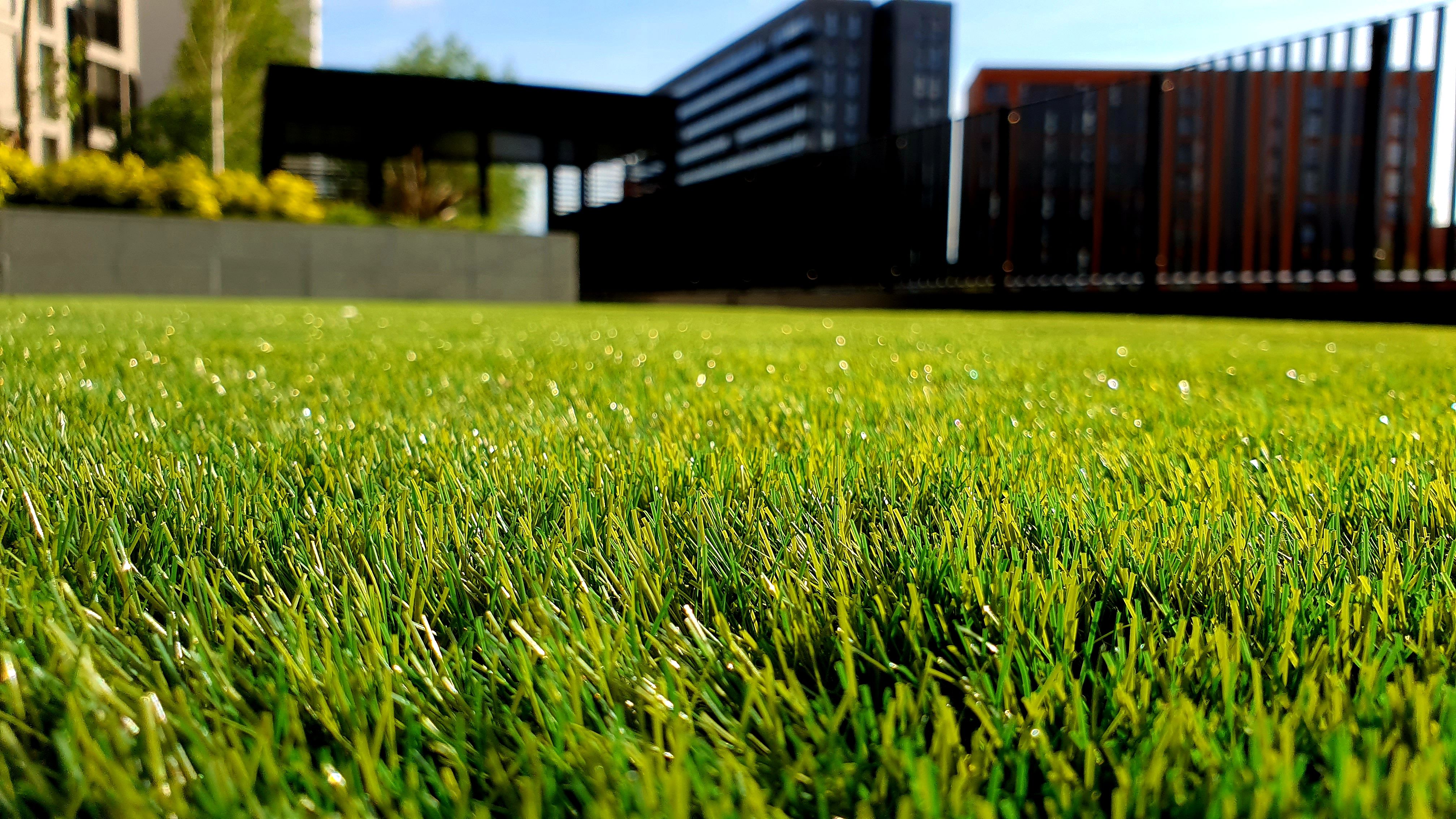
Artificial turf for hospitality venues has to satisfy two audiences at the same time. Guests judge a courtyard, terrace or rooftop lounge within the first few seconds and mostly from close range, so the surface has to read as lush and deliberate. Operations teams judge the same surface after a season of chairs, planters, catering trolleys and weather, so it also has to hold its appearance under constant, uneven load.
That double requirement is what makes hospitality turf a distinct selection problem rather than a residential or sports purchase. Two Venusturf models bracket most of the decision. EM24071902 is a Commercial Grass with a 25mm pile, a four-color configuration and a density of 180 stitches per meter, which equates to 18,900 stitches per square meter, built on a PP + Net + Latex backing. EM241007 is a Residential Grass with a 45mm pile, the same 3/8 inch gauge and four-color format, 150 stitches per meter (15,750 stitches per square meter) and a Double PP + PU glue backing. Both are made of PE and PP and both are designed for application in the Landscaping, Sports, Construction and Hospitality industries.
Why a Standard Turf Specification Breaks in a Hospitality Setting
Hospitality turf is caught between three requirements that pull in different directions.
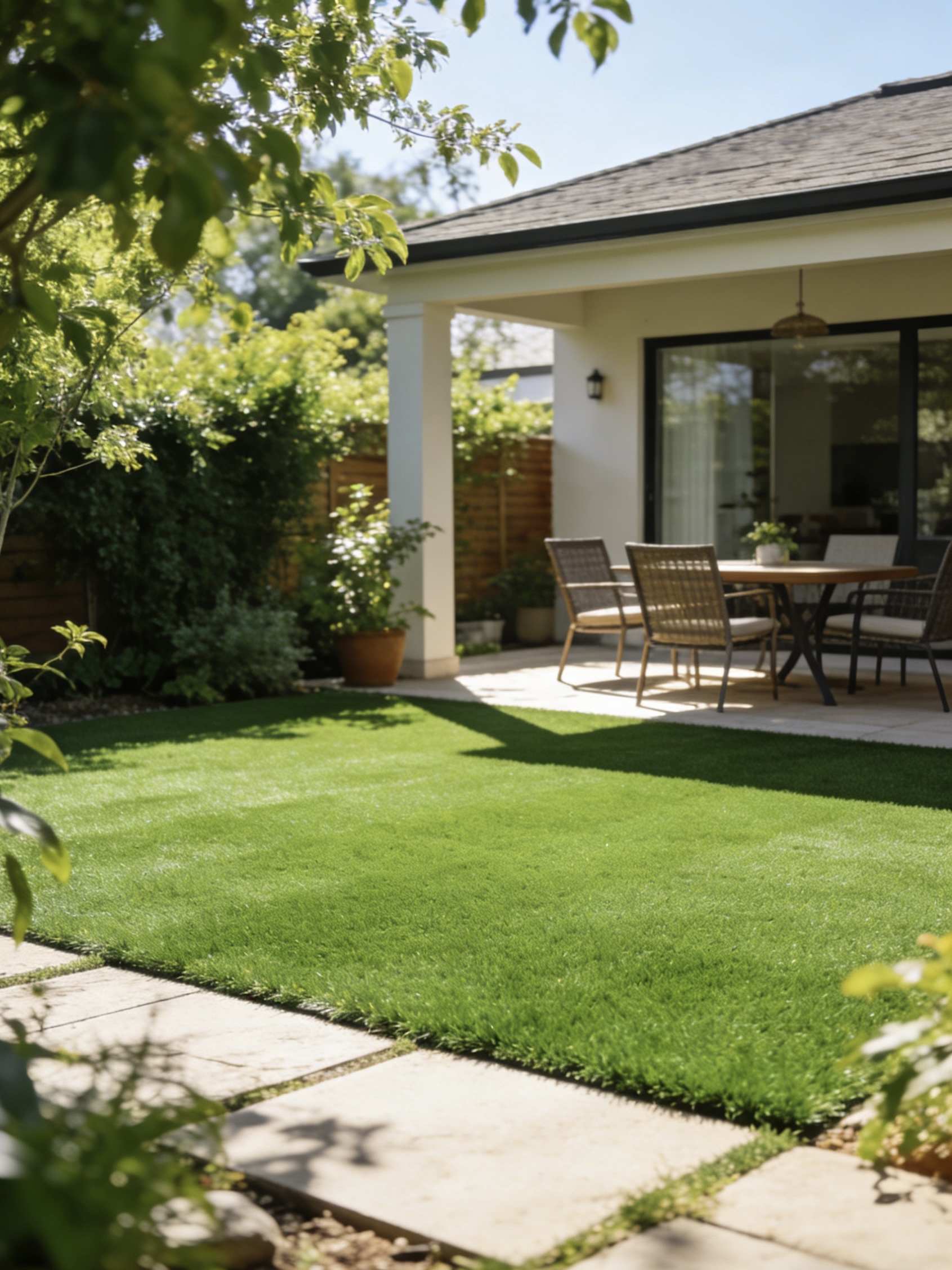
- Visual proximity. Guests stand on a hotel lawn, sit on a rooftop terrace and photograph a courtyard from a metre away. Fibre shape, colour consistency and pile recovery are all visible at that distance.
- Non-athletic but constant load. The traffic is not a 90-minute football match; it is hundreds of short, repeated movements per day, plus point loads from tables, loungers and planters that stay in place for months.
- Continuous exposure. Hospitality amenity areas stay open. The surfaces involved here are designed for outdoor all-weather use and for UV-resistant, wear-resistant, anti-aging and high-traffic conditions.
Those three demands create predictable decision points. A specification that is dense enough for a hotel pool deck may look too flat for a courtyard garden. A softer, deeper residential-style turf may look greener on a balcony but compress under a bar terrace that is reset for events twice a week. Neither outcome is a product defect; both are mismatches between the zone and the construction.
It is also worth noting where published guidance in this category comes from. The sports application segment accounted for approximately 63.1% of global artificial turf market share in 2025, according to Grand View Research. Most technical documentation for artificial turf is therefore written for performance surfaces, not for guest-facing amenity turf, and hospitality buyers usually have to translate sports-oriented parameters — pile height, yarn type, density, backing — into aesthetic and maintenance terms themselves.
Market Context: Where Hospitality Turf Sits in a Growing Category
Artificial turf is a maturing global category rather than a niche. Grand View Research values the global artificial turf market at USD 7.3 billion in 2025 and projects it to reach USD 13.7 billion by 2033. Within that market, Asia-Pacific held the largest revenue share at 32.2% in 2025, and polyethylene (PE) was the dominant material segment with a 63.1% revenue share in the same year. That PE dominance explains why PE-based yarns are the default specification across both sports and amenity applications.
Replacement demand is another factor hospitality buyers should be aware of. The replacement segment of the sports turf market reached 41% of total demand in 2023, approximately 70 million square metres, according to AMI Plastics. Refurbishment is not an exception in this category; it is a planned, recurring event. The direct implication for hospitality is that the specification chosen at installation determines when the surface will need to be replaced, and how disruptive that replacement will be inside an operating venue.
The supplier landscape includes several large international names. CCGrass, Tarkett (FieldTurf), TenCate Grass, Shaw Sports Turf and SportGroup (Polytan) are among the major global competitors identified by Mordor Intelligence. Alongside them sit specialist manufacturers that treat hospitality and landscape projects as a defined part of their portfolio rather than an adjacent market.
Where Venusturf Fits
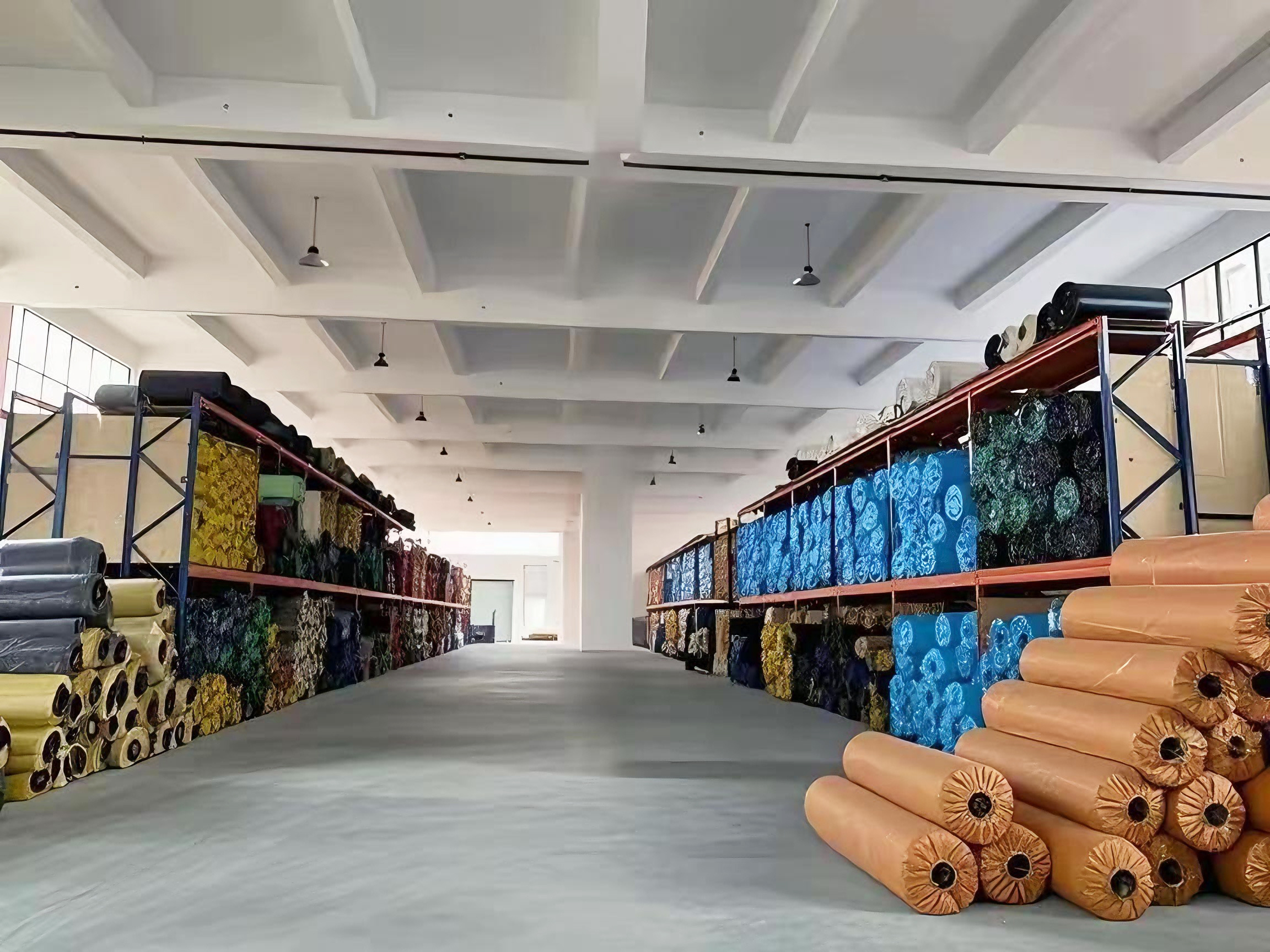
Venusturf (Wuxi Venus Turf Co., Ltd.) is an artificial turf manufacturer based in Wuxi, Jiangsu, China, integrating research and development, production and sales, and supplying artificial grass solutions for sports venues, leisure landscape venues and schools. The company was established in 2024 and operates a manufacturing facility covering 1,000㎡ with 30 integrated production lines, covering the full process from yarn extrusion, twisting, tufting and coating to packaging and delivery. It employs approximately 483 staff, including a research and development team of 25 engineers, and reports an annual production capacity of about 106,000 units, with approximately 80% of products exported to global markets.
Two aspects of that structure are relevant to hospitality work. First, an integrated process from yarn to packaging means the yarn, backing and finishing of a specified model are produced within one chain rather than assembled from unrelated sources, which matters when a property is installed in phases and later sections have to match earlier ones. Second, an export-oriented base means the company is accustomed to specification and documentation requirements across different destination markets.
What Each Specification Does for a Guest-Facing Surface
Pile height: 25mm and 45mm solve different problems
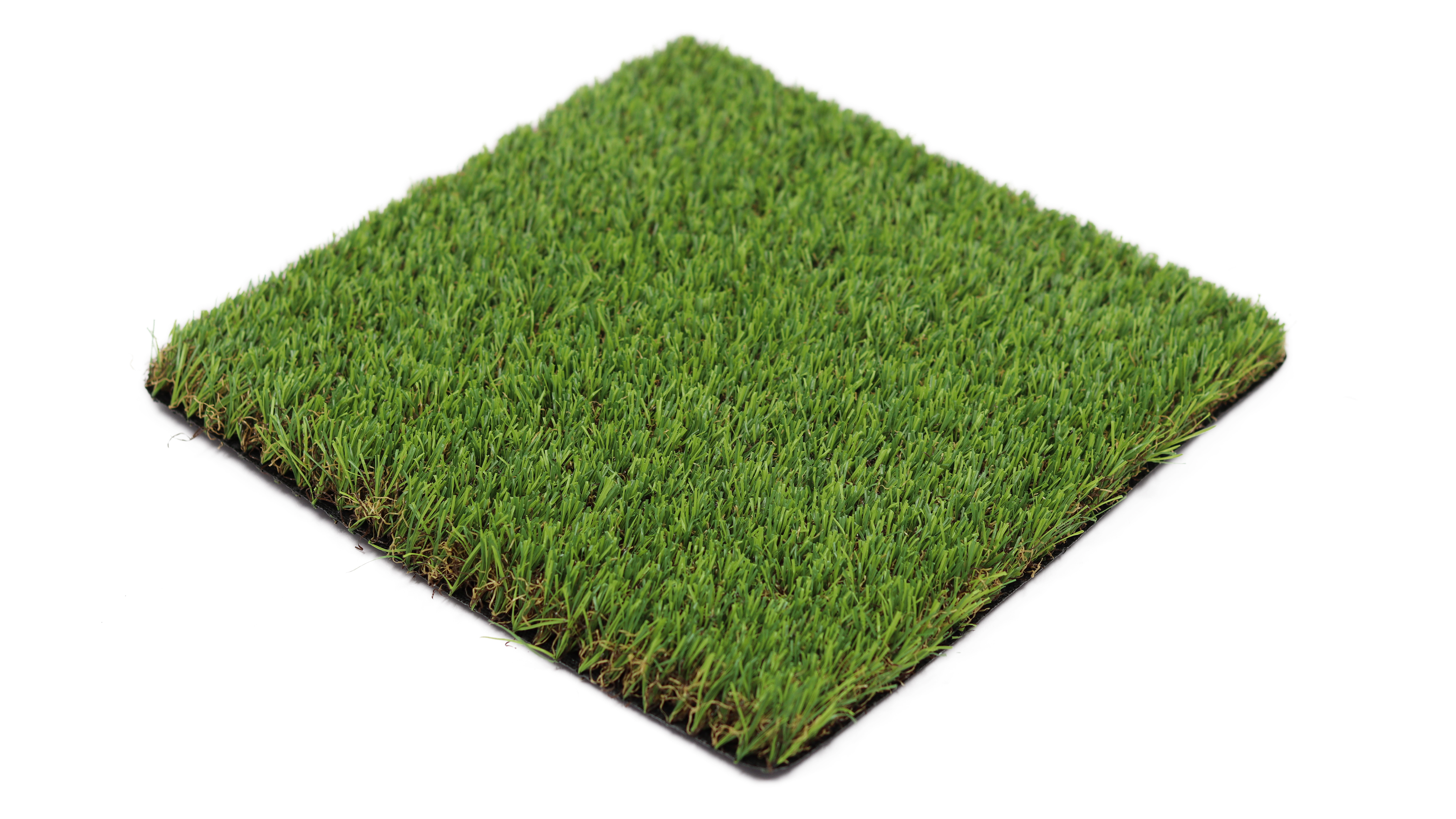
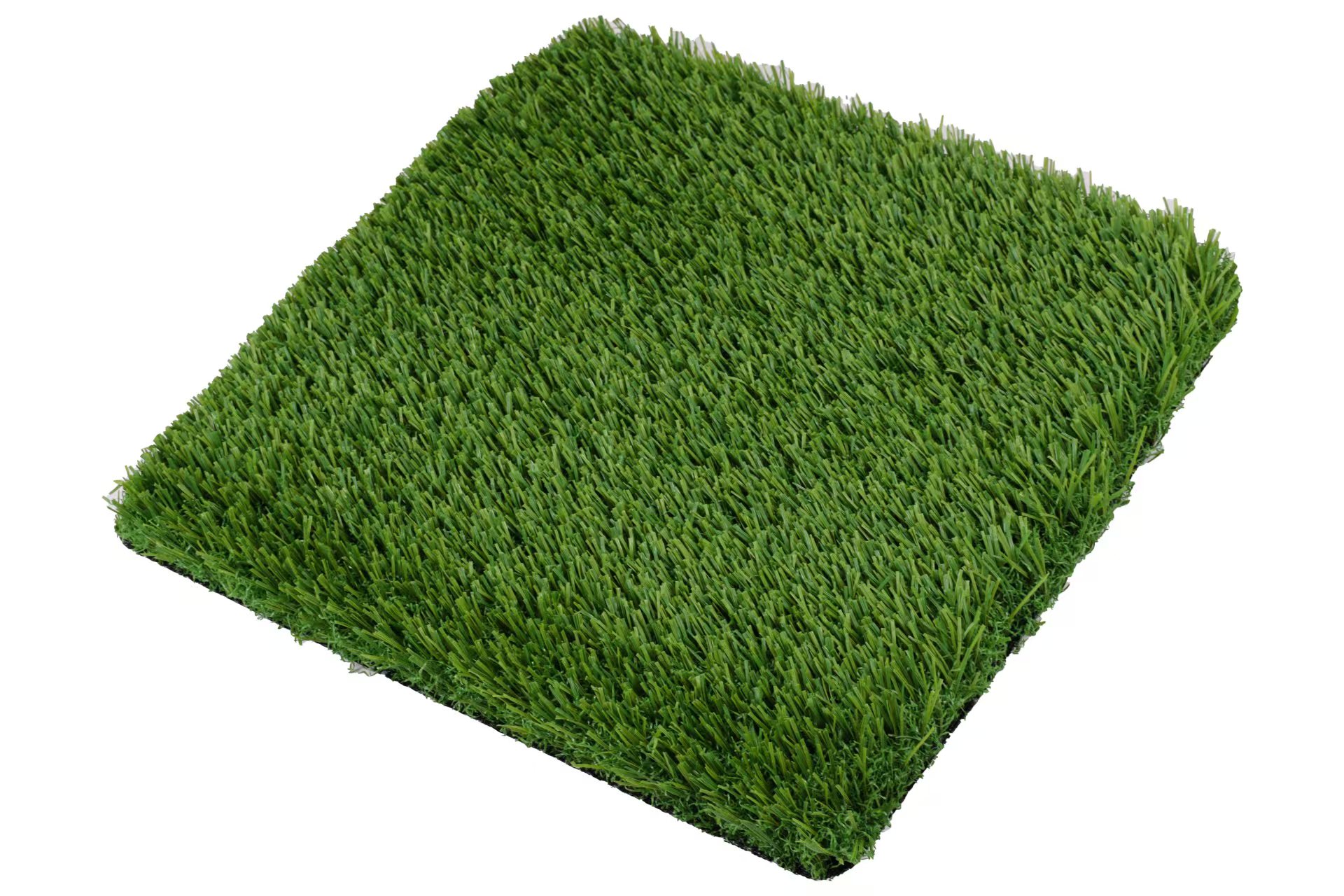
EM24071902 uses a 25mm pile. A shorter pile presents a tighter, more uniform surface, which is what a rooftop lounge, event deck or busy circulation path generally needs: the material has less depth to compress and returns to a consistent profile across the whole area. EM241007 uses a 45mm pile. The extra depth gives a fuller, softer appearance closer to natural lawn, which suits courtyards, garden borders and other areas where guests interact with the surface visually rather than functionally.
Yarn construction: U shape Monofil PE plus Curled PP
Both models share a common yarn family: U shape Monofil PE combined with Curled PP. The monofilament polyethylene strand carries the visible colour and the upright structure of the pile, while the curled polypropylene component fills the base and supports the fibres. In practical terms, this is the construction that produces a surface which looks dense from a standing height — the viewing angle guests actually use on a hotel terrace.
Density: 18,900 versus 15,750 stitches per square meter
Density is the parameter most directly connected to how a surface behaves under repeated load. EM24071902 is specified at 180 stitches per meter, equivalent to 18,900 stitches per square meter. EM241007 is specified at 150 stitches per meter, equivalent to 15,750 stitches per square meter. The commercial model therefore places more fibre per square metre, which is the reason it is the appropriate starting point where guests, furniture and equipment cross the same area repeatedly.
Backing integrity: PP + Net + Latex versus Double PP + PU glue
Backing determines whether a surface keeps its shape at the edges, under planters and around fixed furniture. EM24071902 uses a PP + Net + Latex backing — a layered construction with a net reinforcement that distributes load across the panel. EM241007 uses a Double PP + PU glue backing, a two-layer polypropylene structure bonded with polyurethane adhesive. Both are stable, durable constructions; the difference lies in how they are engineered, and it should be matched to how much static and dynamic load the zone will carry.
Colour: four-color configurations and visual consistency
Both models are supplied in four-color configurations at a 3/8 inch gauge. A multi-colour pile is what prevents a guest-facing lawn from reading as a single flat sheet of green, and it is the detail that most affects how an installation appears in photographs and at close range. Where a property is installed in phases, keeping the same model and colour configuration across phases is the simplest way to avoid a visible tonal break between an older and a newer section.
A Step-by-Step Selection Process for Hospitality Buyers
- Zone the property by guest traffic. Separate the areas where people stand, eat, move furniture or set up events from the areas that are decorative or viewed from a distance. The hospitality project types covered by these products include commercial decoration and event venue setup alongside landscape greening.
- Set a visual target for each zone. Decide where a fuller, deeper look is required and where a tighter, more uniform surface is acceptable. This single decision usually determines which model belongs in which area.
- Match the model to the zone. EM24071902 (25mm, 18,900 stitches/m²) for concentrated traffic and furniture; EM241007 (45mm, 15,750 stitches/m²) for courtyards, garden settings and softer guest-facing finishes.
- Check the backing against the loads the zone will carry. PP + Net + Latex for areas with heavy or repeated point loads; Double PP + PU glue where the surface is mainly walked and viewed.
- Confirm the customization levers before finalizing. These products are customizable in pile height, colour, density and material, so a hospitality specification does not have to be limited to two standard configurations.
- Review the models you intend to specify. Colour reads differently in a shaded courtyard than on a sunlit rooftop, so the finish should be reviewed against the actual lighting of the venue before a full order is placed.
- Plan delivery against the operating calendar. With 30 integrated production lines, an annual capacity of about 106,000 units and an export share of roughly 80%, production and export are routine operations — but installation windows inside an operating hotel are not, so sequencing matters as much as the specification.
Hospitality Use Cases and the Model That Fits
Rooftop lounges and terraces
Rooftop areas concentrate load: furniture is not moved far, but it is never moved away. Wind exposure and direct sun are constant, and surface profile is visible from a seated position. This is the clearest application for a denser commercial construction such as EM24071902, where the 25mm pile and 18,900 stitches per square meter keep the surface uniform under permanent furniture.
Courtyard gardens and landscaped grounds
Courtyards are viewed more than they are used. Guests cross them, photograph them and see them from guest-room windows, but they rarely carry furniture at density. EM241007, with its 45mm pile and Double PP + PU glue backing, gives the fuller appearance a courtyard needs, and it is designed for the same outdoor all-weather, UV-resistant and anti-aging conditions as the commercial model.
Poolside and spa decks
These areas combine barefoot traffic, water exposure and a high visual expectation. Traffic is steady rather than heavy, so the deciding factor is usually colour stability and how the surface reads when wet, not maximum density. The four-color configuration available on both models is what keeps the surface natural-looking under those conditions.
Event lawns and function space
Event use is seasonal but intense: temporary structures, catering equipment and furniture are placed and removed repeatedly. The product range explicitly covers event venue setup and commercial decoration projects, and the zone should be specified for its busiest week rather than its average day.
Pet-friendly courtyards
A growing number of hospitality properties provide pet areas. Pet area installation is one of the project types these products support, and the surfaces are designed for wear-resistant, high-traffic outdoor use. For these zones, match the construction to the traffic level in the same way as any other area of the property.
EM24071902 vs EM241007: Side-by-Side Specification Comparison
| Specification | EM24071902 | EM241007 |
|---|---|---|
| Product name | Artificial Grass (Commercial Grass) | Artificial Turf (Residential Grass) |
| Pile height | 25mm | 45mm |
| Colour | Four color | Four color |
| Gauge | 3/8 inch | 3/8 inch |
| Yarn | U shape Monofil PE + Curled PP | U shape with spine Monofil PE + Curled PP |
| Density | 180 stitches/m, 18,900 stitches/m² | 150 stitches/m, 15,750 stitches/m² |
| Backing | PP + Net + Latex | Double PP + PU glue |
| Material | PE, PP | PE, PP |
| Applicable industries | Landscaping, Sports, Construction, Hospitality | Landscaping, Sports, Construction, Hospitality |
A second table is useful as an editorial selection framework. The zone characteristics below follow the stated performance conditions of these products (outdoor all-weather use, UV-resistant, wear-resistant, anti-aging, high-traffic). The model recommendation is a selection recommendation based on the specifications above, not an additional manufacturer claim.
| Hospitality zone | Typical load profile | Selection recommendation |
|---|---|---|
| Rooftop lounge, bar terrace | High-traffic, permanent furniture, all-weather exposure | EM24071902 (25mm, 18,900 stitches/m², PP + Net + Latex) |
| Courtyard garden, entrance landscaping | Moderate footfall, viewed at close range | EM241007 (45mm, 15,750 stitches/m², Double PP + PU glue) |
| Poolside and spa deck | Steady barefoot traffic, water and sun exposure | Either model, matched to the visual target of the deck |
| Event lawn and function area | Seasonal peak load, temporary structures | EM24071902 for the working footprint |
| Pet area within the property | Wear-resistant, high-traffic outdoor use | Match to traffic level; both models are PE/PP and customizable |
Frequently Asked Questions
1. Do artificial turf installations at hotels and resorts have to meet specific standards?
There is no single global standard written specifically for hotel courtyards, terraces or event lawns. Where a hospitality lawn also functions as a multi-use sports or games surface, specifiers generally refer to the standards that govern synthetic sports turf: the FIFA Quality Programme for Football Turf provides 'FIFA Quality' and 'FIFA Quality Pro' certifications for performance and safety, European synthetic turf standards are governed by EN 15330-1, and German standards by DIN 18035-7. For purely decorative hospitality areas, the practical checks are the stated product construction — material, yarn, density and backing — and the conditions the product is designed for, which for these Venusturf models are outdoor all-weather, UV-resistant, wear-resistant, anti-aging and high-traffic use.
2. Which pile height and density should I choose for a hotel courtyard versus a rooftop bar?
Match the construction to the load, not to the size of the area. For a rooftop bar or event deck, where furniture stays in place and footfall is constant, the 25mm pile with 18,900 stitches per square meter (EM24071902) keeps the surface more uniform. For a courtyard or garden setting, where the surface is mostly viewed and lightly walked, the 45mm pile with 15,750 stitches per square meter (EM241007) provides the fuller, more natural appearance. Both use a 3/8 inch gauge, a four-color configuration and a U shape Monofil PE plus Curled PP yarn family, and both are made of PE and PP.
3. What drives the cost difference between commercial and residential constructions?
Material consumption is the main structural driver, and the specifications show where it changes. EM24071902 places 18,900 stitches per square meter of U shape Monofil PE plus Curled PP yarn over a PP + Net + Latex backing; EM241007 uses 15,750 stitches per square meter of U shape with spine Monofil PE plus Curled PP yarn over a Double PP + PU glue backing. Pile height, density, colour configuration and backing construction all change the amount of yarn and backing material used per square metre. Because both models are customizable in pile height, colour, density and material, the practical approach is to define the zone requirements first and then confirm pricing against that specification rather than against a standard catalogue item.
4. How can we review the surface before committing to a full hospitality order?
The most useful review is against the venue's own lighting, because colour reads differently in a shaded courtyard than on an exposed rooftop. Venusturf can be reached directly to discuss which models to review for a specific property: email info@venusturf.com, telephone +86-189-6171-8197, or WhatsApp +8618961718197 or +8613961696063. The company's product brochure, which covers the range and its configurations, is available for download at https://cdn.socialarks.com/sbsp/24281/0/2026/0416/69e0407726ec7.pdf
5. What affects delivery timing for a hospitality turf order?
Three things determine timing: the specification, the order volume and the destination. On the production side, Venusturf operates 30 integrated production lines handling the full process from yarn extrusion, twisting, tufting and coating through to packaging and delivery, with an annual production capacity of about 106,000 units, and approximately 80% of its products are exported to global markets — so export handling is part of normal operations rather than an exception. If you are working to a fixed installation window in an operating property, it is worth discussing the schedule at the specification stage rather than after the order is placed. You can start that conversation at info@venusturf.com or via WhatsApp at +8618961718197 or +8613961696063.
Conclusion
Hospitality turf is selected on two axes at once: how the surface looks to a guest standing a metre away, and how it holds up where furniture, footfall and weather concentrate. The practical answer is zoning. Areas that carry constant load — rooftop lounges, bar terraces, event footprints — are best served by a denser commercial construction such as EM24071902, with its 25mm pile, 18,900 stitches per square meter and PP + Net + Latex backing. Areas that are viewed more than they are used — courtyards, garden settings, entrance landscaping — are better served by EM241007, with its 45mm pile, 15,750 stitches per square meter and Double PP + PU glue backing. Both are PE/PP products, both use a four-color 3/8 inch construction, both are designed for outdoor all-weather, UV-resistant, wear-resistant, anti-aging and high-traffic conditions, and both can be customized in pile height, colour, density and material.
Next step: send the zone plan for your property — traffic areas, decorative areas and the installation window — and Venusturf will confirm which model and which customization applies to each area.
Email: info@venusturf.com | Tel: +86-189-6171-8197 | WhatsApp: +8618961718197 / +8613961696063
Address: No. 888, Sunshine Industrial Park, Chuangxin West Road, Xishan District, Wuxi City, Jiangsu, China
Website: www.vtsyntheticturf.com | Product brochure: download the Venusturf catalogue