
Long-Term Artificial Turf Partnerships: FAQs on Specs, Acceptance, and Repeat Orders
Date: 2026-10-15 Categories: Industry News Hits: 637
Long-Term Artificial Turf Partnerships: FAQs on Specs, Acceptance, and Repeat Orders
A long-term artificial turf supply relationship is decided by three practical things: a specification that does not drift from order to order, acceptance criteria both sides agree on before production starts, and a communication routine that makes repeat orders predictable. This FAQ answers the questions importers, distributors, contractors and facility operators raise most often when they move from a first trial order to a multi-year supply arrangement.
Venusturf is the brand of Wuxi Venus Turf Co., Ltd., an artificial turf manufacturer based in Wuxi, Jiangsu, China, covering R&D, production and sales of artificial grass for sports venues, leisure landscaping and schools, with exports to global markets. Four verified Venusturf models are used as worked examples throughout this guide: EM241007 Residential Grass (45 mm, 150 stitches/m, Double PP with PU glue), EM24071902 Commercial Grass (25 mm, 180 stitches/m), EM250105 Football Grass (50 mm) and Putt 40 Golf Grass (15 mm).
Problem Definition: What Actually Breaks a Long-Term Turf Partnership
Most supply failures in artificial turf are not dramatic. They show up as small, cumulative mismatches: a roll that measures 43 mm instead of 45 mm, a yarn shape that looks slightly different from the approved sample, a backing that shifts from PU glue to latex, or a colour batch that reads warmer under daylight than the first delivery. Individually these are minor. Across a stadium, a hotel terrace or a residential development, they are visible.
The reason these mismatches matter more in turf than in many other building products is that the surface is bought once and lived on for years. A pitch, a putting green or a commercial courtyard is installed against one specification and then judged against that specification in every following season. When the same buyer re-orders, the comparison is not between suppliers — it is between order one and order twelve.
Three failure modes appear repeatedly in long-term turf supply:
- Specification drift. The model code stays the same while a parameter quietly changes — a different yarn shape, a revised backing, a lighter coating.
- Acceptance ambiguity. No agreed checkpoint list exists, so any dispute is settled by opinion rather than by measurement.
- Documentation gaps. Compliance paperwork covers the first shipment but is not systematically attached to later ones.
A fourth and quieter risk is communication lag: repeat orders placed through a different contact each time, with no shared record of what was approved, when, and against which specification.
Industry Background: Why Repeat Orders Now Carry More Weight
The commercial context makes this an economic question, not just a quality question. Grand View Research values the global artificial turf market at USD 7.3 billion in 2025 and projects USD 13.7 billion by 2033. The same source reports that Asia-Pacific held the largest regional revenue share at 32.2% in 2025, and that polyethylene accounted for 63.1% of revenue by material. Sports applications represented approximately 63.1% of global market share.
Replacement demand is structural rather than incidental. AMI Plastics reported that the replacement segment reached 41% of total sports turf demand in 2023, approximately 70 million square meters. Buyers who resurface or extend a field are, by definition, repeat buyers — which is why the acceptance record from a first installation becomes a procurement asset for the second.
On the standards side, project owners commonly reference the FIFA Quality Programme for Football Turf, which defines the FIFA Quality and FIFA Quality Pro levels for performance and safety; European synthetic turf standards governed by EN 15330-1; and German standards under DIN 18035-7. These frameworks tell a buyer what a finished installation should be judged against. They do not, on their own, tell a buyer whether order twelve will match order one. That is a supply-agreement question, and it is answered with locked specifications, agreed checkpoints and complete documentation.
Detailed Solution: What to Lock Into a Long-Term Artificial Turf Supply Agreement
1. Lock the model code, then restate every parameter behind it
Naming a model is not the same as specifying it. In Venusturf's range, EM241007 is a Residential Grass product with a 45 mm pile height, a 3/8" gauge, four colours, a U shape with spine monofil PE plus curled PP yarn, 150 stitches/m (15,750 stitches/sqm) and a Double PP with PU glue backing. A long-term agreement should name that code and then restate each of those values individually, so that "45 mm residential grass" cannot be re-interpreted later.
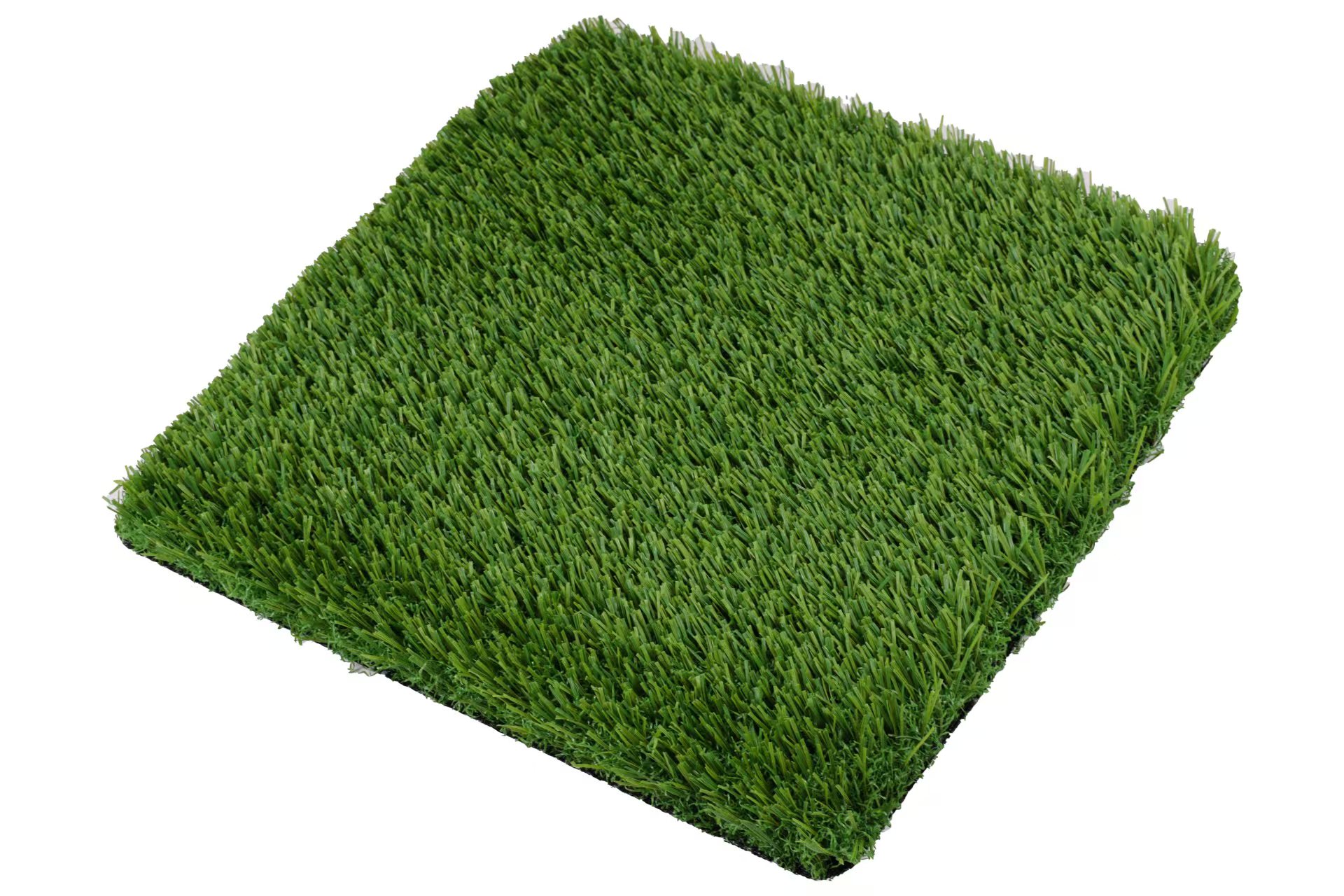
EM241007 Residential Grass — 45 mm pile height, 3/8" gauge, 150 stitches/m (15,750 stitches/sqm), Double PP with PU glue backing.
The same discipline applies to the other frequently repeated models. EM24071902 is a Commercial Grass product with a 25 mm pile height, 3/8" gauge, four colours, U shape monofil PE plus curled PP yarn, 180 stitches/m (18,900 stitches/sqm) and a PP + Net + Latex backing. EM250105 is a Football Grass product with a 50 mm pile height, 5/8" gauge, four colours, U with spine shape monofil PE yarn, 180 stitches/m (11,340 stitches/sqm) and a PP + Mesh + SBR Latex backing. Putt 40 is a Golf Grass product with a 15 mm pile height, 3/16" gauge, two colours, curled PE yarn, 300 stitches/m (63,000 stitches/sqm) and a Double PP + PU glue backing.
Material composition belongs in the same clause. EM241007 is constructed from polypropylene and polyethylene, and EM24071902 from polyethylene and polypropylene. Because polyethylene accounted for 63.1% of global artificial turf revenue by material in 2025 according to Grand View Research, buyers who specify "PE-based yarn" are aligned with the dominant part of the market — but they still need the fibre shape, not just the polymer family.
2. Attach the compliance pack to the agreement, not to the shipment
Venusturf holds a REACH SVHC 240 Substances Test Report issued by SGS under report number SL42404282057101TX, tested against REACH Regulation (EC) No 1907/2006. The certification applies to artificial turf products and is valid for the global market. In a long-term agreement, both parties should state explicitly how that documentation travels with each order, and which additional project-level requirements apply — for example whether a stadium project is being designed against the FIFA Quality Programme, EN 15330-1 or DIN 18035-7. Those project standards and the SVHC test report answer different questions, and buyers who need both should ask for both.
3. Write the commercial terms into the same document
Venusturf's stated production terms are a minimum order quantity of 1,000 m², a lead time of 30–45 days and monthly capacity of 50,000 m². OEM customization covers appearance, specifications, performance and functionality, and base and installation systems. Quality control is described as 100% testing, and after-sales support is provided as remote technical support. Production is carried out across 30 integrated production lines covering yarn extrusion, twisting, tufting, coating and final packaging, with an R&D team of 25 engineers.
Those five items — minimum order quantity, lead time, monthly capacity, customization scope and after-sales mode — define the practical boundaries of a partnership. They tell a buyer the smallest order that can be run consistently, the planning window for a project programme, the ceiling on how much volume can be pulled forward, how far the product can be tailored without leaving the standard range, and what support continues after delivery.
Step-by-Step Breakdown: The Repeat-Order Acceptance Cycle
A repeat order is not a new purchase; it is a re-verification. The following sequence keeps the reference point fixed.
- Freeze the specification sheet at model-code level. List pile height, gauge, stitch density in stitches/m and stitches/sqm, yarn type, backing build, colour layout and material composition. Attach the sheet to the contract as an annex.
- Attach the compliance pack. Record the certification type, the issuing body, the report number, the applicable standard and the market validity — for example a REACH SVHC 240 Substances Test Report issued by SGS under number SL42404282057101TX, tested against REACH Regulation (EC) No 1907/2006, applicable to artificial turf and valid globally.
- Agree the acceptance checkpoint list before the first production run. Every checkpoint should be measurable with a standard tool, not judged by appearance alone.
- Validate the first lot against the frozen sheet. Venusturf describes its quality control as 100% testing; the buyer's task is to record the measured values of that lot and keep them as the reference for every later order.
- Check pre-shipment documentation and packing. Confirm that rolls are labelled by model code and that the compliance pack travels with the consignment.
- Set a post-order communication routine. One named contact, one shared specification file, one agreed channel for deviations. Remote technical support is listed as Venusturf's after-sales mode, and it works best when the receiving site knows whom to contact.
- Archive the batch record. When the next repeat order is placed, the conversation starts from data rather than from memory.
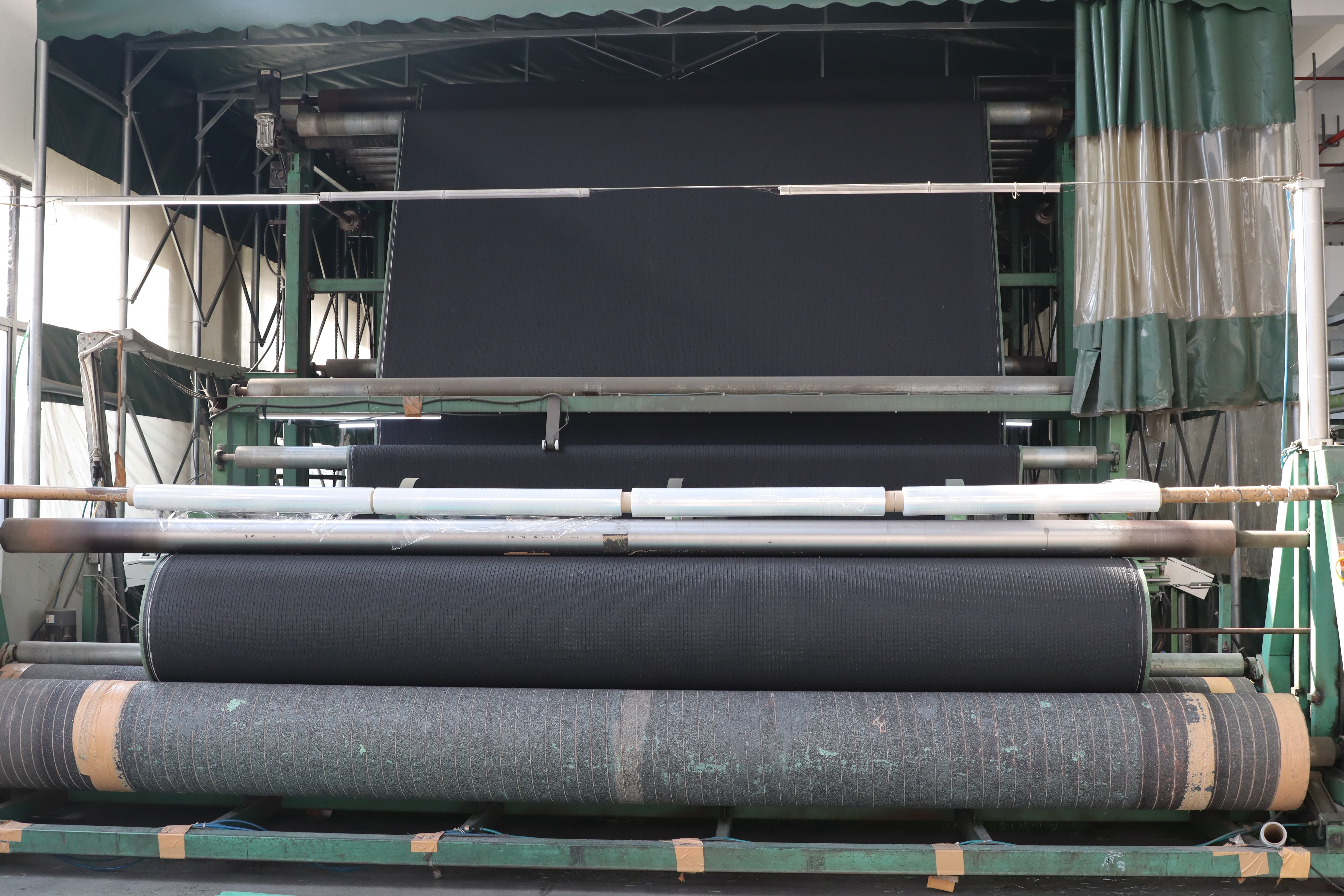
Roll handling and packaging: the point in the process where labelling, roll identification and shipment documentation are confirmed.
Acceptance checkpoints to agree in writing
| Checkpoint | What to verify on each order | Reference values (examples) |
|---|---|---|
| Pile height | Measured pile height against the locked model value | 45 mm (EM241007); 25 mm (EM24071902); 50 mm (EM250105); 15 mm (Putt 40) |
| Gauge | Tufting gauge against the locked value | 3/8" (EM241007, EM24071902); 5/8" (EM250105); 3/16" (Putt 40) |
| Stitch density | Stitches per metre and per square metre | 150/m and 15,750/m² (EM241007); 180/m and 18,900/m² (EM24071902); 180/m and 11,340/m² (EM250105); 300/m and 63,000/m² (Putt 40) |
| Yarn type | Fibre shape and polymer combination | U shape with spine monofil PE + curled PP (EM241007); U shape monofil PE + curled PP (EM24071902); U with spine shape monofil PE (EM250105); curled PE (Putt 40) |
| Backing | Backing build and coating system | Double PP + PU glue (EM241007, Putt 40); PP + Net + Latex (EM24071902); PP + Mesh + SBR Latex (EM250105) |
| Colour | Colour layout against the approved reference | Four colour (EM241007, EM24071902, EM250105); two colour (Putt 40) |
| Compliance pack | Test report attached to the consignment | SGS report SL42404282057101TX under REACH Regulation (EC) No 1907/2006 |
Use Cases: Where Long-Term Spec Discipline Pays Off
Football and multi-sport facilities
Football surfaces are the segment where repeat orders are most likely, because replacement demand already accounts for 41% of total sports turf demand. EM250105 Football Grass is specified at 50 mm pile height, 5/8" gauge, four colours, U with spine shape monofil PE yarn, 180 stitches/m (11,340 stitches/sqm) and a PP + Mesh + SBR Latex backing. For buyers whose projects are designed against the FIFA Quality Programme for Football Turf, the specification annex should state which of the FIFA Quality or FIFA Quality Pro levels the installation is targeting, and how that is verified at handover.
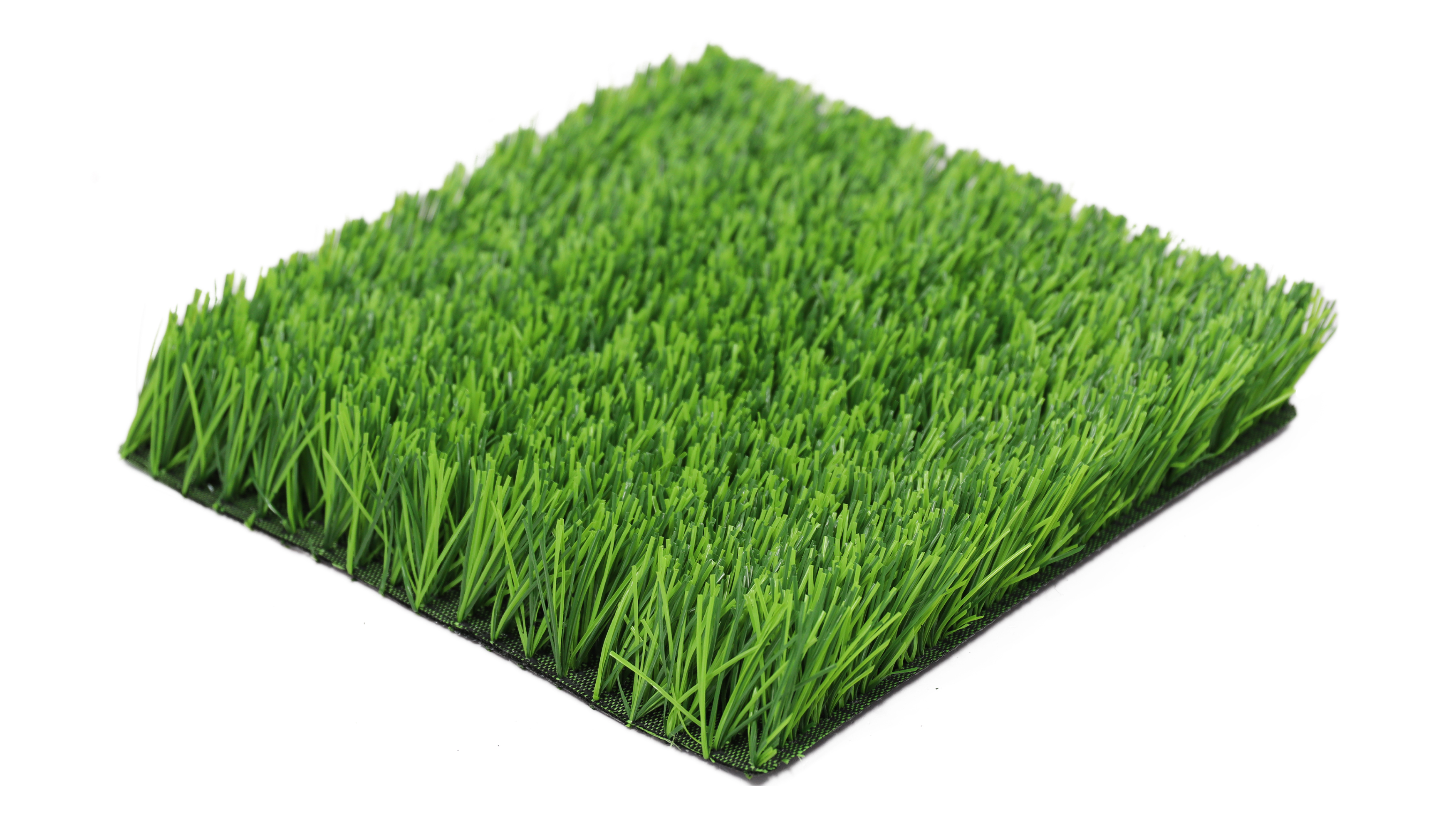
EM250105 Football Grass — 50 mm pile height, 5/8" gauge, 180 stitches/m, PP + Mesh + SBR Latex backing.
Golf and putting surfaces
Golf requires the tightest tolerance loop of any turf category, because surface consistency is part of play, not decoration. Putt 40 Golf Grass is specified at 15 mm pile height, 3/16" gauge, two colours, curled PE yarn, 300 stitches/m (63,000 stitches/sqm) and a Double PP + PU glue backing — a density that makes stitch-rate drift immediately visible on a putting surface.
Venusturf's own case record for the Philippines covers an individual golf course client that purchased 10 rolls; the installation has since been in service for three years, with athletic performance, visual aesthetics and competitive fairness recorded as results and low maintenance noted as the highlight. For a repeat order of that kind, the useful data is not the outcome description but the original specification and the measured values from the first delivery.
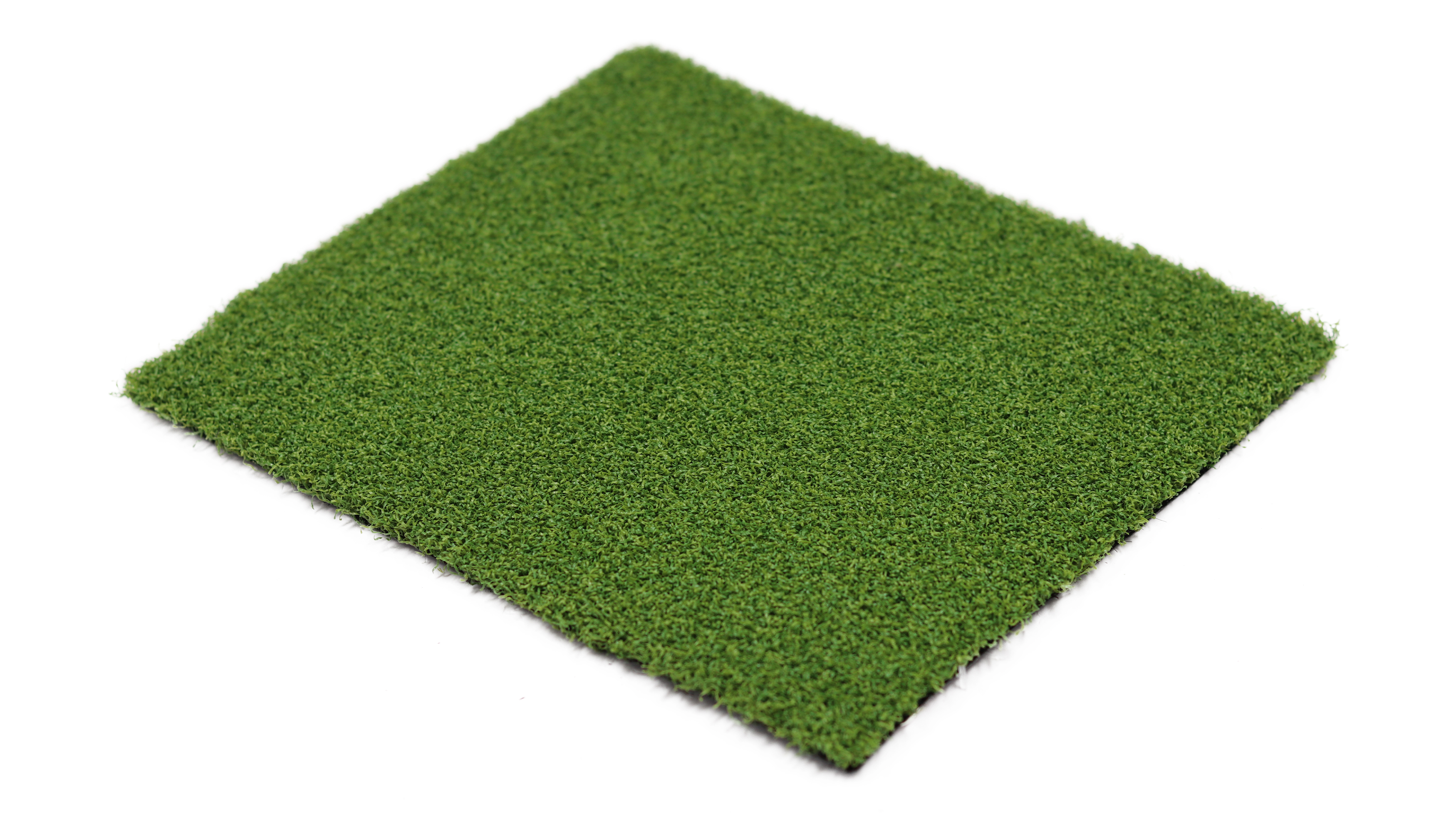
Putt 40 Golf Grass — 15 mm pile height, 3/16" gauge, 300 stitches/m (63,000 stitches/sqm), Double PP + PU glue backing.
Commercial, hospitality and landscape projects
Commercial surfaces absorb footfall rather than cleats, so the failure mode shifts from traction to appearance retention and backing stability. EM24071902 Commercial Grass is specified at 25 mm pile height, 3/8" gauge, four colours, U shape monofil PE plus curled PP yarn, 180 stitches/m (18,900 stitches/sqm) and a PP + Net + Latex backing. For residential and landscape work, EM241007 offers a 45 mm pile with a Double PP + PU glue backing, while EM240404 Residential Grass is specified at 30 mm, 3/8" gauge, 140 stitches/m (14,700 stitches/sqm) and a PP + Mesh + SBR Latex backing.
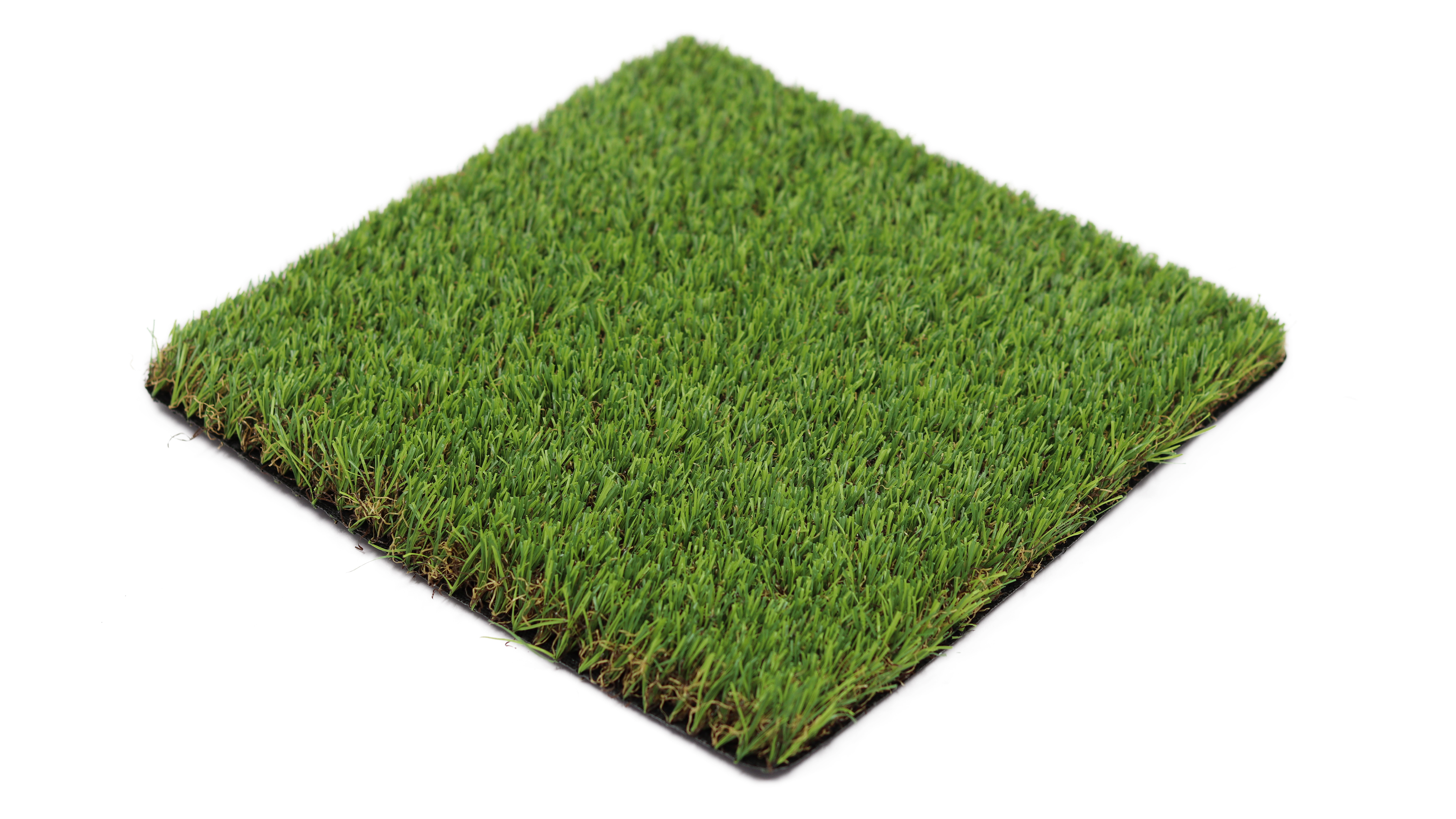
EM24071902 Commercial Grass — 25 mm pile height, 3/8" gauge, 180 stitches/m (18,900 stitches/sqm), PP + Net + Latex backing.
Pet and specialist areas
Pet areas add a cleaning and drainage dimension to the same specification logic. EM24081501-1 Pet Grass is specified at 35 mm pile height, 3/8" gauge, four colours, S shape monofil PE plus curled PP yarn, 100 stitches/m (10,500 stitches/sqm) and a Double PP + Net + Pet glue backing. Because the backing construction differs from the sports models, repeat orders should reference the pet-grass code directly rather than assuming a generic "35 mm grass" will match.
Comparison Table: Model-Level Specifications to Lock
The table below reproduces the published specifications for six Venusturf models spanning residential, commercial, football, golf and pet applications. These are the values a long-term agreement should repeat, because they are also the values a pre-shipment inspection can measure.
| Model | Type | Pile height | Gauge | Yarn | Density | Backing |
|---|---|---|---|---|---|---|
| EM241007 | Residential Grass | 45 mm | 3/8" | U shape with spine monofil PE + curled PP | 150 stitches/m (15,750/m²) | Double PP + PU glue |
| EM240404 | Residential Grass | 30 mm | 3/8" | C shape monofil PE + curled PP | 140 stitches/m (14,700/m²) | PP + Mesh + SBR Latex |
| EM24071902 | Commercial Grass | 25 mm | 3/8" | U shape monofil PE + curled PP | 180 stitches/m (18,900/m²) | PP + Net + Latex |
| EM250105 | Football Grass | 50 mm | 5/8" | U with spine shape monofil PE | 180 stitches/m (11,340/m²) | PP + Mesh + SBR Latex |
| Putt 40 | Golf Grass | 15 mm | 3/16" | Curled PE | 300 stitches/m (63,000/m²) | Double PP + PU glue |
| EM24081501-1 | Pet Grass | 35 mm | 3/8" | S shape monofil PE + curled PP | 100 stitches/m (10,500/m²) | Double PP + Net + Pet glue |
All six models are built on polyethylene and polypropylene materials, and all carry four-colour or two-colour layouts as listed above. The most useful thing a buyer can do with this table is convert it into an inspection form: every row becomes a line item, and every line item becomes a measurement taken at handover of each repeat order.
FAQ: Long-Term Artificial Turf Partnerships
What compliance documentation should be attached to a long-term artificial turf supply agreement?
The baseline document is a REACH SVHC 240 Substances Test Report. Venusturf holds this certification issued by SGS under report number SL42404282057101TX, tested against REACH Regulation (EC) No 1907/2006; it applies to artificial turf products and is valid for the global market. That report answers the chemical-safety question. Project-level frameworks answer a different one: the FIFA Quality Programme for Football Turf defines FIFA Quality and FIFA Quality Pro levels for performance and safety, European synthetic turf standards are governed by EN 15330-1, and German standards by DIN 18035-7. A complete supply agreement states both — which SVHC documentation is attached, and which project standard the finished installation is being designed against.
Can the same specification be reproduced across repeat orders and OEM customization?
Reproducibility depends on how tightly the specification is written. Venusturf operates 30 integrated production lines covering yarn extrusion, twisting, tufting, coating and final packaging, with monthly capacity of 50,000 m² and quality control described as 100% testing. OEM customization is available across appearance, specifications, performance and functionality, and base and installation systems — which means the customization range is wide enough that a repeat order must reference the exact approved configuration rather than a general product description. An R&D team of 25 engineers supports specification-level adjustments, and those adjustments should be documented as annexes so later orders can be matched to them.
Which specification choices drive the cost structure of a long-term agreement?
The visible cost drivers sit in the spec sheet: pile height, stitch density, yarn type and backing construction. Compare three Venusturf models and the differences become concrete. EM241007 is a 45 mm residential grass at 150 stitches/m (15,750 stitches/sqm) with a Double PP + PU glue backing; EM24071902 is a 25 mm commercial grass at 180 stitches/m (18,900 stitches/sqm) with a PP + Net + Latex backing; Putt 40 is a 15 mm golf grass at 300 stitches/m (63,000 stitches/sqm) with a Double PP + PU glue backing. Higher pile height uses more yarn, and higher stitch density uses more tufting time. On the commercial side, the terms that shape budgeting are the 1,000 m² minimum order quantity, the 30–45 day lead time and the 50,000 m² monthly capacity. Because cost follows the frozen specification and the order volume, the practical step is to request a quotation against the locked model code rather than against a category description.
How should a first order or sample be validated before committing to repeat supply?
Validate against the frozen specification sheet, not against a photograph or a memory of the approved sample. Venusturf's stated minimum order quantity is 1,000 m² and its quality control is described as 100% testing; after-sales support is provided as remote technical support. In practice, a buyer should record the measured values of the first lot — pile height, gauge, stitches per metre and per square metre, yarn type, backing construction and colour — and keep those values alongside the approved physical reference. Every later order is then checked against recorded data rather than against impression. Where a project references the FIFA Quality Programme, EN 15330-1 or DIN 18035-7, the validation plan should state which of those requirements is verified at handover and by whom.
What lead time and order volume should a repeat order plan for?
Plan around a 30–45 day lead time, a minimum order quantity of 1,000 m² and monthly capacity of 50,000 m². For a repeat order these three numbers work together: the minimum quantity sets the floor for a production run, the lead time sets the point at which a project programme must trigger the order, and the monthly capacity sets the ceiling on how much volume can be pulled forward in a single window. Orders that involve customized appearance, specifications, performance and functionality, or base and installation systems, should be planned at the longer end and confirmed in writing before the project schedule is fixed.
For buyers building a specification file, the downloadable Venusturf product brochure is a practical starting point, and quotations against a frozen model code can be requested at info@venusturf.com or +86-189-6171-8197.
Conclusion: A Partnership Is a Specification That Survives Repetition
Long-term artificial turf supply is less about the first delivery than about the twelfth. The market context supports that view: a USD 7.3 billion global market in 2025 projected to reach USD 13.7 billion by 2033, a replacement segment already at 41% of sports turf demand in 2023, and Asia-Pacific holding 32.2% of regional revenue. Buyers in that environment are repeat buyers by default, and the supplier relationship is judged on consistency rather than on a single shipment.
The three locks that make repetition work are straightforward. Lock the specification at model-code level, parameter by parameter, using values such as those published for EM241007, EM24071902, EM250105 and Putt 40. Lock the acceptance checkpoints so that a repeat order is verified with measurements rather than opinion. Lock the communication routine so that deviations reach a named contact before they become site problems, backed by compliance documentation issued against REACH Regulation (EC) No 1907/2006 and by a documented production capability of 50,000 m² per month.
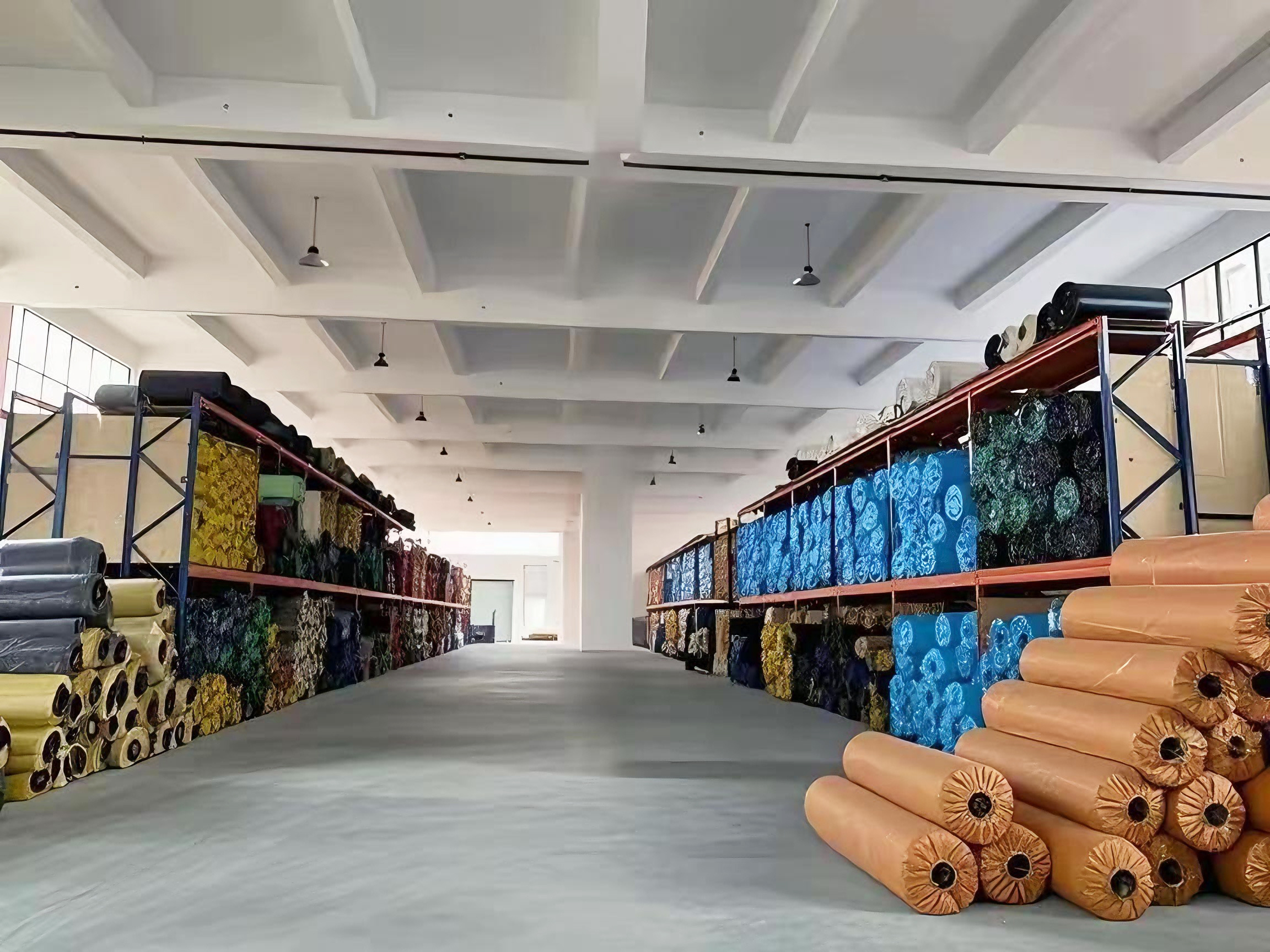
Stock and roll handling: repeat orders are prepared against the same locked specification as the original delivery.
Planning a repeat order or a multi-year turf supply agreement?
Download the catalogue, then send your locked specification for a quotation.
Download the Venusturf Brochure
Email: info@venusturf.com | Tel: +86-189-6171-8197 | www.vtsyntheticturf.com