Evaluating Vertical Integration in Artificial Turf Suppliers: A Factory Audit Checklist
Date: 2026-10-30 Categories: Industry News Hits: 440
Evaluating Vertical Integration in Artificial Turf Suppliers: A Factory Audit Checklist
Short answer: vertical integration in an artificial turf supplier means the yarn is extruded in-house, twisted and tufted on the supplier's own machines, and the backing is coated on the supplier's own line rather than bought as finished roll goods. To verify that claim, audit five things: the process map (which steps are subcontracted), the extrusion line with its additive dosing records, the tufting records that fix stitch count and pile height per model code, the coating line matched to a written backing formulation (Double PP or PP+Mesh+Latex), and batch records that show the approved sample still matches production.
A supplier that controls yarn, tufting and coating can hold stitch count, pile height and backing construction constant from one shipment to the next. A supplier that buys finished roll goods and relabels them cannot, because the process that produced the roll sits outside its control. The difference rarely shows up in a sample book. It shows up in the second or third container, when the colour drifts, the pile height measures short, or the backing on the pallet does not match the backing in the approved sample.
This checklist is written for buyers who have already shortlisted factories and now need to confirm what each one actually controls. It is organised as an audit sequence: define the claim, understand why the market makes that claim hard to verify, then walk the plant, the model codes and the documents in a fixed order.
Problem Definition: Why Catalogue-Level Evaluation Fails
Most supplier evaluations happen at catalogue level: a sample box, a specification PDF, a price list and a certificate folder. None of these prove that the yarn in the sample was extruded by the company that sent it. Three failure modes recur in artificial turf sourcing, and each one is invisible until after the purchase order is confirmed.
- Tufting-only integration. The factory owns tufting machines but buys yarn on the open market. Model codes stay the same while the yarn lot changes, so colour, lustre and polymer behaviour can shift between batches without any field in the catalogue changing.
- Backing substitution. A roll is labelled with an approved model code but carries a different backing formulation than the one approved — for example a Double PP construction replaced by a PP+Mesh+Latex construction, or the reverse. The product name on the packing list stays valid; the delivered roll does not match the approved sample.
- Model codes without written specifications. A code such as EM241007 or EM240404 exists in the price list but is not bound to a written stitch count and pile height. Without that binding there is no reference value, so batch-to-batch consistency cannot be measured at all.
The audit exists to close those three gaps before they become warranty claims. It is a documentation exercise as much as a factory walk: every observation on the floor has to attach to a record, and every record has to attach to a model code you are actually buying.
Industry Background: What the Market Does and Does Not Give Buyers
Artificial turf is sold under one product name but consumed across structurally different applications. Published market summaries describe the same product as widely used in sports stadiums, residential lawns, commercial landscapes, playgrounds and recreational facilities. Those five end uses do not share one specification, one warranty expectation or one acceptance test, which is why a single catalogue SKU set cannot carry the whole range.
Demand pressure is also uneven by segment. Padel court construction reached 77,300 courts globally by late 2025 and early 2026, with 14,355 new courts added in 2025 alone, according to the Playtomic and PwC Padel Global Report. Court rollouts of that scale are repeat-batch businesses: the same surface has to be produced again and again across sites, which makes batch consistency a commercial requirement rather than a technical nicety.
What the market does provide is a mature testing layer. The ASTM International listing for artificial turf surfaces and systems covers test methods and specifications addressing impact attenuation, lead content in fibers, permeability, hazardous metals in infill, abrasiveness, field sampling, surface characterization, filament bind, PFAS sampling, sieve analysis and PAH content, with standards such as ASTM F3189-20, ASTM F1936-19 and ASTM F2765-14(2021) among those listed. For football surfaces, the FIFA Quality Programme for Football Turf specifies, among other performance requirements, a vertical ball rebound between 0.60 m and 0.85 m under FIFA Quality Pro.
Two cautions follow from that. First, the ASTM listing is not a single compliance package: it groups standards with different scopes and different publication years, and individual applicability and current status must be checked before any of them is written into a purchase specification. Second, a test method tells you how a product was measured, not how consistently it is produced. Independent technical guidance also flags user-perceived material issues — Cornell University's sports field management guidance notes an artificial and unnatural feel and a strong odour, particularly where rubber infill is used — which is a material-disclosure question that belongs in the audit, not in the marketing sheet.
Detailed Solution: What an Integrated Plant Looks Like on Paper
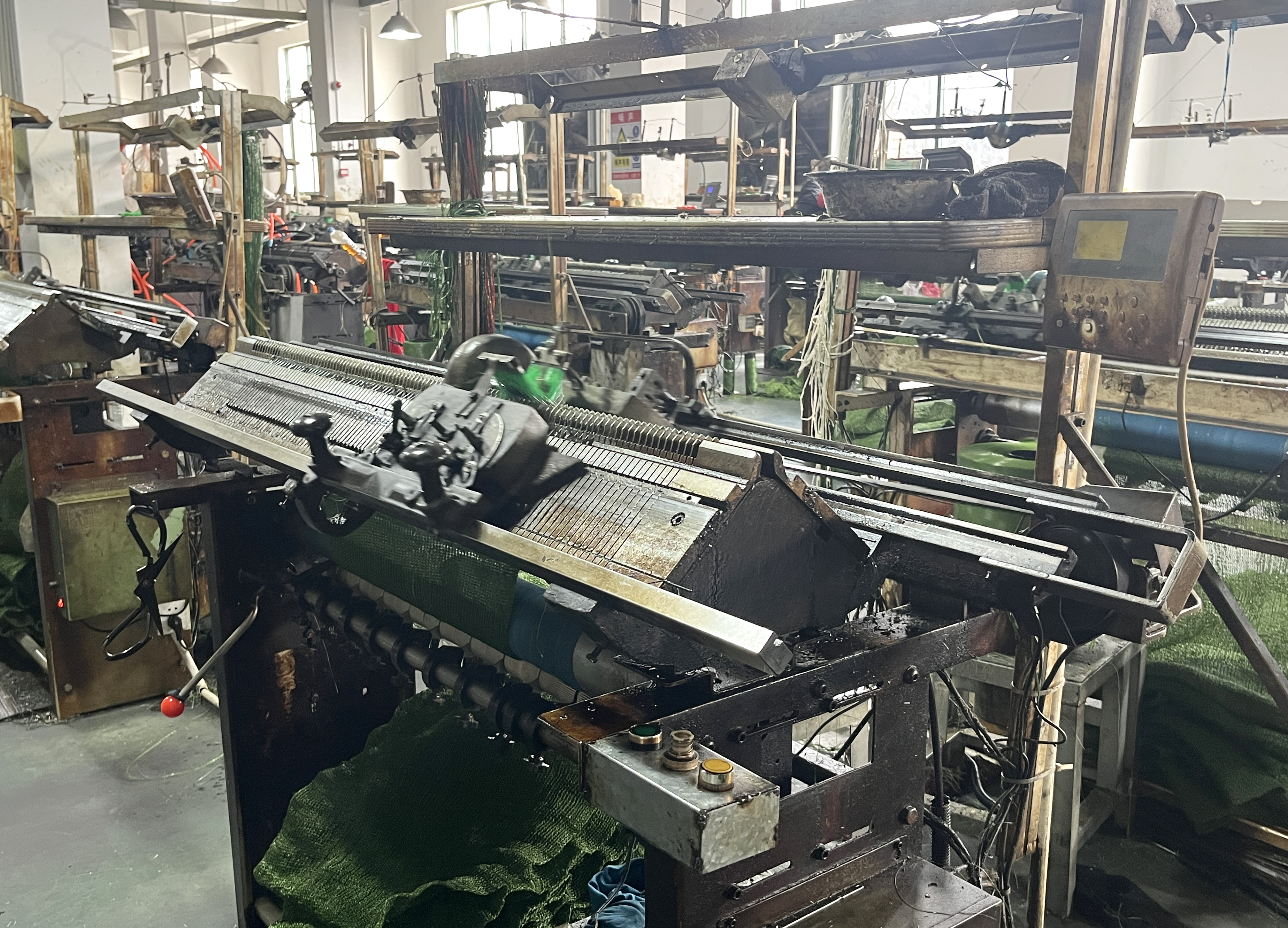
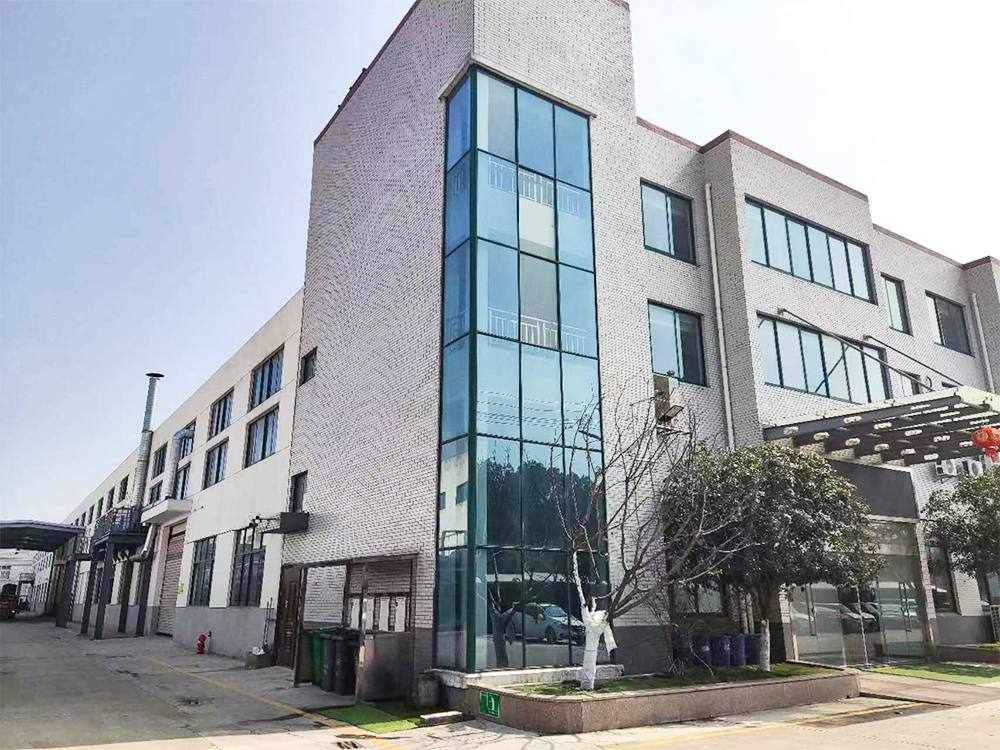
Venusturf is the brand of Wuxi Venus Turf Co., Ltd., an artificial turf manufacturer based in Wuxi, Jiangsu, China, which integrates R&D, production and sales and supplies sports venues, leisure landscape venues and schools. The company reports 30 integrated production lines covering yarn extrusion, twisting, tufting, coating and final packaging and delivery, an annual output of 106,000 units, an export ratio of 80% and a global market footprint, supported by an R&D team of 25 engineers.
For an auditor, the operational sentence in that profile is the process chain: extrusion, twisting, tufting, coating, packaging, delivery. A supplier that genuinely owns that chain can answer three questions that a reseller cannot answer at all. Which lot of yarn went into batch 4 of model EM241007? Which coating line produced the backing on that batch, and against which formulation? Which tufting machine settings were used, and do the recorded stitch count and pile height match the approved specification?
Material control is part of the same chain. Venusturf's documented approach to UV degradation, colour loss and weathering is to add UV stabilisers during production, use anti-UV additives and a UV-resistant masterbatch, backed by UV resistance testing, accelerated ageing testing and quality control for colour fastness. Those are record-generating activities, which is exactly why they are auditable: either the dosing records and the accelerated ageing reports exist for the batch you are buying, or they do not.
Step-by-Step Breakdown: The Factory Audit Checklist
Step 1 — Request the process map before you book travel
Ask for a one-page flow diagram that names every production step from polymer intake to packed roll, and mark which steps happen inside the supplier's own plant and which are bought in. A supplier that cannot produce this diagram in a day is telling you something. Bring the diagram to the audit and walk it in order; any step with no machine and no record behind it is a step you should assume is outsourced.
Step 2 — Verify yarn extrusion and additive dosing
At the extrusion line, ask to see the polymer intake, the masterbatch store and the dosing record for one specific production batch. The dosing record is the document that connects a UV-resistant masterbatch or anti-UV additive to a lot of yarn. Without it, a UV claim in the catalogue cannot be tied to the roll in your container. Cross-check the yarn lot reference against the tufting record for the same batch before you leave the line.
Step 3 — Verify twisting and tufting against the model specification
Tufting is where stitch count and pile height are physically created, so this is where the model code becomes real. Ask for the machine setting log for the code you are buying and confirm that the log states the target stitch count and pile height. Then compare three things side by side: the approved specification sheet, the machine setting log, and the last three batch records for that code. If the specification sheet does not state stitch count and pile height, stop here — the code cannot function as a quality marker.
Step 4 — Verify the coating line against the backing formulation
Backing is the most commonly substituted component in artificial turf, because the tufted greige goods look identical while the backing behind them does not. Ask which coating line runs your order and what formulation it is set up for. Two formulations that appear on supplier documentation are Double PP and PP+Mesh+Latex. They are different backing constructions, and a supplier that substitutes one for the other changes the delivered product without changing the model name. The audit test is document-to-floor matching: the formulation on the order confirmation, the recipe card at the coating line and the formulation printed on the packing list should be the same three-way match.
Step 5 — Reconcile model codes with written specifications
Ask for the approved specification sheet for every code in your order, and check that each one is bound to measurable fields rather than descriptive adjectives. Use two codes from the same range as a test case — for example EM241007 and EM240404 — and ask the supplier to show the specification sheet, the retained approved sample and the batch history for both. If one of the two is documented and the other is not, the undocumented code is the one that will drift in a repeat order.
Step 6 — Test batch-to-batch consistency on two measurable fields
Stitch count and pile height are the two fields a buyer can verify without a laboratory. Ask for the recorded values for the last three batches of each code and confirm that they sit inside the specification. Then compare those records against the retained approved sample: measure the sample, measure a roll from the current batch, and check the difference against the tolerance written on the specification sheet. This is the step that converts a sample approval into a repeatable order.
Step 7 — Audit the test-report file, not the certificate wall
Certificates displayed in a reception area are not evidence for your order. Ask for reports that name the product, the model code, the test method and the laboratory, and check that the method matches your specification. The ASTM listing for artificial turf surfaces and systems includes methods for impact attenuation, lead content in fibers, permeability, hazardous metals in infill, abrasiveness, field sampling, surface characterization, filament bind, PFAS sampling, sieve analysis and PAH content, so a specification can and should name the methods it requires. For football surfaces, require performance evidence against the applicable FIFA Quality Pro window, which includes a vertical ball rebound of 0.60 m to 0.85 m. Where the specification includes UV durability, ask for the accelerated ageing or UV resistance reports that sit behind the masterbatch system the supplier uses.
Step 8 — Walk the warehouse and the packing line
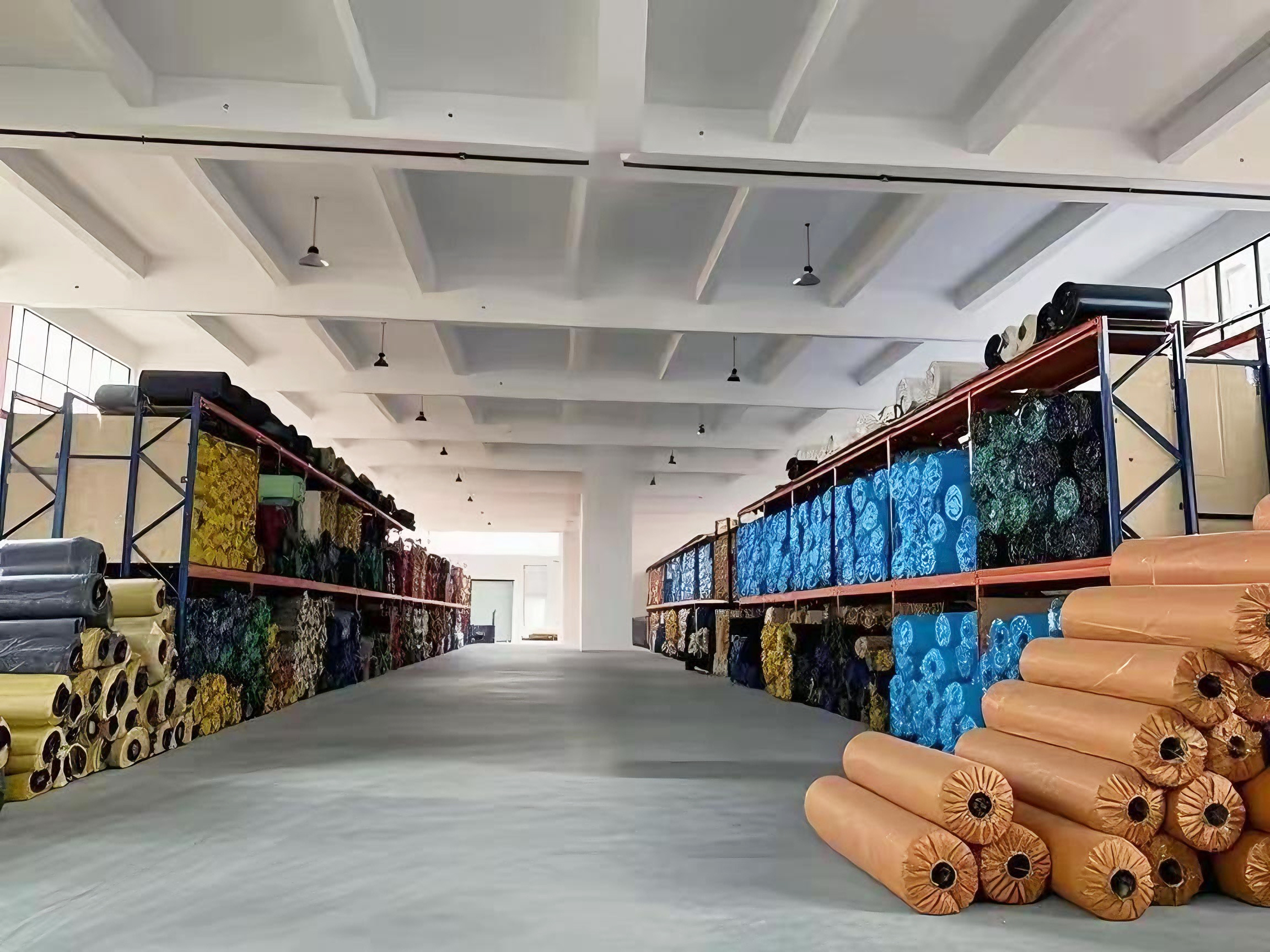
Traceability usually breaks at the last hundred metres. Check that every roll carries a batch ID, that the ID resolves to a production record, and that the packing list states the backing formulation and the model code. Confirm that repeat orders for the same code are scheduled as repeats rather than new runs, and that storage conditions in the warehouse will not distort the roll before loading.
Step 9 — Close with a written pass/fail and a repeat-order clause
Convert the walk into a one-page audit report with a pass, fail or open item for each step above. Open items belong in the purchase order as conditions: the approved specification per model code, the permitted backing formulation, the batch records to be provided with each shipment, and the tolerance for stitch count and pile height on repeat orders. An audit without a repeat-order clause protects only the first shipment.
Use Cases: Where This Checklist Changes the Decision
Importer or distributor building an approved vendor list. The audit produces a comparable file per factory: which steps are in-house, which formulation is approved, which records ship with each order. Two suppliers quoting the same model code stop looking identical once their process maps are side by side.
Football or multi-sport pitch project with a performance specification. Where the tender references a performance window such as the FIFA Quality Pro vertical ball rebound of 0.60 m to 0.85 m, the audit focus shifts to test-report traceability: method, laboratory, model code and batch, all named on the same document.
Padel or multi-site court rollout. Repeated batches across sites make stitch count and pile height the practical quality markers. The audit question is not whether the first court looks right, but whether court twelve will match court one.
Landscape, commercial and municipal delivery. Where the same code ships to several sites over several months, backing formulation documentation is the delivery-integrity control: the roll that arrives in month six has to be built the way the roll in month one was built.
Comparison Table: Audit Evidence Matrix
The matrix below sets out what to request, what to check on the floor, and what the check protects. It uses only the construction names and audit fields referenced in this guide.
| Backing formulation (as documented) | What the formulation document should state | On-site check | What the check protects |
|---|---|---|---|
| Double PP | The declared formulation name, the coating compound used, the coat-weight specification, and the roll width and length tolerance | Recipe card at the coating line, matched to the formulation on the order confirmation and on the packing list of the batch being loaded | Prevents a roll shipping under an approved model code with a backing other than the one approved |
| PP+Mesh+Latex | The declared formulation name, the mesh and latex inputs recorded against the order, and the coat-weight specification | Input stock and batch records for the mesh and latex exist for the order, and the coating line is set to the approved formulation | Prevents batch-to-batch change in construction within the same model code |
The second table applies the same logic to model-level specifications. Replace the two example codes with the codes in your own order when you run the audit.
| Model code | Specification fields that make the code auditable | Evidence to request | What the auditor compares |
|---|---|---|---|
| EM241007 | Stitch count, pile height, yarn reference, backing formulation | Approved specification sheet, retained approved sample, last three batch records, machine setting log | Recorded stitch count and pile height against the specification; current roll against the retained sample |
| EM240404 | Stitch count, pile height, yarn reference, backing formulation | Approved specification sheet, retained approved sample, last three batch records, machine setting log | Same fields, checked separately: a documented code does not make an undocumented code acceptable |
FAQ: Vertical Integration and Factory Audits
What documents should a factory audit confirm before an artificial turf order is approved?
At minimum: a written specification per model code stating stitch count, pile height, yarn reference and backing formulation; test reports that name the product, model code, test method and laboratory; and performance evidence where the application requires it. The ASTM listing for artificial turf surfaces and systems includes methods covering impact attenuation, lead content in fibers, permeability, hazardous metals in infill, abrasiveness, field sampling, surface characterization, filament bind, PFAS sampling, sieve analysis and PAH content. For football surfaces, the FIFA Quality Pro window includes a vertical ball rebound of 0.60 m to 0.85 m. The ASTM listing is not a single compliance package — applicability and current status must be checked for each standard before it enters your specification.
How can a buyer confirm that yarn extrusion and coating are really in-house?
Ask for the process map, then walk it and match each step to a machine and to a production record for one named batch. Venusturf reports 30 integrated production lines covering yarn extrusion, twisting, tufting, coating and final packaging and delivery, so the audit trail should run continuously from yarn lot to packed roll. If a step has no machine, no dosing or recipe record, or a purchase order for finished roll goods, treat that step as outsourced regardless of what the catalogue says.
Does vertical integration change how an artificial turf quotation should be read?
It changes what you can ask for. Where yarn, tufting and coating are in-house, a quotation can be structured by process step — yarn, tufting, backing and coating, packing — and the cost drivers can be discussed line by line instead of as one blended number. No public, verifiable price benchmark for artificial turf is available in the sources behind this checklist, so the practical rule is to compare the specification behind each quotation rather than the headline figure alone. Where a step is subcontracted, ask who performs it and whether the approved specification survives that handover.
How should samples be used to check batch-to-batch consistency?
Retain a signed approved sample per model code with the specification sheet attached, then audit production against it on the two fields a buyer can verify: stitch count and pile height. Ask for the last three batch records for the code you are buying — for example EM241007 and EM240404 — and confirm that the recorded values sit inside the specification. Finally, check that the backing formulation on the batch record matches the formulation in your purchase order. A sample without a code, and a code without a written specification, cannot support a repeat order.
What lead-time signals should a buyer look for during a factory audit?
Look at the queue on the floor rather than the promise in the email. Venusturf reports an annual output of 106,000 units and an export ratio of 80%, which means production is planned against a largely export order book; ask how that book is sequenced and where your order sits in it. Confirm that tufting, coating, packing and loading are scheduled on the same plan, and that repeat orders for the same code are planned as repeats. Then validate the plan with a first order measured against the promised interval. For a sample set, a specification review or a quotation structured by process step, contact Venusturf at info@venusturf.com.
Conclusion
Vertical integration is not a marketing category; it is a set of records that either exist or do not. A supplier that extrudes yarn, tufts it and coats its own backing can hand you a continuous trail from yarn lot to packed roll, and that trail is what makes stitch count, pile height and backing formulation enforceable in a repeat order. A supplier that assembles finished roll goods can offer samples, prices and certificates, but not that trail.
Run the audit in the order set out above: process map, extrusion and dosing, tufting against the model specification, coating against the written formulation, model codes with measurable fields, three batch records per code, test reports that name the method, warehouse traceability, and a written pass/fail with a repeat-order clause. Ten pages of documentation and one day on the floor will tell you more about the second container than any sample box can.
Audit dossier, samples and process-step quotations
Venusturf (Wuxi Venus Turf Co., Ltd.) supplies artificial turf for sports, golf, landscape and commercial projects and can provide model-level specification sheets, retained samples and batch documentation for audit review. Request the company catalogue and product documentation here: Venusturf product catalogue (PDF).
Email: info@venusturf.com · Tel: +86-189-6171-8197 · WhatsApp: +8618961718197 · Website: www.vtsyntheticturf.com