A Guide to Sports Turf Certifications and Safety Standards for B2B Buyers
Date: 2026-10-20 Categories: Industry News Hits: 830
A Guide to Sports Turf Certifications and Safety Standards for B2B Buyers
A sports turf compliance review rests on four document families: substance compliance such as REACH SVHC test reports, surface performance reports against a named standard (for example FIFA Quality / FIFA Quality Pro for football turf, EN 15330-1 in Europe or DIN 18035-7 in Germany), fire performance test reports for the carpet and backing, and impact attenuation data for the installed system. Each document is valid only for the model, construction and test standard it names. That is why the practical audit question is not “are you certified?” but “does this report cover the exact turf I am buying?”
Why “Are You Certified?” Is the Wrong Audit Question
Certification in the artificial turf trade is not a company-level badge. It is a set of test reports issued by a laboratory against a defined product sample, using a defined standard, on a defined date. A supplier can hold dozens of valid reports and still leave a procurement manager exposed if none of them describes the construction actually quoted for the project.
In supplier audits, document packages usually fail for one of four reasons:
- Model mismatch. The report names a different turf model than the one in the quotation. A report for one 45 mm landscape product does not automatically describe a 50 mm football surface or a 15 mm golf surface.
- Scope mismatch. The test was run on the yarn only, not the finished carpet; or on the carpet without the backing that will be supplied; or on a backing system that differs from the quoted one.
- Standard ambiguity. The document says “tested to European standards” without naming EN 15330-1, or claims performance without stating which parameter was measured and at what sample age.
- Version drift. The standard cited in the report has since been revised, or the test predates the current yarn or backing formulation.
None of these failures are exotic. They are the normal consequence of treating compliance as a marketing document rather than a specification document. The fix is procedural: lock the specification first, then require documentation that matches it line by line.
Industry Background: Why Compliance Pressure Is Rising
Artificial turf is no longer a niche surface. Grand View Research valued the global artificial turf market at USD 7.3 billion in 2025 and projects it to reach USD 13.7 billion by 2033, with the Asia-Pacific region holding the largest revenue share at 32.2% in 2025. Polyethylene dominated the material mix with a 63.1% revenue share in the same year, and sports applications accounted for approximately 63.1% of global market share. Mordor Intelligence reports that China alone has more than 15,000 synthetic sports fields installed, representing 52% of regional installations.
Two structural forces make documentation stricter rather than looser. First, replacement demand: AMI Plastics recorded that the replacement segment reached 41% of total sports turf demand in 2023, approximately 70 million square metres. Replacement decisions are usually made by owners who already operate a field and who therefore compare the new carpet against a known baseline, performance report against performance report. Second, the buyer base has professionalised. Facility operators, main contractors and procurement departments now ask for the same evidence they would ask for on any other construction component.
The standards landscape buyers will meet most often is relatively small and specific:
- FIFA Quality Programme for Football Turf provides “FIFA Quality” and “FIFA Quality Pro” certifications covering performance and safety for football turf.
- EN 15330-1 governs synthetic turf surfaces in Europe; DIN 18035-7 is the corresponding German standard.
- REACH Regulation (EC) No 1907/2006 is the substance-compliance baseline for European-bound material, typically evidenced through SVHC screening reports.
Fire performance and impact attenuation are separate evidence streams. They are tested differently from surface performance, and they are frequently the two documents a buyer forgets to request until the installation contractor asks for them.
How Turf Construction Determines Which Documents Apply
Compliance is a property of a construction, not of a category. Change the yarn, the backing or the pile height and the tested object has changed. The three variables below are the ones that most often decide whether a supplier's document package is relevant to a given project.
Yarn composition: PE, PP and what the report actually covers
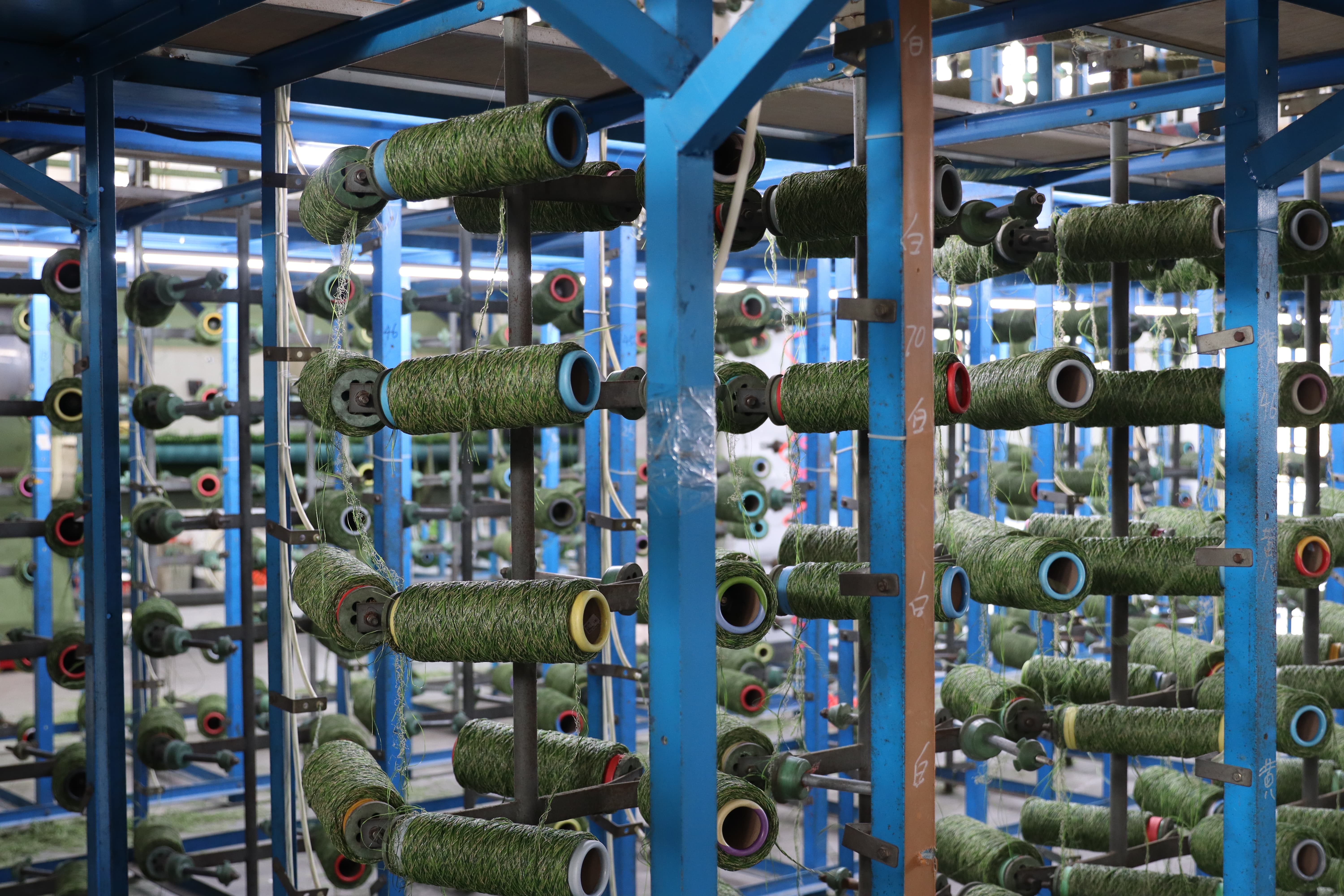
Most sports surfaces use polyethylene (PE) as the primary playing yarn, often combined with polypropylene (PP). Polyethylene's 63.1% revenue share of the material mix in 2025 reflects that dominance. In practice, a football or golf carpet is usually a blend in structure even when it is described simply as “PE turf” — for example, a U-shape monofil PE yarn combined with a curled PP yarn, which is the documented construction of Venus Turf's Artificial Turf EM241007.
For a buyer, the consequence is straightforward: a substance compliance report should be tied to the finished carpet made from the yarns actually supplied. When a supplier switches yarn supplier, adds a colour batch or changes the curled PP component, the honest answer is that the substance report needs to be confirmed against the new bill of materials, not assumed to carry over.
Backing construction: PP + mesh + SBR latex versus double PP + PU glue
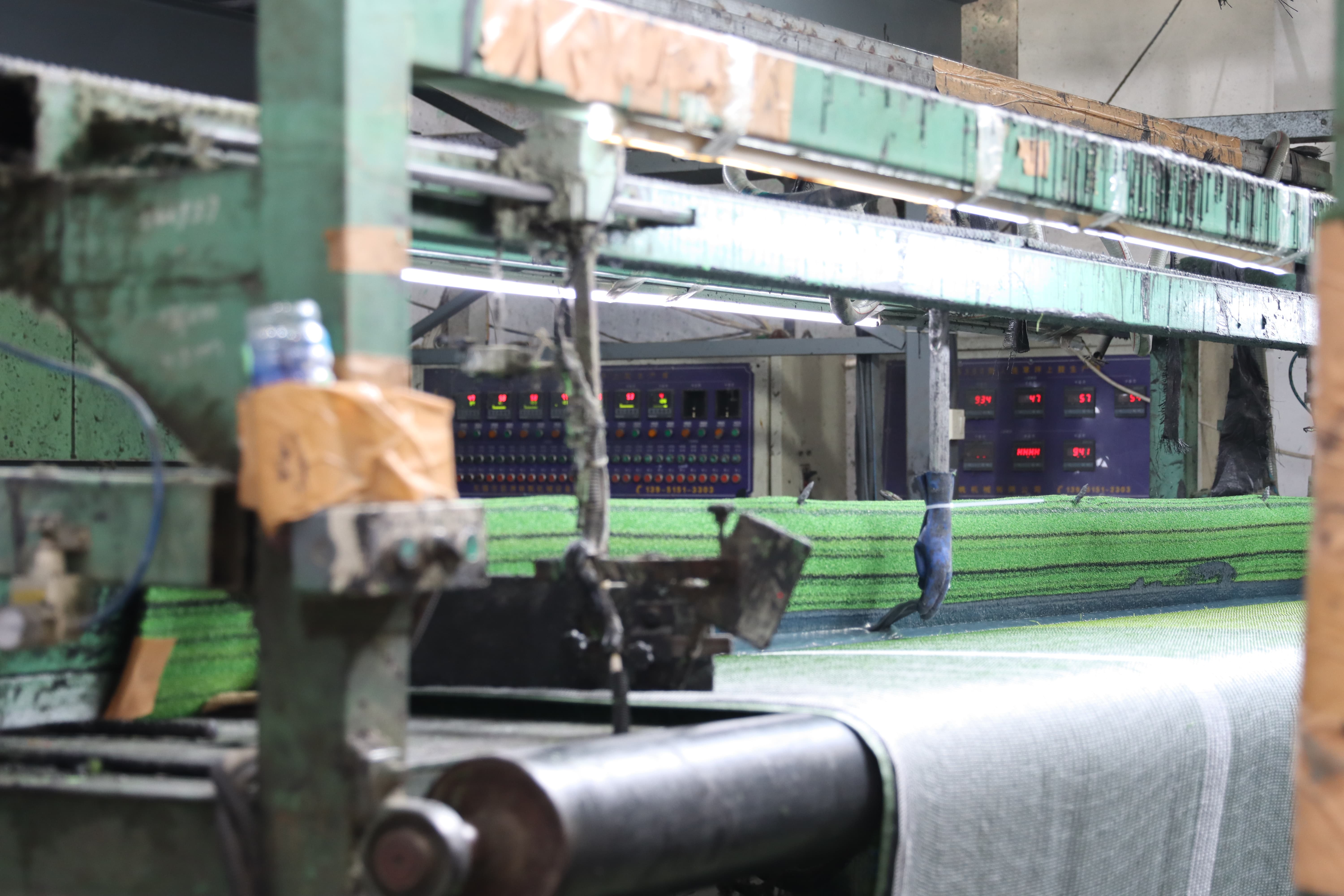
Backing is the part of a turf system buyers most often overlook, and it is the part most likely to sit outside a certificate's scope. Two constructions dominate sports and landscape supply: a PP + mesh + SBR latex backing, common on sports carpets where dimensional stability and cost balance matter, and a double PP + PU glue backing, which is the documented backing of the EM241007 construction.
Because the backing contains a binder, it introduces its own substance and fire behaviour. A report issued on a carpet with an SBR latex backing does not automatically describe the same carpet with a PU glue backing, and vice versa. Buyers auditing a supplier should ask a direct question: “Which backing was in the sample that was tested, and is that the backing quoted to me?”
Pile height: 50 mm football surfaces versus 15 mm golf surfaces
Pile height separates product families and, with them, the evidence required. A football pitch carpet in the 50 mm range is normally specified against football surface performance criteria, which is where FIFA Quality and FIFA Quality Pro, EN 15330-1 and DIN 18035-7 enter the conversation. A golf surface at 15 mm, used for putting and approach areas, is specified around different performance expectations — ball roll, surface consistency and playability — and the project specification, rather than a single universal football certificate, usually carries those criteria.
Pile height also changes the installed system. A 50 mm carpet with an infill and a shockpad behaves differently under impact than a 15 mm carpet used without infill. That is the reason impact attenuation is documented at system level, not at carpet level.
Impact attenuation and fire performance: the two documents buyers forget
Impact attenuation is measured on the installed system, including any shockpad, and is normally reported as a separate document from the carpet specification. Fire performance is likewise tested on the carpet and, where the specification requires it, on the complete system. Neither should be inferred from a substance report or from a performance certificate for a different parameter.
A practical instruction for procurement: list impact and fire as separate line items in the document register, each with its own model reference, test date and issuing laboratory. Where the project specification names a required performance level, ask the supplier to confirm that the report was generated against that level — not simply that a test exists.
What a manufacturer can document, and what it cannot
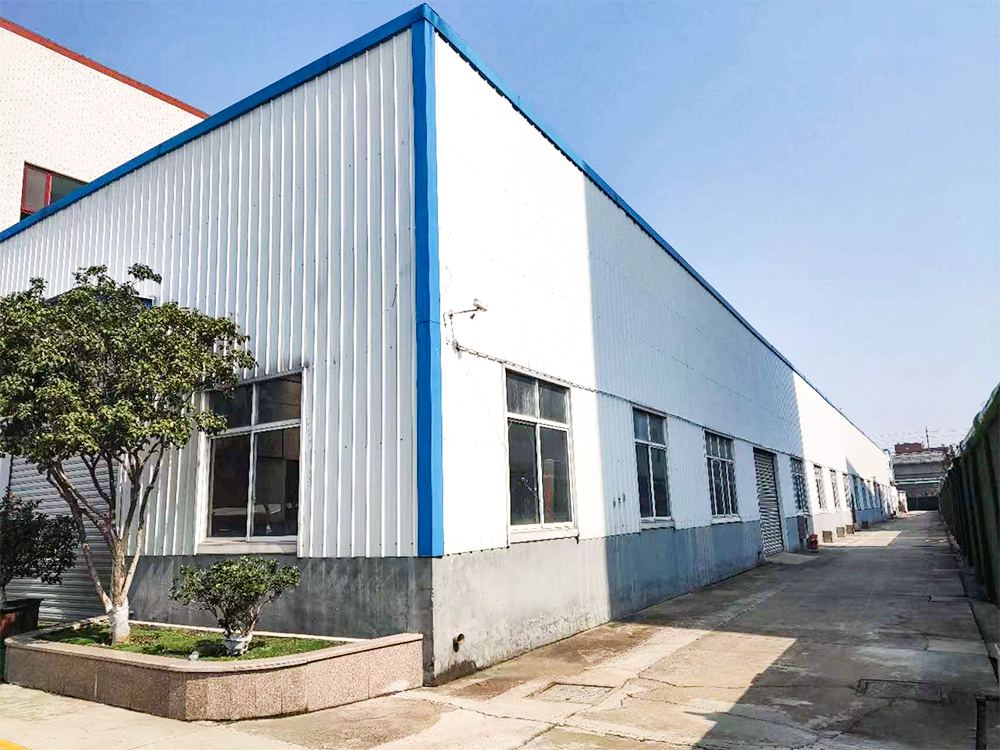
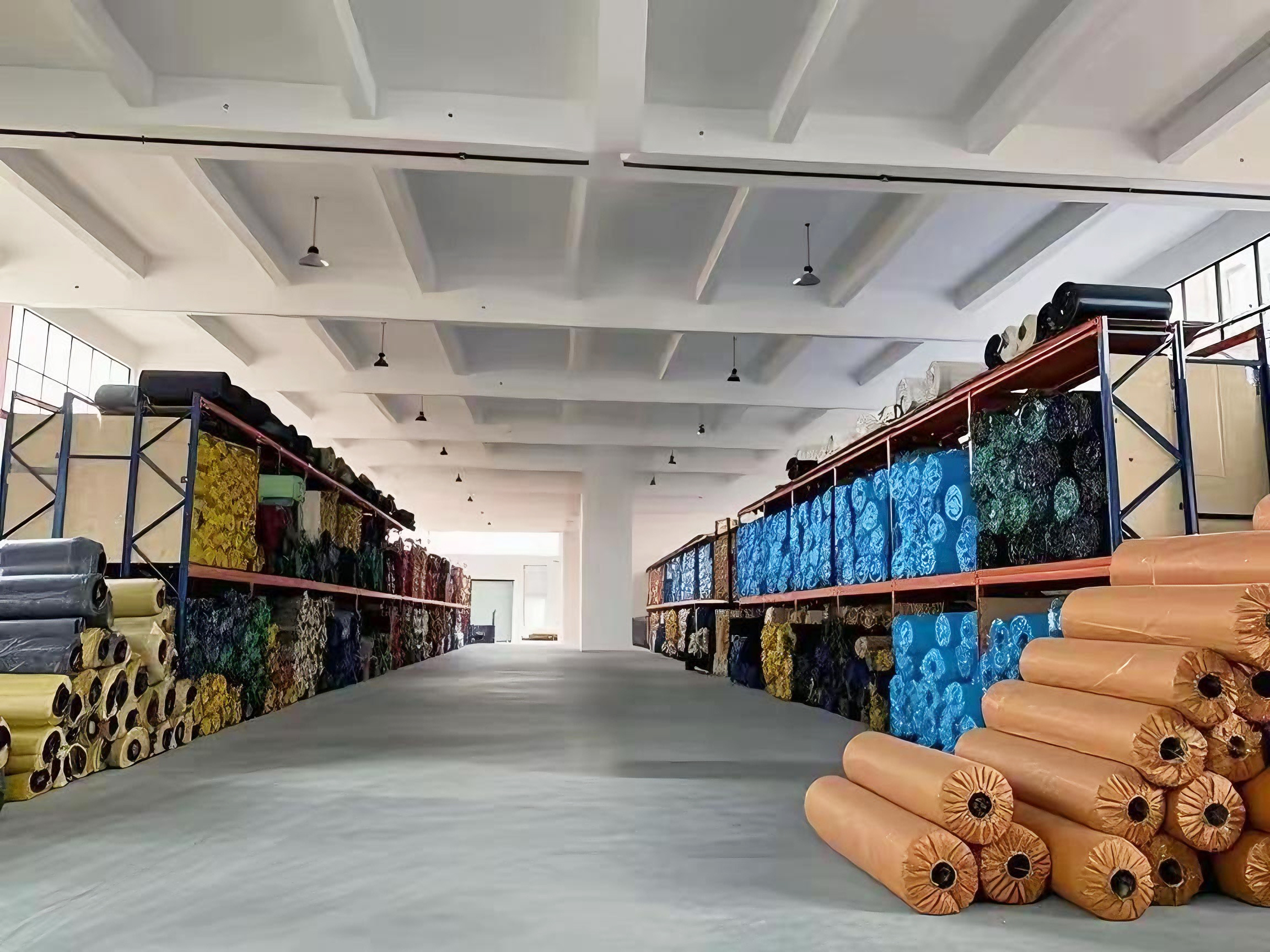
Venus Turf (Wuxi Venus Turf Co., Ltd.) is an artificial turf manufacturer integrating R&D, production and sales, operating 30 integrated production lines that cover yarn extrusion, twisting, tufting, coating and final packaging. The company exports to global markets, with an export ratio of 80%.
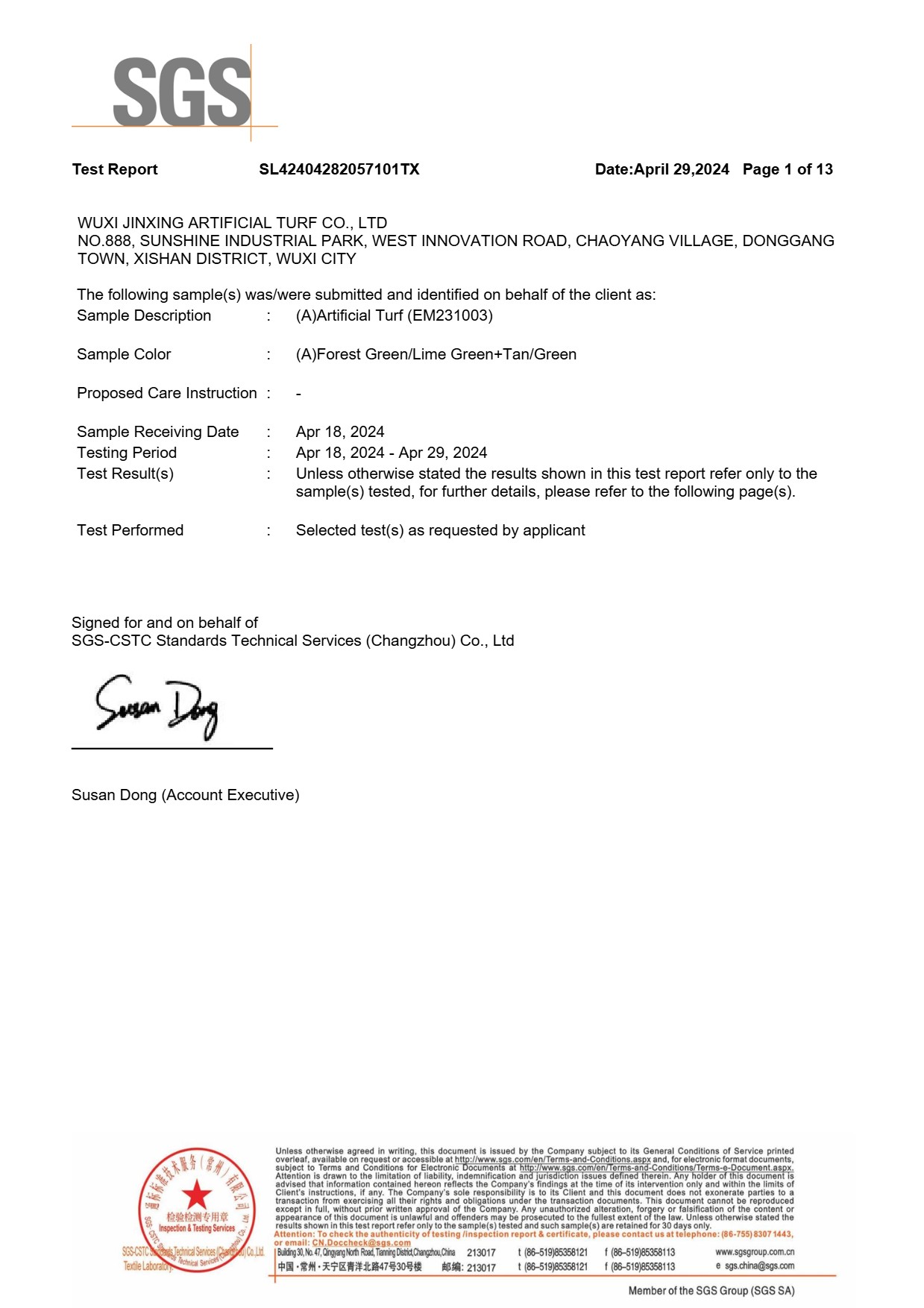
Its documented compliance evidence includes an SGS-issued REACH SVHC 240 Substances Test Report, certificate number SL42404282057101TX, issued 29 April 2024 under REACH Regulation (EC) No 1907/2006, covering artificial turf and linked to product model EM241007. That is a specific, verifiable document — and it is exactly the kind of evidence a buyer should insist on: named laboratory, named certificate, named model, named standard.
Equally important is what such a report does not do. It does not certify a football pitch to FIFA Quality Pro, and it does not replace a fire performance report. Any supplier who presents one document as a blanket proof of all compliance is telling the buyer something useful about how the audit will go.
Step-by-Step: Running a Compliance-Focused Supplier Audit
The audit sequence below is designed so that each step either confirms or eliminates a document before commercial commitments are made.
- Lock the specification sheet first. Record pile height, yarn composition, gauge, stitch density, backing type and colour, plus the intended application. For reference, the documented EM241007 specification is a 45 mm four-colour carpet, 3/8″ gauge, U-shape monofil PE with curled PP yarn, 150 stitches/m and 15,750 stitches/m², on a double PP + PU glue backing. Every document you receive afterwards is checked against this sheet.
- Request a document register, not a folder of PDFs. Ask for one table listing each report: title, certificate number, issuing laboratory, standard, issue date, product model and backing covered.
- Match model and scope. Reject any report whose model or backing differs from the quotation unless the supplier provides a written statement of equivalence covering the difference.
- Verify issuer and validity. Confirm that the issuing body is independent and identifiable, that the certificate number is traceable, and that the report is current relative to the standard version it cites.
- Confirm acceptance testing and commercial terms. Venus Turf's purchasing terms list pre-shipment test as the acceptance criterion, MOQ 1,000 m², FOB delivery terms, and payment of 30% TT as deposit with 70% TT before delivery. Acceptance language in the purchase order should name the test and the document set that must accompany the shipment.
- Write compliance into the order. Attach the specification sheet and the document register as annexes so that “compliant” is defined by reference, not by recollection.
| Document | What it evidences | Issuer type in the verified set | Question to ask |
|---|---|---|---|
| REACH SVHC substances test report | Substance screening of the finished carpet against REACH Regulation (EC) No 1907/2006 | Independent testing laboratory (e.g., SGS) | Which model and backing were tested, and on what date? |
| Surface performance report | Performance and safety of the playing surface against the standard named in the project specification | Accredited test institute | Which standard and parameter were tested — FIFA Quality / FIFA Quality Pro, EN 15330-1, DIN 18035-7 or another? |
| Fire performance test report | Reaction to fire of the carpet and, where required, the complete system | Independent testing laboratory | Was the tested sample the quoted backing construction? |
| Impact attenuation data | Behaviour of the installed system, including shockpad, under impact | Testing laboratory or system supplier | Does the data describe the full system as installed on this project? |
Use Cases: Where the Document Set Changes
Football and multi-sport pitches
Football surfaces at approximately 50 mm pile height usually sit behind the most formal documentation set, because pitch owners frequently reference FIFA Quality or FIFA Quality Pro and, in Europe, EN 15330-1 or DIN 18035-7. The document register for these projects should include the performance report, the substance report on the finished carpet and the impact data for the installed system with its shockpad.
Golf surfaces
Golf installations at approximately 15 mm pile height shift the emphasis from football performance criteria to surface consistency and playability, and they often run through a different procurement route. A documented case is a golf course installation in the Philippines for an individual client, delivered as 10 rolls of Artificial Turf EM241007 and in service for 3 years, with reported outcomes covering athletic performance, visual aesthetics and competitive fairness, and low maintenance as the operational highlight. For a buyer, the transferable lesson is documentation continuity: the same model, the same backing and the same report references were maintained from order to delivery.
Replacement and retrofit projects
With replacement accounting for 41% of sports turf demand in 2023, many audits now begin with an existing field rather than a greenfield site. In these projects, the previous carpet gives the buyer a baseline, and the audit should focus on whether the new construction improves or at least preserves the documented performance and safety characteristics of the surface being replaced.
Comparison: Football Grass and Golf Grass Documentation Profiles
The table below compares the two product categories referenced in this guide. Where a category attribute is not documented for a specific model, the buyer's action is to request it — not to assume it.
| Attribute | Football Grass (EM250105) | Golf Grass (Putt 40) | Documented reference: Artificial Turf EM241007 |
|---|---|---|---|
| Primary application | Football and sports pitch surfaces | Golf surfaces, including putting and approach areas | Documented for golf course and landscape-type applications |
| Typical pile height | Approximately 50 mm | Approximately 15 mm | 45 mm |
| Yarn composition | PE / PP | PE / PP | U-shape monofil PE with curled PP |
| Backing construction | PP + mesh + SBR latex (common sports construction) | PP + mesh + SBR latex (common sports construction) | Double PP + PU glue |
| Substance compliance evidence | REACH SVHC report naming the finished carpet | REACH SVHC report naming the finished carpet | SGS report SL42404282057101TX, issued 29 April 2024 |
| Surface performance evidence | Report against FIFA Quality / FIFA Quality Pro, EN 15330-1 or DIN 18035-7 as named in the project specification | Report against the criteria defined in the project specification | Confirm per project specification |
| Fire and impact evidence | Request as separate documents | Request as separate documents | Request as separate documents |
Two conclusions follow from the comparison. First, the same four document families apply to both categories; what changes is the performance standard the buyer cites and the way the system is installed. Second, backings differ between constructions inside a single supplier's range, so a document issued for one backing should not be assumed to cover another.
Frequently Asked Questions
Which certifications should a buyer request before approving an artificial turf supplier?
Request four document sets: a substance compliance report such as a REACH SVHC test report naming the finished carpet model; a surface performance report against the standard named in the project specification, such as FIFA Quality or FIFA Quality Pro for football turf, EN 15330-1 in Europe or DIN 18035-7 in Germany; a fire performance test report for the carpet and, where required, the backing system; and impact attenuation data for the installed system. Each document should name the product model, the test standard, the laboratory and the issue date.
Can specifications be customized without invalidating the compliance documents?
Customization changes the tested object, so documentation has to follow it. Venus Turf provides OEM production services and customization covering appearance, specifications, performance and functionality, and the base and installation system. When yarn, backing or pile height changes, the buyer should confirm that substance, fire and performance reports are reissued or explicitly extended to the new construction rather than carried over from an earlier order.
What drives the cost of a compliant sports turf order?
Compliance cost is driven mainly by how much testing the project requires and how far the construction departs from a standard build. Venus Turf's stated commercial terms are an MOQ of 1,000 m² and FOB delivery terms, with payment of 30% TT as deposit and 70% TT before delivery. Test scope, backing type and pile height typically move unit cost more than a supplier's marketing positioning does.
Can a sample be tested before the full order is placed?
Pre-shipment test is listed as the acceptance criterion in Venus Turf's purchasing terms, and quality control is described as 100% test, with remote technical support after delivery. That structure allows a buyer to define sample verification and pre-shipment inspection as acceptance conditions in the order, before the balance payment is released.
What lead time should a buyer plan for a compliant order?
Venus Turf quotes a lead time of 30-45 days against a monthly capacity of 50,000 m². Testing and document review should be scheduled inside that window rather than after it. Buyers who need a quotation, a specification-matched sample or the full product catalogue can request them directly from the Venusturf team at info@venusturf.com or via WhatsApp on +8618961718197.
Conclusion
Sports turf compliance is a matching exercise between three things: the construction you are buying, the standard your project requires, and the document that proves it. Buyers who lock the specification first, request a document register instead of a folder, and check model, backing and test scope line by line will find that most of the risk disappears before the purchase order is signed.
The verified evidence set is a useful benchmark. A REACH SVHC 240 Substances Test Report issued by SGS under certificate SL42404282057101TX shows what a usable document looks like: named laboratory, named standard, named model, named date. Fire performance, impact attenuation and surface performance reports should be held to the same standard of specificity — and where a supplier cannot produce a matching document, the right response is to ask for the gap to be closed, not to accept a substitute.
Next step for procurement teams
Venusturf supplies sports, golf and landscape artificial turf with OEM production and customization across appearance, specifications, performance and the base and installation system. To support a supplier audit, request the product catalogue, a specification-matched sample or a quotation with the document register attached.
Download the catalogue: Venusturf product brochure (PDF)
Website: www.vtsyntheticturf.com
Email: info@venusturf.com | Tel: +86-189-6171-8197
Address: No. 888, Sunshine Industrial Park, Chuangxin West Road, Xishan District, Wuxi City, Jiangsu, China