Matching Artificial Turf to Your Next Project: A Scenario-Based Selection Guide for Sports, Golf, and Landscape Buyers
Date: 2026-08-27 Categories: Industry News Hits: 390
Matching Artificial Turf to Your Next Project: A Scenario-Based Selection Guide for Sports, Golf, and Landscape Buyers
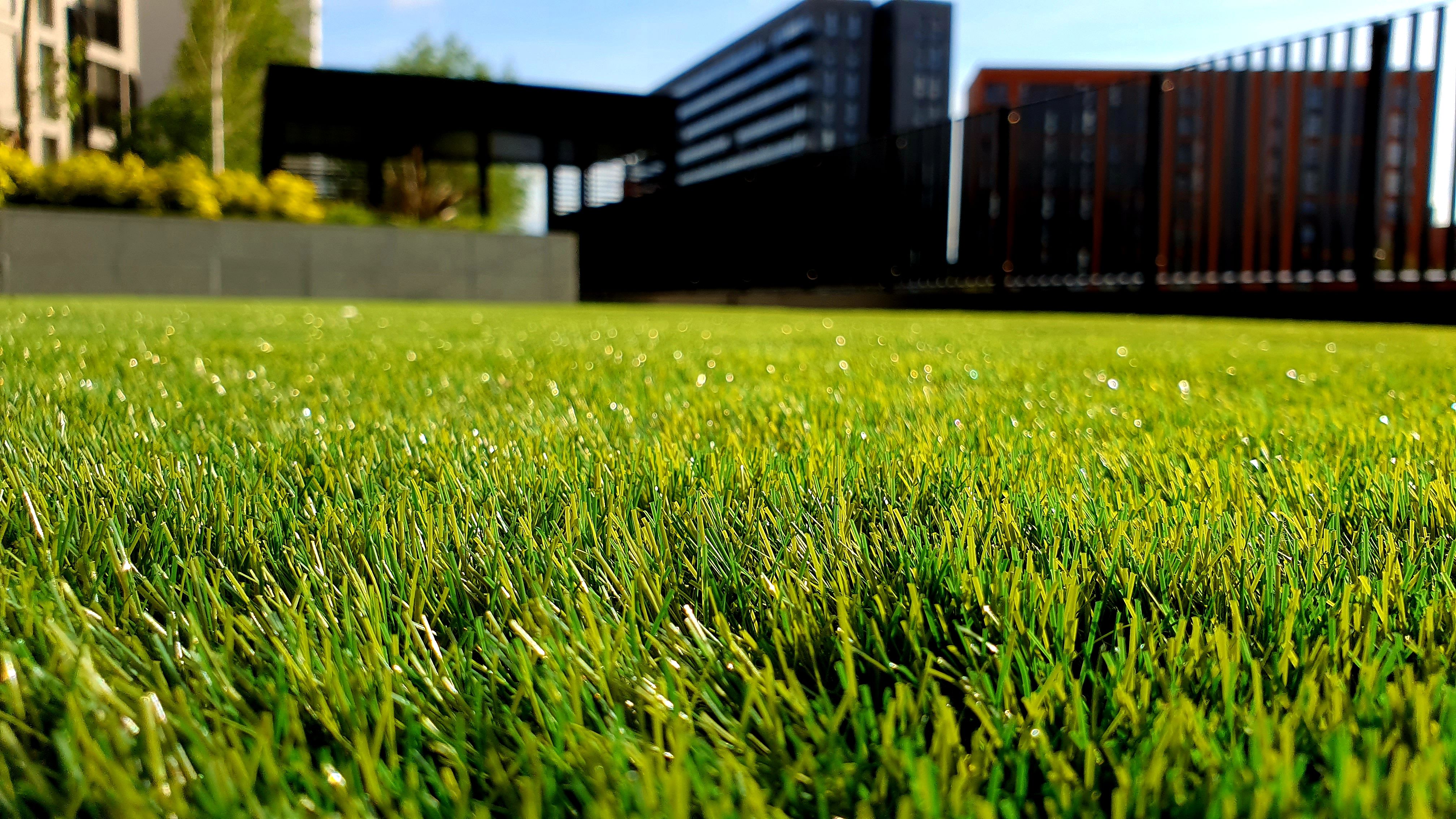
Cover image: Artificial turf application in landscape greening projects.
Choosing artificial turf is rarely about finding a single "best" product. In practice, the right choice depends on the project scenario: a football field demands shock absorption, ball roll consistency, and player safety; a golf course requires dense, low-profile putting surfaces; a backyard or pet area prioritizes drainage, ease of cleaning, and comfort underfoot; a commercial space needs a tidy appearance that can handle continuous foot traffic.
This guide is written for project owners, contractors, facility managers, and procurement teams who are comparing artificial turf options for a specific application. It explains how to translate project conditions into turf specifications, how to evaluate suppliers, and what to prepare before placing an order.
Why Scenario Mapping Matters in Artificial Turf Procurement
The global artificial turf market was valued at USD 7.3 billion in 2025 and is projected to reach USD 13.7 billion by 2033, according to Grand View Research. The sports application segment accounted for approximately 63.1% of the global market share in 2025. Yet within that segment, the technical requirements vary significantly: a 50mm football surface and a 15mm golf putting green share little in common beyond the category name.
Scenario-based selection reduces the risk of specifying the wrong product. It forces buyers to define the physical conditions, user expectations, regulatory requirements, and maintenance constraints before comparing price or samples.
Defining the Problem: "What Will This Turf Actually Be Used For?"
Before contacting any supplier, answer five questions:
- What type of activity will take place on the surface?
- How many hours per day or week will the surface be used?
- What is the local climate and drainage situation?
- Who are the end users: athletes, pets, children, customers, or residents?
- What maintenance resources are available after installation?
These answers determine the relevant specifications: pile height, yarn type, density, gauge, backing system, and infill requirements.
Artificial Turf by Application: A Venusturf Product Overview
Wuxi Venus Turf Co., Ltd. (Venusturf) is a professional artificial turf manufacturer integrating R&D, production, and sales. The company operates 30 integrated production lines and oversees the entire manufacturing process from yarn extrusion, twisting, tufting, and coating to final packaging and delivery. Its product range covers sports grass, golf grass, landscape grass, pet grass, commercial grass, and residential grass.
The following table compares representative Venusturf products across application scenarios. Specifications are drawn from the manufacturer's published product data.
Venusturf Product Portfolio by Scenario
| Application | Model | Pile Height | Yarn | Density | Backing |
|---|---|---|---|---|---|
| Football / Sports Field | EM250105 | 50mm | U with Spine shape Monofil PE | 180 stitches/m; 11,340 stitches/sqm | PP + Mesh + SBR Latex |
| Golf Putting Green | Putt 40 | 15mm | Curled PE | 300 stitches/m; 63,000 stitches/sqm | Double PP + PU glue |
| Pet Area | EM24081501-1 | 35mm | S shape Monofil PE + Curled PP | 100 stitches/m; 10,500 stitches/sqm | Double PP + Net + Pet glue |
| Commercial Space | EM24071902 | 25mm | U shape Monofil PE + Curled PP | 180 stitches/m; 18,900 stitches/sqm | PP + Net + Latex |
| Residential Garden | EM240404 | 30mm | C shape Monofil PE + Curled PP | 140 stitches/m; 14,700 stitches/sqm | PP + Mesh + SBR Latex |
| Residential / Multi-Purpose | EM241007 | 45mm | U shape with spine Monofil PE + Curled PP | 150 stitches/m; 15,750 stitches/sqm | Double PP + PU glue |
Scenario 1: Sports Fields and Athletics Facilities
Primary Requirements
In sports and athletics applications, artificial turf must provide standardized athletic performance and ensure athlete safety. These two requirements drive most specification decisions.
Standardized performance means predictable ball behavior, consistent surface firmness, and uniform traction across the playing area. Athlete safety means adequate shock absorption, controlled joint loading, and stable footing, especially for high-impact sports.
Recommended Specification Logic
For football and multi-sport fields, a longer pile height (around 50mm) combined with a dense monofilament PE yarn structure is commonly used to replicate the playing characteristics of natural grass while improving durability. The Venusturf EM250105 football grass model uses a 50mm pile height, four-color yarn, 5/8" gauge, and 11,340 stitches per square meter. This specification profile supports ball roll stability and energy restitution for competitive play.
Synthetic sports fields are widely installed in China: according to Mordor Intelligence, China has over 15,000 synthetic sports fields installed, accounting for 52% of regional installations in Asia-Pacific. The scale of adoption makes scenario-specific specification particularly important: a school training pitch, a professional club facility, and a multi-purpose community field each need a different construction standard.
For sports projects, buyers should also check whether the surface needs to meet recognized standards such as the FIFA Quality Programme for Football Turf, which provides "FIFA Quality" and "FIFA Quality Pro" certifications for performance and safety. These standards function as an independent benchmark; not every project requires FIFA certification, but a supplier should be able to explain how its product would be tested against relevant requirements.
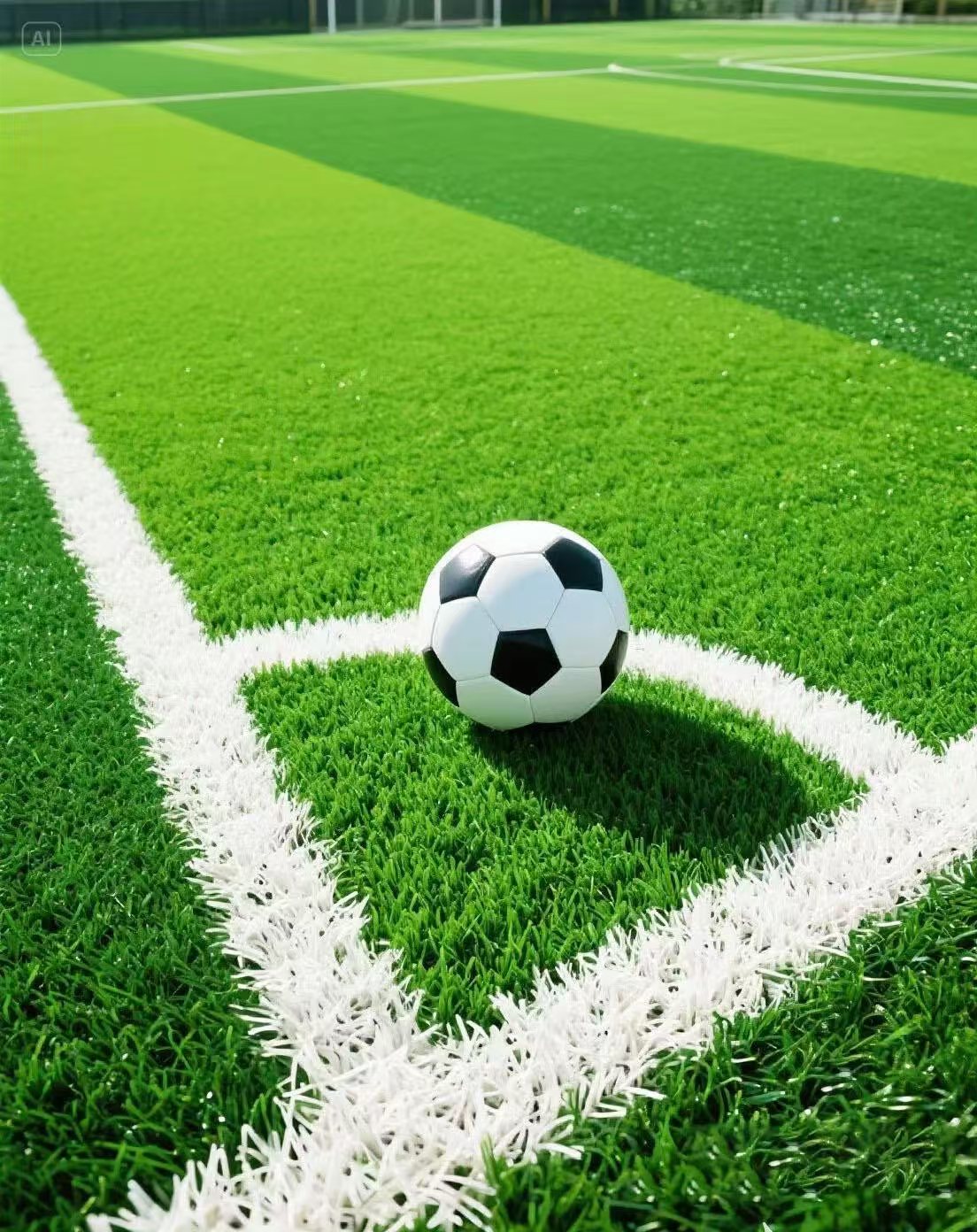
Football field application: Dense polyethylene yarn and stable backing support ball roll and player traction.
Scenario 2: Golf Courses and Practice Areas
Primary Requirements
Golf turf demands visual consistency, precise ball behavior, and low maintenance. Unlike natural grass, which requires watering, mowing, and regular turf management, artificial golf grass is installed and used with minimal ongoing upkeep. In a documented Venusturf case in the Philippines, an individual client used 10 rolls of artificial turf for a golf course application over a three-year period; the outcome highlighted performance, visual aesthetics, competitive fairness, and low maintenance.
Recommended Specification Logic
For putting greens, a short pile height with a very high stitch density creates the smooth, true-rolling surface required for the short game. The Venusturf Putt 40 golf grass model uses a 15mm pile height, two-color yarn, 3/16" gauge, and 63,000 stitches per square meter. The curl in the PE yarn helps the surface hold its shape under repeated use.
For golf course landscaping beyond the putting green, hybrid solutions may combine longer landscape grass around tees, bunker edges, and rough areas with shorter putting surfaces. Because golf projects are often judged visually, color consistency and even texture matter for the final result.
Scenario 3: Landscape, Residential, and Commercial Spaces
Primary Requirements
In landscape and residential applications, artificial turf replaces natural grass and reduces maintenance costs. It is also designed to be easy to clean. These functional benefits matter for homeowners, commercial property managers, and landscaping contractors who want a green, usable surface without irrigation, mowing, or pesticide treatments.
Recommended Specification Logic
Residential and commercial turf typically uses a medium pile height in the 25-45mm range. The choice depends on the desired look and the intensity of use:
- Residential garden: A 30mm to 45mm pile height offers a soft, natural appearance while remaining stable under normal family activity. The Venusturf EM240404 (30mm, C shape Monofil PE + Curled PP) and EM241007 (45mm, U shape with spine Monofil PE + Curled PP) are representative options.
- Commercial decoration: A shorter pile height around 25mm creates a cleaner, more formal look and withstands continuous foot traffic. The Venusturf EM24071902 commercial grass uses a 25mm pile height and a density of 18,900 stitches per square meter.
- Balcony or decorative areas: Lower-traffic installations can prioritize appearance and comfort, with specification choices driven by the visual finish rather than heavy-duty performance.
Scenario 4: Pet Areas
Primary Requirements
Pet turf must handle urine drainage, resist digging, clean easily, and remain comfortable for animals. The functional priorities differ from sports turf: drainage rate and odor resistance are as important as pile appearance.
Recommended Specification Logic
The Venusturf EM24081501-1 pet grass model uses a 35mm pile height, S shape Monofil PE + Curled PP yarn, and a special backing system: double PP + net + pet glue. The backing is designed for pet applications, with a structure that supports drainage and cleaning.
For pet areas, buyers should verify that the supplier's backing system is appropriate for the intended use. Pet glue backing differs from standard latex backing and is selected specifically for its resistance to moisture and odor penetration.
Customization and Supplier Capability: What to Ask Before Ordering
Venusturf's application scenarios include special requirements: customizable pile height, color, density, and material to meet specific project needs. This is a common expectation for commercial and sports projects, where the final turf must match a brand guideline, a specific field dimension, or a regional preference.
Venusturf's production capabilities include OEM manufacturing with customization covering appearance, specifications, performance and functionality, base, and installation system. The monthly production capacity is 50,000 m², with a lead time of 30-45 days and a minimum order quantity of 1,000㎡. All products undergo 100% testing before shipment.
Supplier Evaluation Checklist
- Can the supplier provide full specification sheets for each turf model?
- Does the supplier own its production lines, or sub-contract manufacturing? Venusturf operates 30 integrated production lines from yarn extrusion to packaging.
- Can the supplier customize pile height, color, density, and backing material?
- What is the minimum order quantity and lead time? Venusturf's MOQ is 1,000㎡ and standard lead time is 30-45 days.
- What testing equipment is used for quality control? Venusturf uses a water bath, spectral light box, UV climate resistance test chamber, tensile tester, moisture tester, intelligent high-transmission electron microscope, and vernier caliper.
- What export experience does the supplier have? Venusturf exports approximately 80% of its output to global markets.
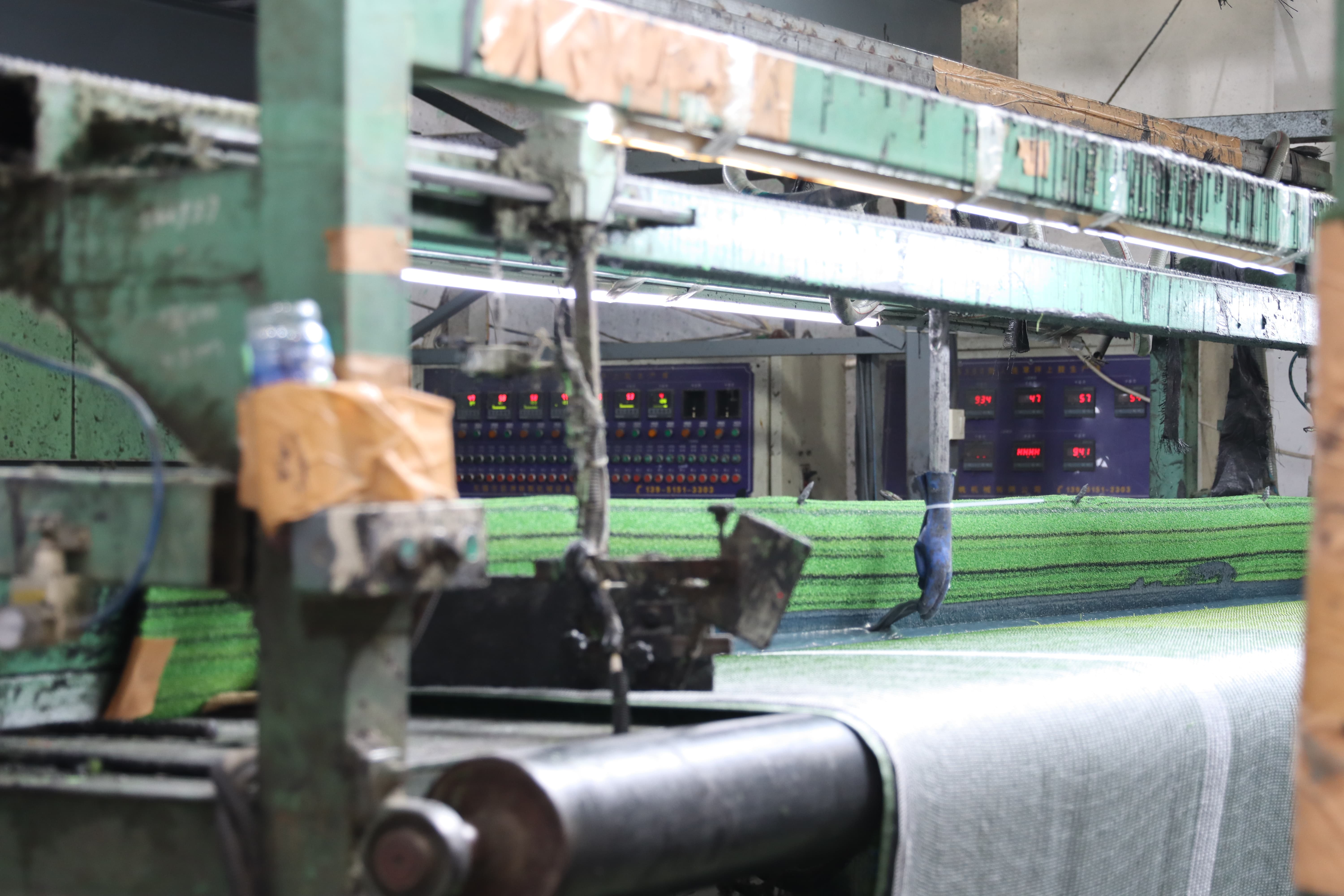
Production process: Backing coating is a key quality-control stage in artificial turf manufacturing.
Decision Framework: Selecting the Right Turf Specification
The table below summarizes how a buyer's project conditions translate into turf specifications. Its purpose is to structure the decision, not to replace a professional supplier consultation.
| Project Scenario | Primary Functional Need | Recommended Pile Height Range | Key Specification Focus |
|---|---|---|---|
| Football / Multi-Sport | Standardized athletic performance; athlete safety | 50mm and above | Yarn structure, density, shock absorption, FIFA-related testing |
| Golf Putting Green | Ball roll consistency; visual quality | 15mm typical | High stitch density, curled yarn, flat surface |
| Residential Garden | Natural appearance; low maintenance | 30-45mm | Color blend, softness, backing stability |
| Pet Area | Drainage; easy cleaning; durability | 30-40mm | Pet-specific backing, moisture resistance, yarn resilience |
| Commercial / Decorative | Tidy appearance; foot traffic resistance | 20-30mm | Density, formal finish, cleanability |
Industry Context and Market Considerations
Polyethylene is the dominant material in the artificial turf market, accounting for a 63.1% revenue share in 2025 according to Grand View Research. Most Venusturf models use PE yarn in combination with PP backing components, which aligns with the market's general preference for PE due to its softness, resilience, and UV resistance.
The replacement segment of the sports turf market reached 41% of total demand in 2023, approximately 70 million square meters, according to AMI Plastics. This indicates that a significant share of procurement is for replacing existing turf rather than new installations. For replacement projects, buyers need to assess the existing base conditions, confirm whether the old surface has been removed, and match the new turf to the site's dimensional and drainage constraints.
Regional standard requirements also matter. European standards for synthetic turf are governed by EN 15330-1, and German standards by DIN 18035-7. Buyers selling into European markets, or installing turf in Europe, should ask how the product relates to these standards.
Case Example: Golf Turf in the Philippines
A documented Venusturf case involved an individual client in the Philippines who ordered 10 rolls of artificial turf for a golf course application. The turf remained in service for three years. The case outcome emphasized athletic performance, visual aesthetics, competitive fairness, and low maintenance. The low-maintenance characteristic is often the deciding factor for golf clients who want a premium playing surface without continuous turf management.
This case illustrates a recurring buyer pattern: the client did not choose a single "best" turf on the market. Instead, they selected a turf whose specification matched the golf course scenario, the tropical climate, and the maintenance capacity of the site.
Step-by-Step Procurement Process
- Define the scenario. Document the intended use, traffic level, climate, and end-user expectations.
- Shortlist specifications. Identify the pile height, yarn type, density, and backing that fit the scenario.
- Check standards and certifications. If the project requires FIFA, EN 15330-1, DIN 18035-7, or other compliance, list those requirements in the inquiry.
- Request detailed product data. Ask the supplier for model specifications, material composition, and test reports.
- Evaluate manufacturing capability. Confirm whether the supplier owns production lines, can customize, and performs quality testing.
- Review samples. Samples should be evaluated for color, texture, yarn resilience, and backing quality.
- Confirm order terms. Establish MOQ, lead time, packaging, shipping, and installation support.
- Plan installation and maintenance. Prepare the base, schedule installation, and agree on after-sales technical support.
FAQ
Which artificial turf is best for a football field?
For a football field, the turf needs to provide standardized athletic performance and ensure athlete safety. A model such as Venusturf EM250105 uses a 50mm pile height, four-color monofilament PE yarn, and 11,340 stitches per square meter, with a PP + Mesh + SBR Latex backing. The specification supports ball roll stability and surface durability. For competitive facilities, buyers should also ask how the turf would perform under relevant standards such as the FIFA Quality Programme.
Can artificial turf be customized for a specific project?
Yes. Venusturf application scenarios include special requirements that are customizable in pile height, color, density, and material to meet specific project needs. OEM production is available for appearance, specifications, performance and functionality, base, and installation system. The minimum order quantity is 1,000㎡, with a monthly production capacity of 50,000㎡ and a lead time of 30-45 days.
How much does a typical artificial turf order cost?
Cost depends on the selected specification, quantity, backing type, and shipping destination. Venusturf does not publish blanket pricing, but the company's standard MOQ is 1,000㎡, which provides a reference point for budget planning. Buyers are advised to request a quotation for their specific model and quantity. A formal quote is available by contacting the company directly, and the company brochure can be downloaded for a product overview.
Can I obtain a sample before placing an order?
Buyers can request samples as part of the inquiry process. Venusturf's manufacturing process applies 100% testing, and quality control equipment includes a water bath, spectral light box, UV climate resistance test chamber, tensile tester, moisture tester, intelligent high-transmission electron microscope, and vernier caliper. A sample should be evaluated for color, texture, yarn resilience, and backing quality before confirming the full order.
How long does delivery take?
Venusturf's standard production lead time is 30-45 days after order confirmation, assuming a 1,000㎡ MOQ. Final delivery time depends on the order quantity, specification complexity, and shipping route. For project planning, buyers should add the lead time to their installation schedule.
Conclusion: Start from the Scenario, Not the Marketing Claim
The most reliable way to choose artificial turf is to match the turf specification to the physical and functional demands of the project. A sports field prioritizes athlete safety and consistent performance; a golf surface prioritizes ball behavior and low maintenance; a landscape or pet area prioritizes drainage and ease of cleaning; a commercial space prioritizes appearance and durability.
Venusturf offers a range of artificial turf products that span these scenarios, with manufacturing capabilities that support OEM customization and quality-controlled production. The next step is to define your project requirements, request the relevant specifications, and evaluate samples against measurable criteria.
Need help choosing the right turf for your project?
Contact Venusturf for product specifications, OEM consultation, or a quote.
Email: info@venusturf.com | Tel: +86-189-6171-8197 | WhatsApp: +8618961718197