How OEM Artificial Turf Orders Work: From Specification to Pre-Shipment Test
Date: 2026-08-17 Categories: Industry News Hits: 220
How OEM Artificial Turf Orders Work: From Specification to Pre-Shipment Test
An OEM artificial turf order is a production agreement in which a manufacturer makes artificial grass to a buyer's specification instead of selling only a fixed catalog product. The key to a successful order is verification: the buyer must confirm that the factory controls the complete process, can adjust the product to a specific application, and can provide the relevant compliance data before shipment. This article explains the OEM workflow used by Venusturf, the brand of Wuxi Venus Turf Co., Ltd., and lists the facts, parameters, and procurement points that matter during evaluation and execution.
Why OEM Capability Matters in Artificial Turf Procurement
Procurement problems usually start when a buyer selects a product based on a photo or a sample without checking whether the manufacturer can reproduce that quality across a full order. In artificial turf projects, the same visual appearance can hide differences in pile height, gauge, yarn structure, density, backing, and glue. These parameters affect playability, drainage, durability, maintenance cost, and compliance.
For a golf course, a 10-roll installation may require consistent roll-to-roll color and equal performance. For a playground or school yard, safety and materials matter. For a landscape project, decorative appearance and long-term cost may be prioritized. A manufacturer with OEM capability can adjust appearance, specifications, performance and functionality, and the base and installation system. Without that capability, the buyer must accept a standard product even when it does not fully fit the project.
Market Context: Scale, Applications, and Standards
According to Grand View Research, the global artificial turf market was valued at USD 7.3 billion in 2025 and is projected to reach USD 13.7 billion by 2033. Grand View Research also reports that the sports application segment accounted for about 63.1% of the global market in 2025, while polyethylene was the dominant material with a 63.1% revenue share. The Asia-Pacific region held the largest regional share at 32.2%.
Mordor Intelligence reports that China leads the Asia-Pacific market with over 15,000 installed synthetic sports fields, accounting for 52% of regional installations. AMI Plastics data indicates the replacement segment reached 41% of total sports turf demand in 2023, approximately 70 million square meters. Buyers are therefore looking not only for new installations, but for replacement consistency and long-term supply relationships.
Several international standards are commonly referenced in sports turf procurement. The FIFA Quality Programme provides FIFA Quality and FIFA Quality Pro certifications. In Europe, EN 15330-1 and DIN 18035-7 are common reference standards. OEM buyers should be clear about which standard, if any, is required by the project before evaluating a supplier.
Documented OEM Capability of Venusturf
Wuxi Venus Turf Co., Ltd. is a professional artificial turf manufacturer established in 2024 and based in Wuxi, Jiangsu, China. The company integrates R&D, production and sales services and supplies artificial grass to global markets, with around 80% of output exported. Its documented annual output is 106,000 units, and its R&D team includes 25 engineers.
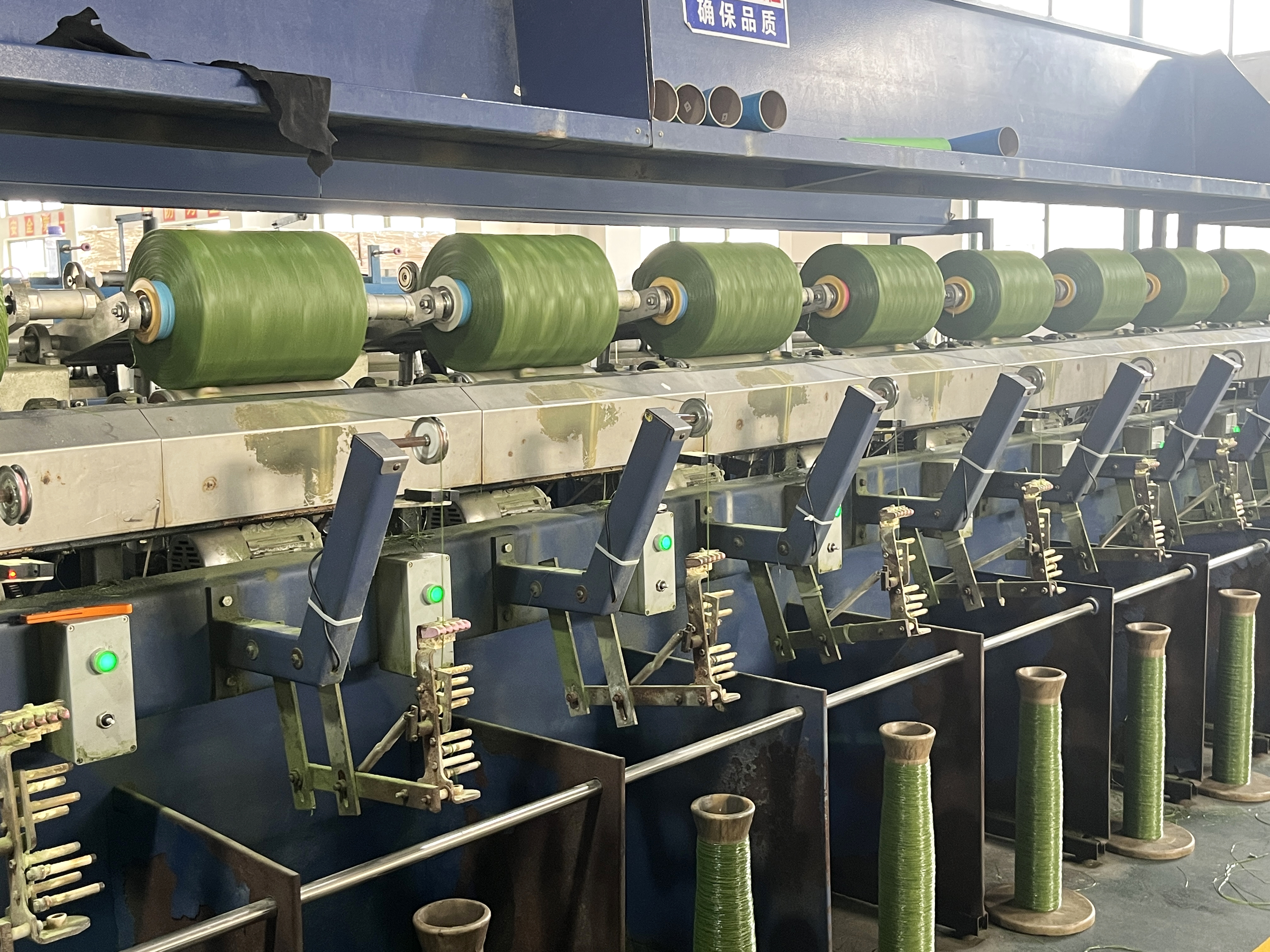
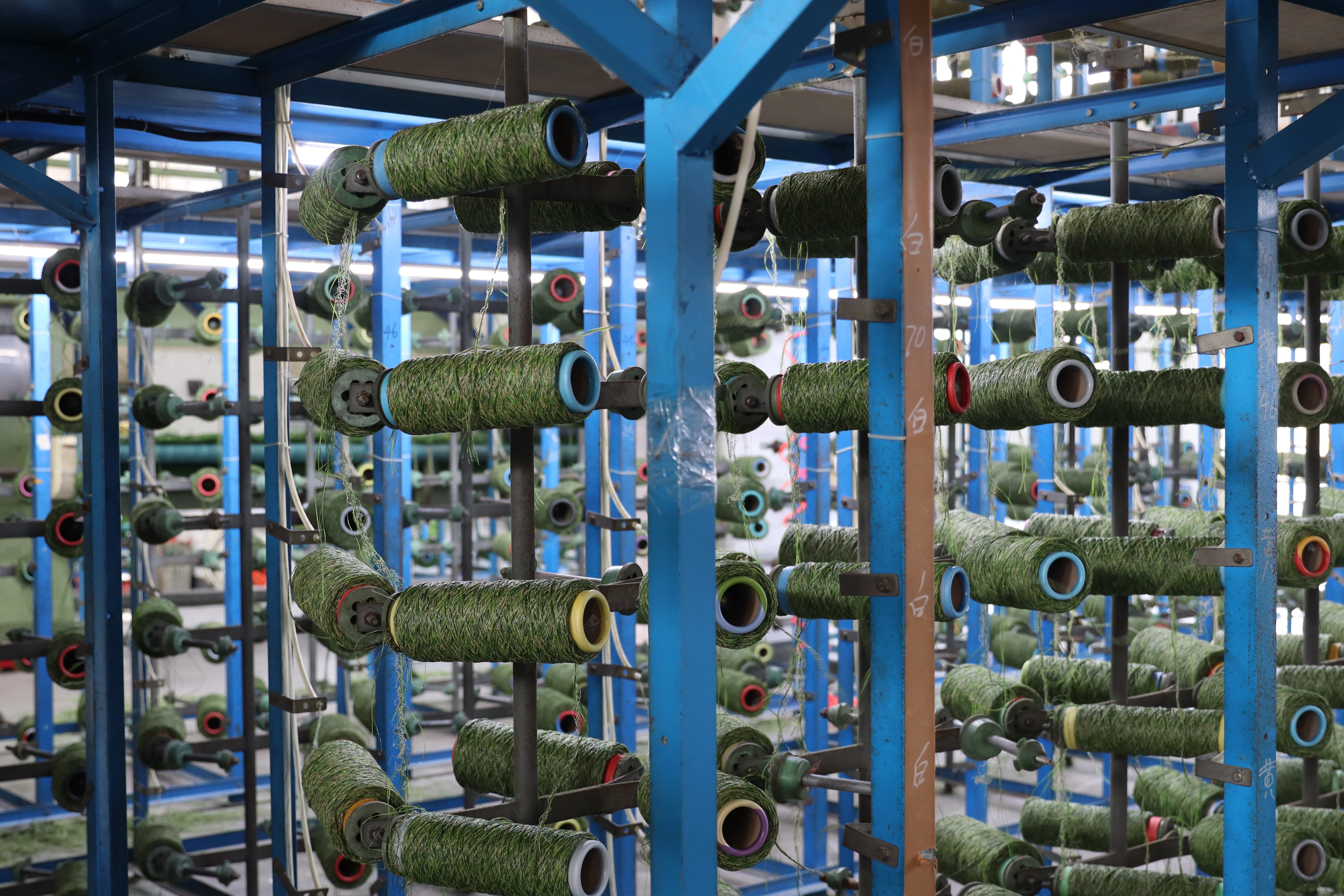
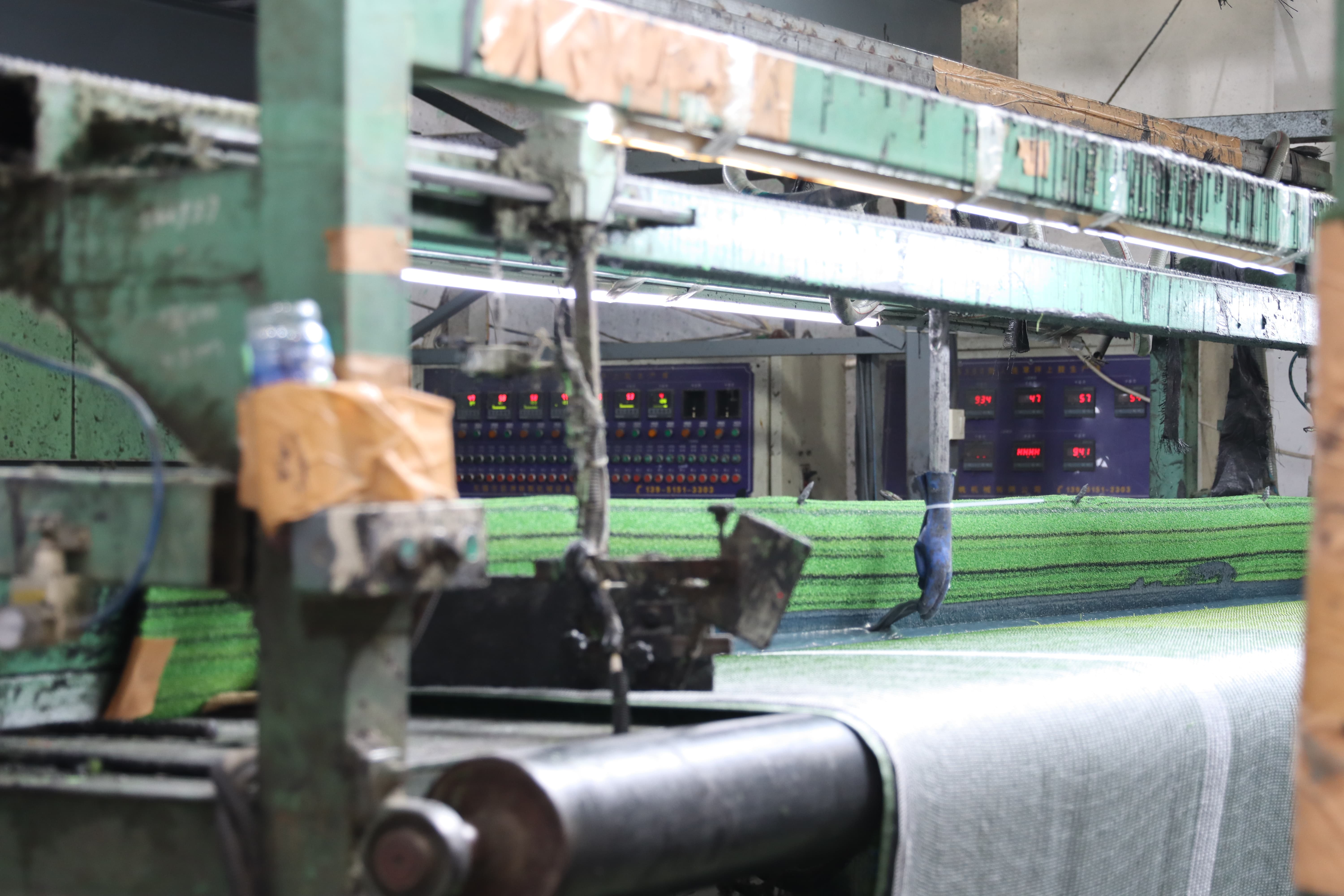
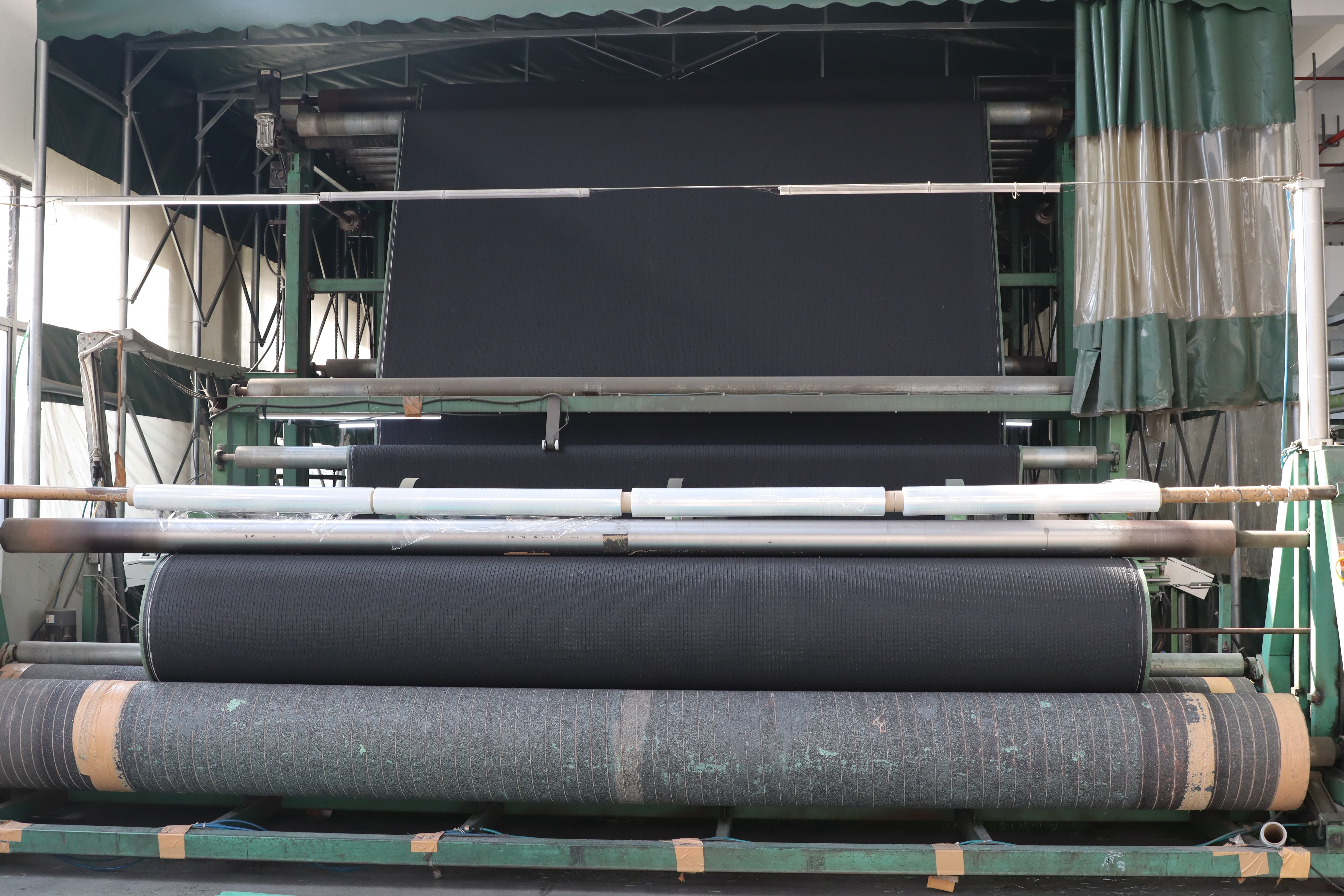
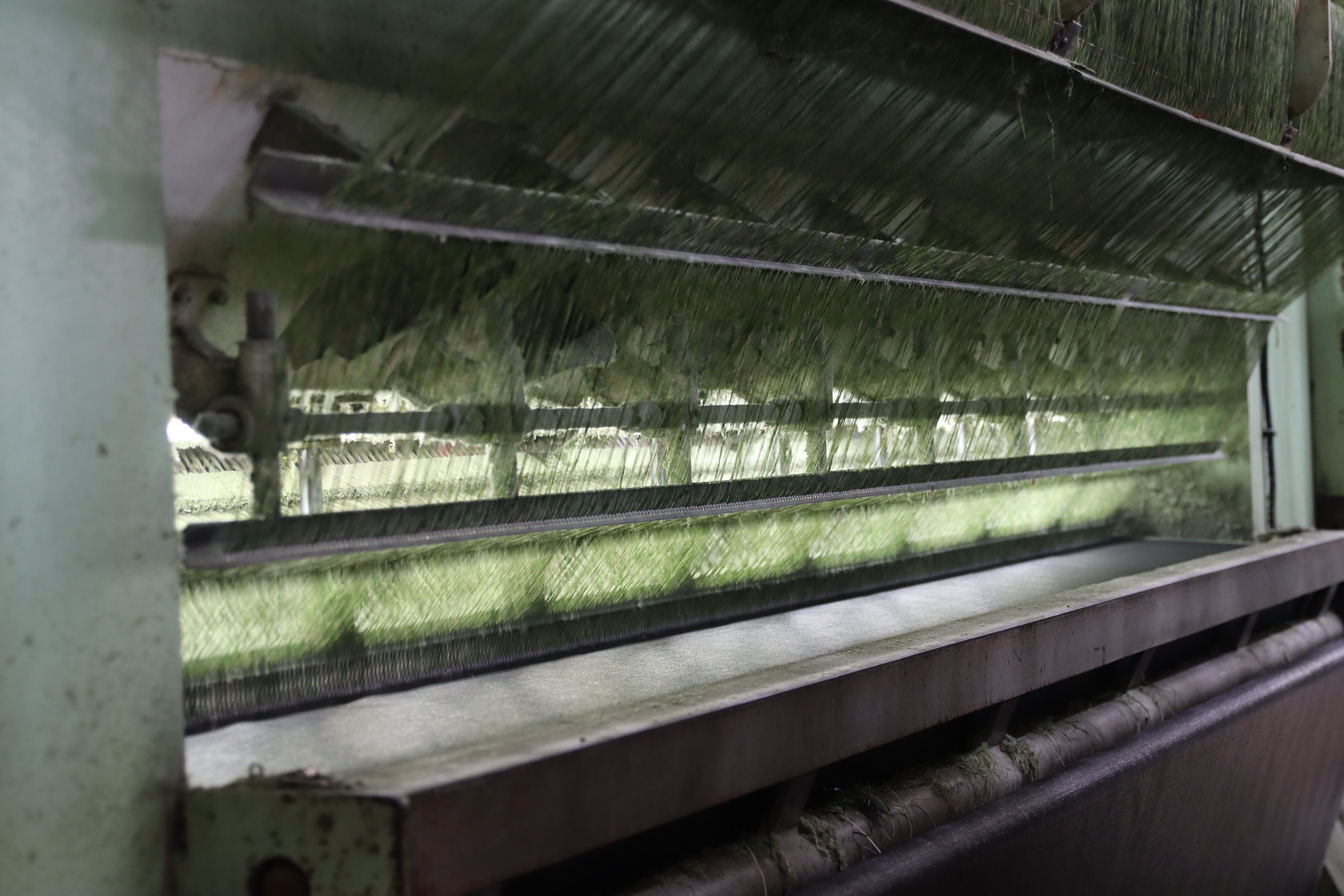
For OEM production, the company provides customization in appearance, specifications, performance and functionality, and the base and installation system. The production base operates 30 integrated production lines, covering yarn extrusion, twisting, tufting, coating, and final packaging and delivery. Monthly capacity is 50,000 square meters, and the documented OEM lead time is 30 to 45 days. The MOQ is 1,000 square meters. Quality control is described as 100% testing, and after-sales support includes remote technical support.
Reference Product: Artificial Turf EM241007
One documented product in Venusturf's product reference is Artificial Turf model EM241007, classified as residential grass. It shows how parameters can be specified in an OEM environment. The product parameters are:
| Parameter | Value |
|---|---|
| Pile Height | 45mm |
| Color | Four-color |
| Gauge | 3/8" |
| Yarn | U shape with spine monofil PE + curled PP |
| Density | 150 stitches/m, 15,750 stitches/sq m |
| Backing | Double PP + PU glue |
| Material | PP / PE |
| Applicable Industries | Landscaping, Sports, Construction, Hospitality |
PP and PE are the material inputs. The product's applicable industries include landscaping, sports, construction, and hospitality. According to Grand View Research, polyethylene dominated the global artificial turf material market in 2025, which helps explain why PE-based face yarns are common in buyer specifications.
Step-by-Step OEM Procurement Process
Step 1. Define the End Use and Performance Requirement
The first step is to decide which type of artificial turf the project needs. The same base material can be described as sports grass, golf grass, padel grass, football grass, baseball grass, playground grass, gym grass, tennis grass, landscape grass, commercial grass, pet grass, residential grass, eco grass, bocce ball grass, rugby grass, backyard grass, balcony grass, decorative grass, multi-purpose grass, or golf hitting mat. The important procurement move is to turn the label into a specification: pile height, gauge, yarn shape, density, backing, color, and applicable industry.
Step 2. Align the Specification with OEM Customization Options
After the requirements are clear, the buyer should confirm which elements can be changed. In Venusturf's documented OEM scope, customization can cover appearance, specifications, performance and functionality, and the base and installation system. For example, EM241007 uses a U-shaped monofil PE yarn with curled PP and a double PP backing with PU glue; another project could require a different yarn or backing depending on climate and use.
Step 3. Check Compliance Documents and Standards
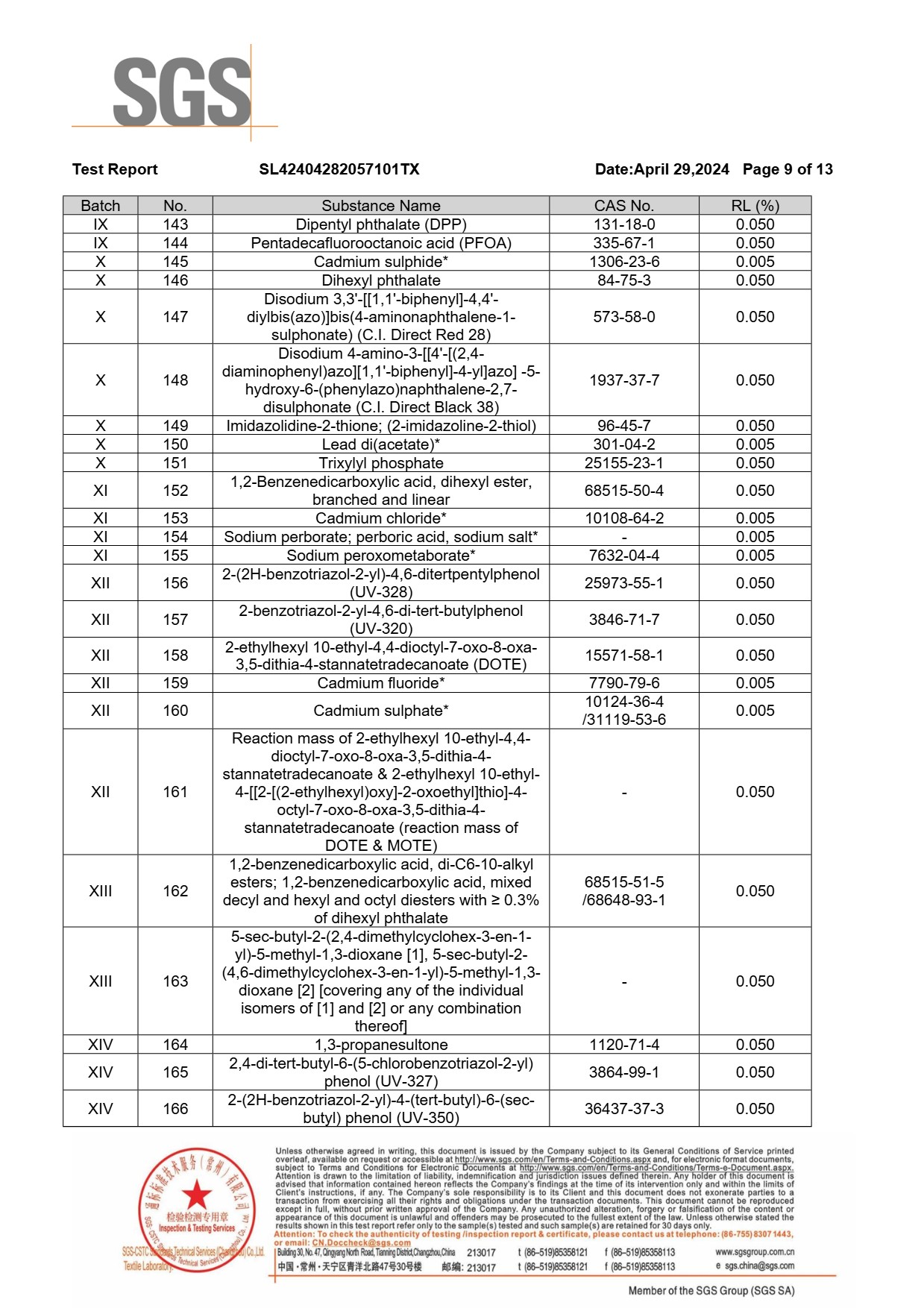
The buyer should ask for test reports before mass production. For model EM241007, Venusturf has a REACH SVHC 240 Substances Test Report issued by SGS, certificate number SL42404282057101TX, based on REACH Regulation (EC) No 1907/2006. The issue date is 2024-04-29. In Europe, REACH-related documentation is often required by downstream customers. Where a project references FIFA Quality, EN 15330-1, or DIN 18035-7, the buyer should confirm with the manufacturer whether the product and system have been tested against those requirements.
Step 4. Confirm Capacity and Production Schedule
Once the specification is frozen, capacity and lead time determine whether the project can execute. Venusturf's documented monthly capacity is 50,000 square meters, and its OEM lead time is 30 to 45 days. The MOQ is 1,000 square meters. These numbers are only a starting point; the buyer should ask for a written schedule for the specific quantity and customization level.
Step 5. Agree on Inspection, Payment, and Delivery
Documented procurement terms from Venusturf include an MOQ of 1,000 square meters, FOB delivery, and payment by 30% TT deposit with 70% TT before delivery. Acceptance includes a pre-shipment test. The buyer should confirm whether the pre-shipment test checks color, dimensions, weight, backing, and packaging before the goods leave the factory.
Step 6. Plan After-Sales and Installation Support
After-sales support can be as important as the product itself. Venusturf's documented after-sales service is remote technical support. Buyers who need installation training, site supervision, or a specialized installer should state this requirement early. For a golf course project in the Philippines, the documented use of 10 rolls shows that even relatively small installations require clear execution planning.
Use Cases: Golf, Sports, Landscape and Beyond
Golf Course Turf
A documented Venusturf case involved an individual client in the Philippines who used Artificial Turf EM241007 in a golf course installation. The project included 10 rolls, and the product remained in use for 3 years. The stated result areas were athletic performance, visual aesthetics, and competitive fairness, with low maintenance highlighted as a benefit. Golf buyers often need consistent playing characteristics across tees, fairways, or practice areas, so OEM specification control matters more than a generic lawn product.
Sports Grass and Multi-Sport Fields
Sports applications represented about 63.1% of the global artificial turf market in 2025, according to Grand View Research. For football, rugby, baseball, padel, tennis, and other sports, yarn stiffness, backing, and infill can determine whether the field performs. A buyer using OEM production should be able to specify the backing, pile, and performance target rather than adjusting a field design around a pre-existing stock item.
Landscape, Commercial, and Residential Turf
For landscape, commercial, and residential artificial grass, visual balance and cost control often lead the decision. The classification of EM241007 as residential grass, with its four-color appearance and 45mm pile height, is an example of a landscape-oriented specification. The applicable industries listed for this product are landscaping, sports, construction, and hospitality, which reflects the range of projects buyers evaluate.
Specialty Turf Categories
Labels such as pet grass, playground grass, gym grass, balcony grass, decorative grass, and golf hitting mats require the buyer to identify unique performance constraints. OEM customization allows the specification to be adjusted for those constraints, but it does not remove the buyer's responsibility to define test requirements and acceptance criteria. Multi-purpose and eco-oriented turfs can also be evaluated through the same process: application, material, parameters, backing, compliance, and cost.
Comparison Table: OEM Capability Checklist for Artificial Turf
The table below maps documented Venusturf facts to the procurement questions a buyer should ask before committing to an OEM artificial turf order.
| Capability Area | Documented Venusturf Fact | What the Buyer Should Verify |
|---|---|---|
| Production integration | 30 integrated production lines from yarn extrusion, twisting, tufting, coating to packaging and delivery | Production consistency and responsibility for each process step |
| Customization scope | OEM customization covers appearance, specifications, performance and functionality, base and installation system | Which parameters are fixed and which can be changed for the project |
| Capacity and lead time | Monthly capacity 50,000 m²; OEM lead time 30–45 days; MOQ 1,000 m² | Whether the schedule fits the project and order quantity |
| Quality and compliance | 100% test; pre-shipment test; REACH SVHC 240 report from SGS for EM241007 | Current certificates, test scope, and destination-market requirements |
| Commercial terms | FOB; 30% TT deposit and 70% TT before delivery | Incoterms, payment timing, and costs after delivery |
| After-sales | Remote technical support | Level of installation and technical support included |
Global competitors such as CCGrass, Tarkett (FieldTurf), TenCate Grass, Shaw Sports Turf, and SportGroup (Polytan) also operate in the market. That context makes supplier verification more important: a buyer is not selecting a name but a set of documented capabilities that can be inspected and tested.
Frequently Asked Questions
1. Does Venusturf provide compliance documents for artificial turf?
Yes. Venusturf has a REACH SVHC 240 Substances Test Report for the Artificial Turf model EM241007, issued by SGS under certificate number SL42404282057101TX. The report is based on REACH Regulation (EC) No 1907/2006 and is dated 2024-04-29. Buyers should confirm whether the project requires additional documents such as FIFA Quality, EN 15330-1, or DIN 18035-7.
2. What OEM customization options are available?
Venusturf provides OEM production services. According to documented capability, customization can cover appearance, specifications, performance and functionality, and the base and installation system. The factory also operates 30 integrated production lines, so product changes can be managed across yarn extrusion, twisting, tufting, coating, and packaging.
3. What are the MOQ, payment terms, and delivery method?
The MOQ is 1,000 square meters. Payment terms are 30% TT as deposit and 70% TT before delivery. Delivery method is FOB. Acceptance includes a pre-shipment test.
4. Can buyers verify quality before shipment?
Venusturf's documented quality control is 100% testing, and the documented acceptance procedure includes a pre-shipment test. The REACH SVHC 240 report provides third-party substance compliance data for EM241007. For current sample policy and sample lead time, buyers should contact Venusturf directly.
5. What is the lead time for an OEM artificial turf order?
The documented OEM lead time is 30 to 45 days. Monthly capacity is 50,000 square meters, and after-sales support is described as remote technical support. For a project-specific lead time based on quantity and customization, contact Venusturf at info@venusturf.com or +86-189-6171-8197.
Conclusion
OEM artificial turf procurement is not a simple catalog purchase. The buyer must define the application, translate it into measurable parameters, verify compliance documents, agree on production controls, and confirm commercial terms. Venusturf's documented capabilities include integrated production, OEM customization, a REACH-tested product reference, pre-shipment testing, and remote technical support. The company background and product details are available in the official company brochure.
Download the Venusturf company brochure for a full company introduction. For a specific project, email info@venusturf.com or contact +86-189-6171-8197.
Need a custom artificial turf specification? Contact Venusturf to discuss capacity, compliance, and lead time.