
45mm vs. 30mm Residential Artificial Grass: A Sourcing Decision
Date: 2026-09-15 Categories: Industry News Hits: 101
45mm vs. 30mm Residential Artificial Grass: A Sourcing Decision
Two residential artificial turf constructions can look nearly identical on a catalogue page and still require two different sourcing decisions. This guide compares Venusturf EM241007 (45mm pile) with EM240404 (30mm pile) and shows how pile height, stitch density, yarn cross-section and backing system should be matched to the way a site is actually used — in landscaping, sports, construction or hospitality settings.
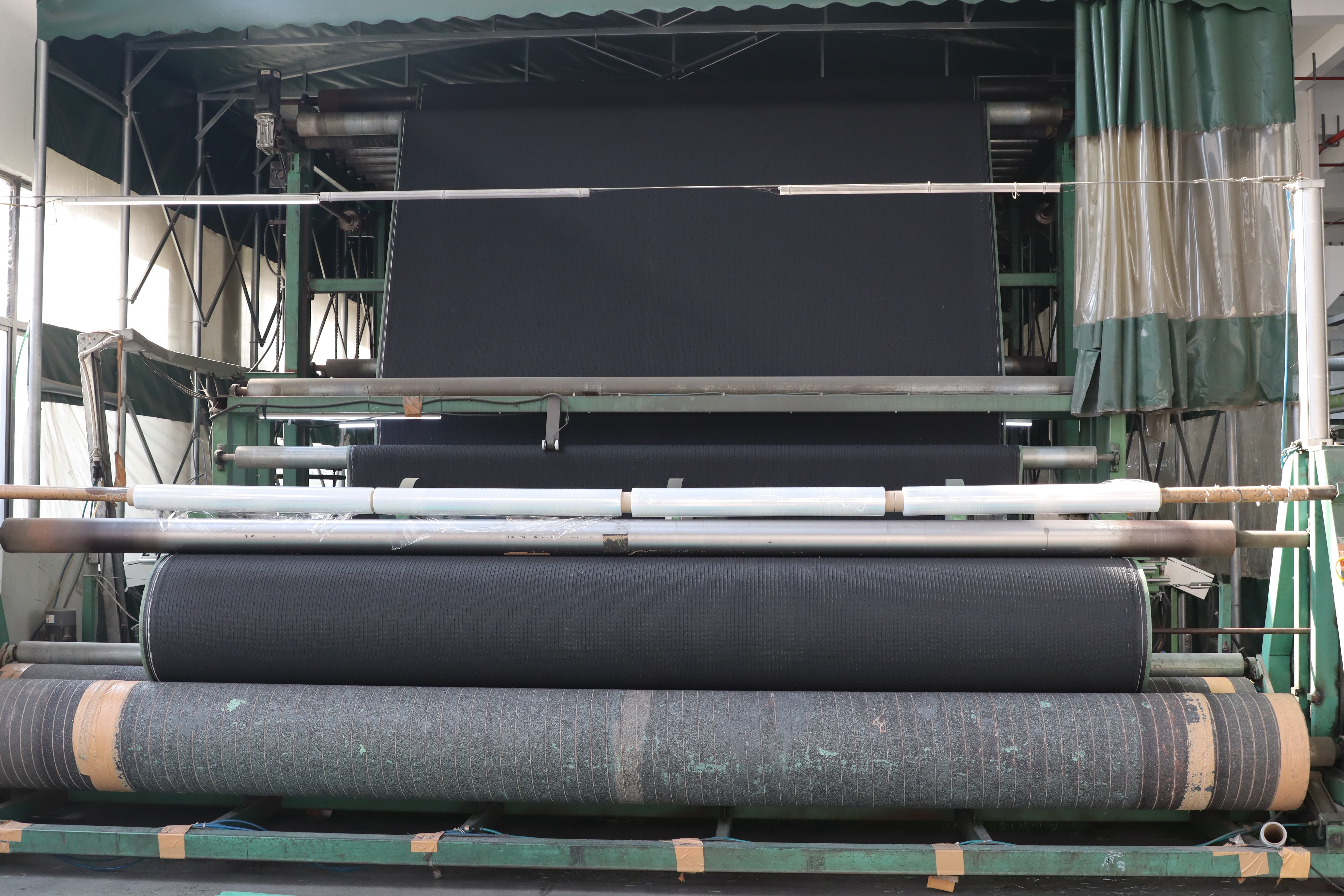
Cover image: artificial turf rolling and packaging — the stage where a residential order is prepared for shipment.
Answer First: Which Construction Fits Which Project
The short answer is that neither construction wins by default. The two models share the same 3/8 inch gauge and the same monofilament PE plus curled PP yarn family, so the decision does not come down to which one is technically superior. It comes down to which combination of pile height, yarn profile and backing system matches the traffic, the visual brief and the handling constraints of the site.
- EM241007 (45mm pile) is a Residential Grass construction with 150 stitches/m and 15,750 stitches/m² at 3/8 inch gauge, U-shape with spine Monofil PE plus Curled PP yarn, four-colour styling, and Double PP backing with PU glue. Its stated applicable industries are landscaping, sports, construction and hospitality.
- EM240404 (30mm pile) is specified at 140 stitches/m and 14,700 stitches/m² at 3/8 inch gauge, C-shape Monofilament PE plus Curled PP yarn, and PP / Mesh / SBR Latex backing.
- The density gap is narrow — 15,750 versus 14,700 stitches/m², a difference of roughly seven percent. Pile height and backing system, not density, are the decisive variables in this head-to-head.
Buyers who default to the tallest and densest option usually over-specify small decorative areas and under-budget the visible main lawn. Buyers who default to the cheapest roll usually under-specify areas that will take constant foot traffic. The framework later in this article is designed to remove both errors.
Problem Definition: Why "Taller and Denser" Is Not a Sourcing Rule
A residential artificial grass specification is not one number. It is at least five numbers working together, and reading any one of them in isolation produces a purchasing error.
- Pile height is the length of the upright fibre. It drives visual depth, surface softness and the volume of yarn consumed per square metre.
- Stitch rate is the number of tufts inserted per metre of length — 150 stitches/m on EM241007 and 140 stitches/m on EM240404.
- Gauge is the distance between needle rows. At 3/8 inch, both models place approximately 105 tufts across each metre of width, which is why stitch rate multiplied by that figure produces the published densities of 15,750 and 14,700 stitches/m².
- Yarn cross-section determines how the blade behaves under foot. EM241007 uses a U-shape profile with a spine; EM240404 uses a C-shape monofilament.
- Backing system determines how well the tufts stay in place. EM241007 pairs a Double PP backing with PU glue; EM240404 pairs PP with mesh and SBR latex.
The three common failure modes follow directly from this. The first is over-specifying: paying for a 45mm pile on a side yard or a rooftop terrace where a 30mm construction delivers the same visual result at a lower material mass. The second is under-specifying: installing a short pile in a hospitality terrace or a family lawn where furniture, footfall and repeated cleaning compress the surface. The third is single-variable purchasing: comparing pile heights while ignoring that the backing system has to hold a taller, heavier tuft in place.
Industry Background: What the Market Data Says About Residential Turf Demand
The global artificial turf market was valued at USD 7.3 billion in 2025 and is projected to reach USD 13.7 billion by 2033, according to Grand View Research. Asia-Pacific held the largest regional revenue share at 32.2% in 2025. Within the material mix, polyethylene accounted for a 63.1% revenue share in 2025 — the same polymer family used in the monofilament PE yarn of both constructions discussed here, which is one reason the two models can be compared on equal technical ground.
Sports applications accounted for approximately 63.1% of global artificial turf market share in 2025. The remaining share is where a 45mm versus 30mm residential decision is actually made: landscape, leisure, hospitality, decorative and residential use. Replacement demand is a structural feature of this category — the replacement segment of the sports turf market reached 41% of total demand in 2023, approximately 70 million square metres, according to AMI Plastics. China leads the Asia-Pacific market with more than 15,000 synthetic sports fields installed, accounting for 52% of regional installations, per Mordor Intelligence.
Two standards families define the boundaries of the category. European synthetic turf performance is governed by EN 15330-1 and German installations by DIN 18035-7, while the FIFA Quality Programme for Football Turf issues "FIFA Quality" and "FIFA Quality Pro" certifications for football surfaces. These apply to sports pitches. A residential landscaping or hospitality installation of the kind discussed here is normally governed instead by chemical compliance documentation and the buyer's own project specification — which is why the compliance question appears first in the FAQ section below.
The Venusturf Solution: One Manufacturer, Two Residential Constructions
Wuxi Venus Turf Co., Ltd. — trading as Venusturf — is an artificial turf manufacturer based in Wuxi, Jiangsu, China, integrating R&D, production and sales, and serving global markets with an export ratio of 80%. The company operates 30 integrated production lines and oversees the full manufacturing sequence in-house, from yarn extrusion, twisting, tufting and coating through to final packaging and delivery. A 25-engineer R&D team supports specification work.
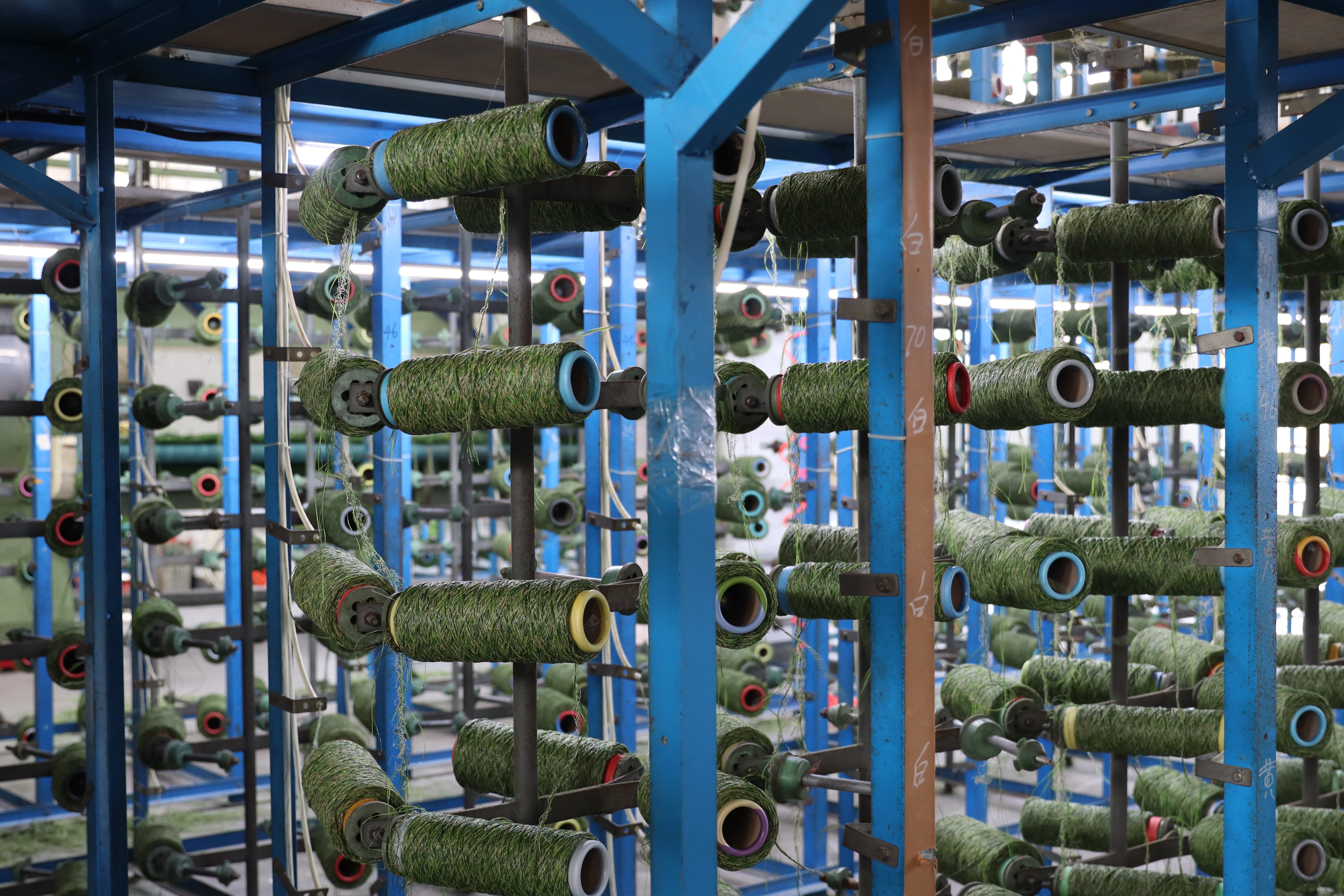
In-house yarn production: the U-shape with spine and C-shape monofilament profiles are formed before tufting.
For a 45mm versus 30mm decision, three first-party capabilities matter. The first is OEM production with customization options covering appearance, specifications, performance and functionality, and the base and installation system — meaning pile height, colourway and backing can be aligned to a project brief rather than chosen from a fixed menu. The second is capacity: 50,000 m² per month, a minimum order quantity of 1,000 m², a stated lead time of 30–45 days, and 100% testing in production with after-sales remote technical support. The third is documentation.
On compliance, Venusturf holds a REACH SVHC 240 Substances Test Report issued by SGS under certificate number SL42404282057101TX, tested against REACH Regulation (EC) No 1907/2006 for artificial turf, with an issue date of 29 April 2024. For European residential and hospitality buyers, this is the document that typically decides whether a specification can be used at all.
There is also a reference installation on record. An individual client in the Philippines installed 10 rolls of EM241007 on a golf course application; the project has run for three years, with recorded outcomes covering athletic performance, visual aesthetics, competitive fairness and low maintenance. It is a single case rather than a performance guarantee, but it demonstrates what a 45mm residential-class construction does over a multi-year service period when the surface is maintained.
Step-by-Step: A Spec-Driven Framework for Choosing Between 45mm and 30mm
Step 1 — Write the use profile before the specification
Record the four inputs that actually determine the answer: expected foot traffic per day, whether furniture or equipment will sit on the surface, whether the area is the visual focal point of the property, and how the rolls will be moved onto site. Everything that follows is a response to those four inputs.
Step 2 — Fix pile height by traffic and visual depth
A 45mm pile such as EM241007 is the appropriate starting point where the surface is the visible main lawn or terrace and will carry regular footfall. A 30mm pile such as EM240404 is the appropriate starting point for side yards, decorative strips, balconies, rooftops and lower-traffic commercial areas where a shorter, more compact profile is sufficient and easier to handle.
Step 3 — Reconcile stitch rate with gauge
At 3/8 inch gauge, there are approximately 105 tuft positions per metre of width. Multiplying that by the stitch rate gives the published density: 150 stitches/m produces 15,750 stitches/m² for EM241007, and 140 stitches/m produces 14,700 stitches/m² for EM240404. Because the difference is only about seven percent, density should not be the tie-breaker between these two models. Use this step to confirm that a quoted specification is internally consistent, not to rank the two constructions.
Step 4 — Read the yarn cross-section
Both models combine monofilament PE with curled PP, but the monofilament profiles differ. EM241007 uses a U-shape with a spine — a ribbed blade designed to resist collapsing under repeated loading, which is the reason a taller pile can be specified with confidence. EM240404 uses a C-shape monofilament, a curved cross-section that suits a shorter, denser-looking residential surface. The sourcing question is straightforward: does the project's traffic justify a taller, spine-reinforced blade, or is a compact C-shape profile the better match?
Step 5 — Match the backing to the construction
Backing is where a taller pile earns its durability. EM241007 uses Double PP backing with PU glue, a combination selected where tuft lock and dimensional stability are priorities — which is consistent with a 45mm, 15,750 stitches/m² construction. EM240404 uses PP with mesh and SBR latex, the long-established residential backing architecture. A buyer should not pair a tall pile with an entry-level backing expectation, and should confirm that the backing quoted matches the pile height quoted.
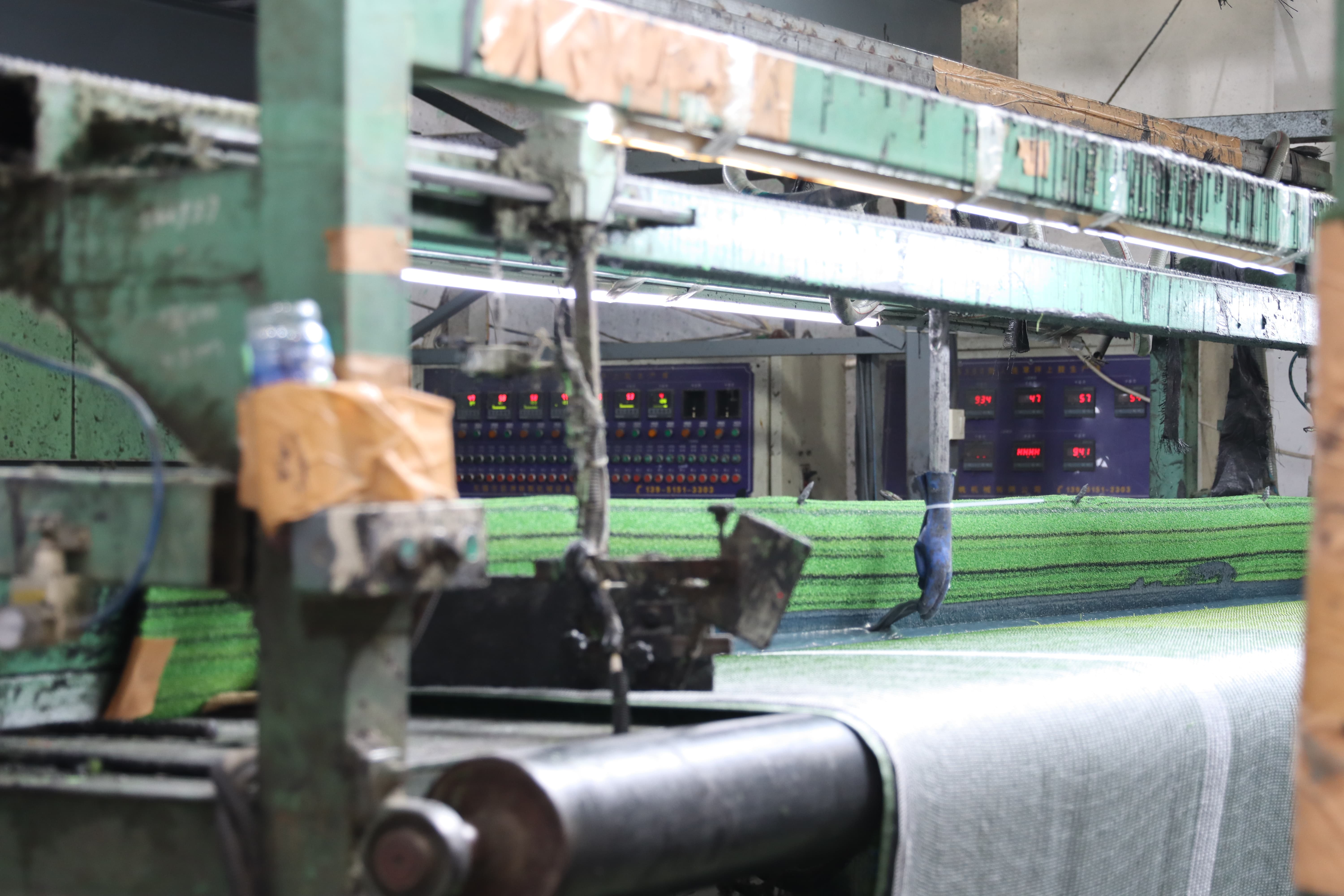
Backing coating: PU glue and SBR latex systems are applied after tufting, and the backing choice is matched to the pile construction.
Step 6 — Validate before committing
Assess both constructions physically for pile feel, colour and appearance, then confirm the specification that will be checked. Venusturf's stated acceptance method is a pre-shipment test, supported by 100% testing during production — meaning the agreed specification is verified before the goods leave.
Step 7 — Lock commercial terms against the project schedule
Confirm the order quantity against the 1,000 m² MOQ, the delivery method (FOB), the payment structure (30% TT as deposit, 70% TT before delivery) and the 30–45 day lead time. Schedule reverse from the installation date rather than from the purchase date.
Use Cases: Matching Each Construction to Landscaping, Sports, Construction and Hospitality
EM241007 lists landscaping, sports, construction and hospitality as applicable industries. The table below translates that into a practical fit for each setting.
- Landscaping. A 45mm four-colour construction with 15,750 stitches/m² is suited to the main lawn or entrance garden where visual depth and appearance retention matter. A 30mm construction is the more efficient choice for side yards, narrow decorative strips and areas that are seen but rarely walked on.
- Hospitality. Hotel terraces, event lawns and pool surrounds combine photography, furniture and constant footfall in one area. The taller pile and PU-glue backing of EM241007 address that combination; shorter piles are usually reserved for back-of-house or low-visibility zones.
- Construction. Balconies, podiums and rooftop amenity areas typically impose handling and load constraints. A 30mm construction such as EM240404 reduces roll weight and material mass per square metre, which simplifies transport and laying in restricted-access buildings.
- Sports-adjacent and leisure surfaces. Golf hitting areas, bocce ball lanes and multi-purpose leisure zones benefit from a consistent, low-maintenance surface. The recorded Philippines golf course installation of EM241007 — 10 rolls, individual client, three years in service, with outcomes covering athletic performance, visual aesthetics, competitive fairness and low maintenance — is an example of a 45mm residential-class construction being used in a play-oriented setting.
- Where this comparison stops. Neither model is a stadium-grade pitch system. Football, rugby, padel and tennis surfaces that must meet EN 15330-1, DIN 18035-7 or the FIFA Quality Programme require a separate specification route.
Head-to-Head Comparison Table: EM241007 vs. EM240404
| Specification dimension | EM241007 | EM240404 |
|---|---|---|
| Pile height | 45mm | 30mm |
| Gauge | 3/8 inch | 3/8 inch |
| Yarn construction | U-shape with spine Monofil PE + Curled PP | C-shape Monofilament PE + Curled PP |
| Stitch rate | 150 stitches/m | 140 stitches/m |
| Density | 15,750 stitches/m² | 14,700 stitches/m² |
| Backing system | Double PP + PU glue | PP + Mesh + SBR Latex |
| Colour | Four-colour | Not specified in the provided specification |
| Material | PP, PE | PP, PE (yarn: Monofilament PE + Curled PP) |
| Stated applicable industries | Landscaping, sports, construction, hospitality | Not specified in the provided specification |
| Best-fit profile (sourcing guidance, not a manufacturer claim) | Visible main lawns, terraces and hospitality areas with regular footfall and furniture | Side yards, balconies, rooftops and decorative or lower-traffic areas where lighter rolls are an advantage |
Read this table as a specification comparison, not a ranking. The two models are separated by pile height, yarn profile and backing system; stitch rate and density are close enough that they should not decide the purchase.
Frequently Asked Questions
1. Does 45mm residential artificial grass meet EU chemical compliance requirements?
Venusturf holds a REACH SVHC 240 Substances Test Report issued by SGS, certificate number SL42404282057101TX, tested against REACH Regulation (EC) No 1907/2006 for artificial turf, issued on 29 April 2024. Buyers should confirm that the exact pile height, colourway and backing combination they order is covered by the documentation supplied with that order. Separately, note that EN 15330-1, DIN 18035-7 and the FIFA Quality Programme apply to synthetic sports surfaces; a residential landscaping installation is normally governed by chemical compliance documentation and the buyer's own project specification instead.
2. Can pile height, yarn or backing be customized for a specific residential project?
Yes. Venusturf provides OEM production services with customization options covering appearance, specifications, performance and functionality, and the base and installation system. Production runs across 30 integrated lines handling yarn extrusion, twisting, tufting, coating and packaging in-house, with a monthly capacity of 50,000 m², 100% testing, and a 25-engineer R&D team supporting specification changes.
3. What drives the cost difference between a 45mm and a 30mm construction?
Material mass is the primary driver. A 45mm pile uses more yarn per square metre than a 30mm pile, and the higher stitch rate (150 versus 140 stitches/m) adds further yarn consumption. The backing system also differs: EM241007 uses Double PP with PU glue, while EM240404 uses PP with mesh and SBR latex. Because pricing depends on specification, order quantity and delivery terms, it is quoted per project rather than published. The stated minimum order quantity is 1,000 m², delivery is FOB, and payment terms are 30% TT as deposit with 70% TT before delivery.
4. How can I validate both constructions before committing to a bulk order?
Validation works on two levels: the physical material you assess for pile feel, colour and appearance, and the contractual acceptance check. Venusturf's stated acceptance method is a pre-shipment test, supported by 100% testing during production, so the specification approved by the buyer is the specification verified before dispatch. When comparing 45mm and 30mm side by side, assess both under the same lighting and against the same sub-base conditions, then fix pile height, colourway and backing in writing before the order is placed.
5. What lead time and order volume should a residential project plan for?
Venusturf states a production lead time of 30–45 days, a minimum order quantity of 1,000 m², and a monthly capacity of 50,000 m², so a single residential project sits comfortably inside one production cycle while multi-site or distributor orders can be scheduled across several. After-sales support is provided as remote technical support. To move from comparison to order, send your site measurements, chosen model and target installation date; the current product catalogue is available to download here, or contact the team directly at info@venusturf.com or +86-189-6171-8197.
Conclusion: Decide on the Project, Not on the Pile Height
The 45mm versus 30mm decision is a project decision, not a product ranking. Where the surface is the visible centre of a residential, hospitality or leisure setting and will carry regular footfall, EM241007's 45mm pile, U-shape with spine Monofil PE plus Curled PP yarn, 15,750 stitches/m² density and Double PP with PU glue backing form a coherent specification built for appearance retention. Where the area is secondary, decorative or access-constrained, EM240404's 30mm pile, C-shape monofilament and PP / Mesh / SBR Latex backing deliver a lighter, lower-profile surface that fits the brief without over-specifying.
The framework in this article reduces the choice to five confirmable inputs: traffic, visual priority, handling constraints, yarn profile and backing match. Confirm those, verify the compliance documentation for the exact specification ordered, and validate through the pre-shipment test. That process is what separates a specification-led purchase from a pile-height guess.
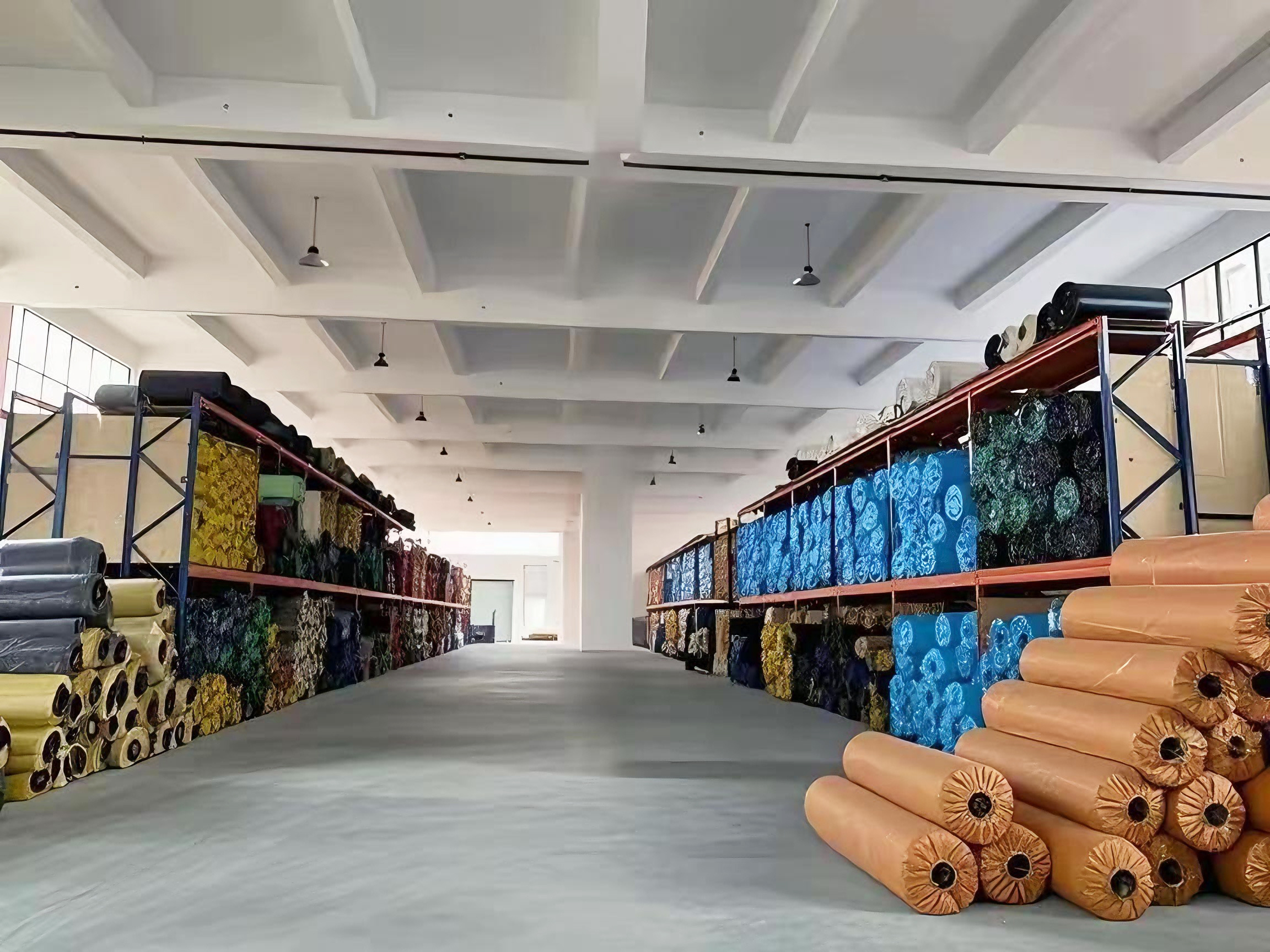
Finished-goods storehouse: residential and commercial turf orders are held and dispatched against confirmed specifications.
Next Step: Compare 45mm and 30mm Against Your Own Project
Tell us the site type, total area and installation window, and we will confirm which construction fits — 45mm EM241007, 30mm EM240404, or a customized specification built to your brief.