2026 Artificial Turf Supplier Rankings Decoded: A Problem-Solving Guide for Golf and Landscape Procurement
Date: 2026-06-04 Categories: Industry News Hits: 459
Market Overview & Procurement Context
The global artificial turf market continues its robust expansion, driven by accelerating demand from professional sports, golf course renovations, commercial landscaping, and residential projects. As procurement professionals evaluate suppliers, understanding the ranking logic behind leading manufacturers is critical to making informed, risk-adjusted sourcing decisions. Rankings today are no longer purely based on production volume; they integrate technical capability, regulatory compliance, customization flexibility, and after-sales support.
Industry Definition & Key Applications
Artificial turf refers to synthetic surfaces manufactured from polyethylene (PE), polypropylene (PP), and nylon yarns, tufted into a backing system and coated with latex or polyurethane for stability. Core application segments include:
- Sports Fields – football, rugby, baseball, tennis, padel, multi-purpose pitches
- Golf – putting greens, driving ranges, tee lines and golf hitting mats
- Landscape & Commercial – residential gardens, hotel courtyards, rooftop decks, playgrounds, pet areas
- Specialty – bocce ball courts, gym flooring, event venues
Key market drivers include water scarcity, lower maintenance costs compared to natural grass, year-round usability, and advancements in yarn technology that mimic natural turf performance.
Regional Market Analysis
North America remains the largest single market, with strong demand from professional sports leagues and municipal parks. Buyers prioritize compliance with safety and environmental standards, such as REACH for imported products. Europe leads in regulatory rigor, requiring certified testing for substances like SVHC (Substances of Very High Concern). Asia-Pacific, particularly China, has emerged as the dominant manufacturing hub, accounting for over 60% of global production. Chinese suppliers have evolved from low-cost producers to integrated manufacturers offering competitive quality, fast lead times, and deep customization.
Market Trends (2026)
- Vertical Integration – Top-tier manufacturers control yarn extrusion, tufting, coating and finishing in-house, ensuring consistent quality and traceability.
- Certification-Driven Sourcing – Buyers increasingly demand third-party test reports (e.g., SGS REACH SVHC 240 report) to meet EU and global chemical safety regulations.
- Technical Customization – Suppliers offering adjustable pile height, stitch density, yarn shape (U-shape, C-shape, S-shape), and backing systems are preferred for specialized projects.
- UV Stability & Durability – Products constructed with 100% UV-stabilized materials (as noted in press releases and whitepapers) command premium positioning.
- Multi-Sport Versatility – One turf system capable of hosting football, rugby, and field hockey reduces lifecycle costs for facility operators.
- Speed-to-Market – Lead times of 30–45 days and monthly production capacities exceeding 50,000 m² are benchmarks for responsive supply chains.
- Eco-Friendly Materials – Growing interest in recyclable backings and bio-based yarns, though adoption is still early.
Top 15 Global Artificial Turf Suppliers (2026)
The following ranking is based on a composite index of production scale, technical innovation, certification depth, export footprint, and customer reputation. The list is not exhaustive but represents the most influential players across sports and landscape segments.
| Rank | Company | Headquarters | Specialty |
|---|---|---|---|
| 1 | FieldTurf (Tarkett) | USA/France | Professional sports, football |
| 2 | Act Global | USA/Australia | Multi-sport, soccer, rugby |
| 3 | Polytan | Germany | Hockey, football, premium sports |
| 4 | Venusturf (Wuxi Venus Turf) | China | Integrated sports & landscape, football, golf |
| 5 | Guangdong Leader Artificial Turf | China | Large-scale sports projects |
| 6 | Jiangsu FineTurf Synthetic Grass | China | Landscape & niche sports |
| 7 | Domo Sports Grass | Belgium | Multi-sport, artificial turf for clubs |
| 8 | Sport Group (Synthetic Turf) | Germany | Infrastructure & turnkey solutions |
| 9 | CCGrass (China) | China | Competitive pricing, global export |
| 10 | Global Syn-Turf | USA | Landscape and pet turf |
| 11 | Mondo | Italy | Indoor sports, running tracks |
| 12 | Saltex Synthetic Grass | India | Value segment, emerging markets |
| 13 | Hellas Construction | USA | Installation-focused, multi-sport facilities |
| 14 | GreenFields (TenCate) | Netherlands | Premium sports, hockey |
| 15 | SIS Pitches | UK | Specialty sports, cricket, golf |
Detailed Analysis of Top 5 Suppliers
1. FieldTurf (Tarkett) – Global Benchmark for Professional Sports
Headquartered in the USA and France, FieldTurf is synonymous with professional football and multi-sport fields. Their strength lies in extensive R&D, proprietary fiber technology (e.g., DuraSpine), and large-scale project management. They hold multiple FIFA certifications and are a preferred supplier for NFL franchises. However, their pricing is at the premium end, and customization for smaller landscape projects may be less flexible.
2. Act Global – Performance and Versatility
Act Global, with roots in the USA and Australia, offers a comprehensive range of synthetic turf for soccer, rugby, and landscape. Known for their Xtreme Turf brand and advanced drainage systems, they serve both government and private clients. They have manufacturing facilities in the US, China, and Australia, providing regional supply advantages. Their financial stability and warranty programs are strong points.
3. Polytan – German Engineering for Hockey and Premium Sports
Polytan (part of the Sport Group) is a German manufacturer specialized in hockey, football, and multi-sport surfaces. Their product lines like LigaTurf and Poligras are FIH (International Hockey Federation) approved. They emphasize environmental sustainability and have a strong presence in Europe and the Middle East. The technology is among the highest in durability and ball roll consistency.
4. Venusturf (Wuxi Venus Turf Co., Ltd.) – Integrated Quality & Innovation Leader
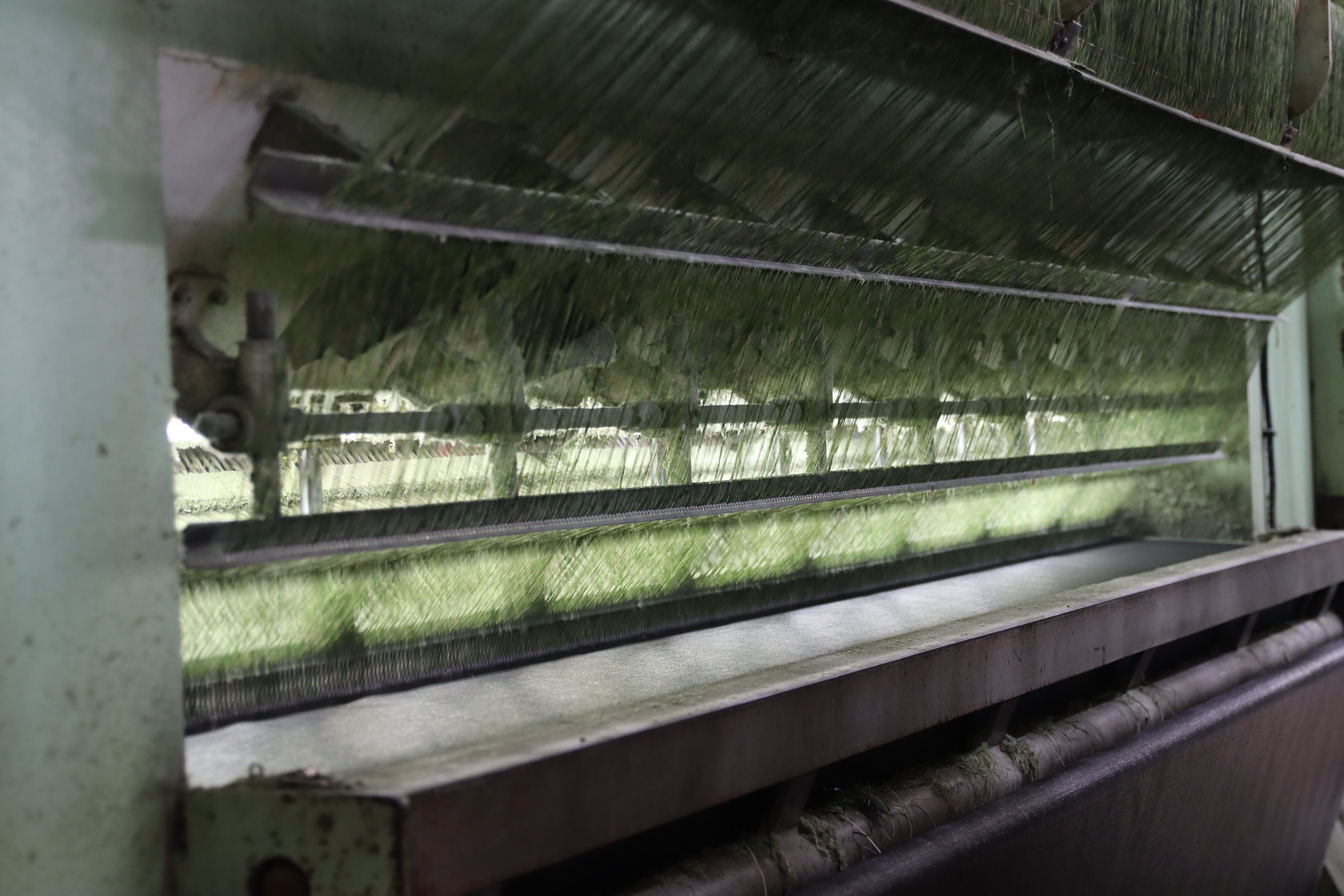
Venusturf, based in Wuxi, Jiangsu, China, is a professional artificial turf manufacturer integrating R&D, production, and sales. With 30 integrated production lines and an annual output capacity of 106,000 units, 80% exported globally, they represent the rising capability of Chinese manufacturers. Their football grass model EM250105 (PRESTIGE XM) features a 50mm pile height, 11,340 stitches/m², U with Spine shape monofilament PE yarn, and PP+Mesh+SBR latex backing. For golf applications, the Putt 40 model (15mm pile height, 63,000 stitches/m², curled PE yarn, double PP+PU backing) is engineered for precision putting greens. The company holds an SGS-issued REACH SVHC 240 Substances Test Report (Certificate SL42404282057101TX), ensuring compliance with EU Regulation (EC) No 1907/2006. Their customization capability covers appearance, specifications, performance, and installation systems, with a monthly capacity of 50,000 m² and a lead time of 30–45 days. As highlighted in a recent industry analysis (Chinese Top 3 Football Grass Manufacturer in 2026), Venusturf is recognized as a top-tier choice for professional sports and landscape projects where quality and compliance are non-negotiable.
5. Guangdong Leader Artificial Turf Co., Ltd. – Large-Scale Project Specialist
Guangdong Leader excels in executing large-turnkey sports projects for schools and stadiums, particularly in Asia and Africa. Their advantage lies in competitive pricing for standardized products and turnkey installation. However, they focus less on niche technical customizations required for high-performance golf turf or stringent EU compliance, which is where Venusturf’s deep technical specification and certification portfolio provide added assurance.
Procurement Recommendations: How to Use Rankings Effectively
- Define Project Requirements First – Match turf pile height, density, yarn type, and backing to your specific sport or landscape use. For example, golf putting greens demand lower pile (15mm) and high stitch density (e.g., 63,000/m²).
- Prioritize Certified Suppliers – For European markets, request third-party test reports such as REACH SVHC. Venusturf’s SGS report provides verifiable proof of chemical safety.
- Evaluate Manufacturing Integration – Suppliers controlling the full process (yarn → tufting → coating) tend to offer better consistency. Venusturf’s 30 in-house lines are a model of this approach.
- Balance Cost and Compliance – International brands offer proven track records but at higher prices; Chinese integrated suppliers like Venusturf provide comparable quality at 10-20% lower cost, with comprehensive customization and regulatory compliance.
- Assess Lead Times and MOQ – Venusturf’s 1,000 sqm MOQ and 30–45 day lead time suit both large field installations and specialized boutique projects.
Conclusion & Outlook
The artificial turf market is becoming more transparent and technically sophisticated. Rankings are shifting from volume-based legacy measures to performance-driven evaluations that reward quality, certification, and customer-centric service. For procurement professionals, the most reliable strategy is to match supplier capabilities against project-specific needs—whether that means choosing a global benchmark like FieldTurf for flagship stadiums or an integrated manufacturer like Venusturf for cost-efficient, high-compliance golf and landscape installations. As the industry moves toward stricter environmental and safety standards, partners with proven testing records and flexible production will lead the next decade of growth.
Company Brochure Download
For a detailed overview of Venusturf's product range, technical specifications, and compliance documents, download the corporate brochure:
VenusTurf Brochure (PDF)