How Artificial Turf Technical Parameters Affect Quality: A 2026 Buyer's Guide
Date: 2026-06-26 Categories: Industry News Hits: 934
Decoding Artificial Turf Technical Parameters: How Manufacturing Processes Impact Quality & Performance
For procurement professionals navigating the global artificial turf market, technical specifications are often a source of confusion. What do pile height, gauge, density, and backing type really mean for on-field performance? And how does a manufacturer's production process turn these numbers into a durable, safe, and visually appealing product? This guide answers these questions with a focus on real-world application and supplier capability.
1. The Procurement Dilemma: Why Technical Parameters Matter
When sourcing artificial turf for sports fields, golf greens, landscape projects, or pet areas, buyers encounter a dense list of parameters: pile height, stitch density, gauge, yarn shape, backing composition, and more. The challenge is that identical numbers can yield vastly different results depending on the manufacturer's process. A 50mm football grass from one supplier may shed fibers after one season, while another exceeds FIFA durability standards for years.
The core question: Which parameters are critical, and how do you verify that a supplier's production quality matches their data sheet? This article bridges that gap by linking technical specifications to tangible performance outcomes and uncovering the hidden impact of manufacturing processes.
2. Industry Context: The Evolution of Artificial Turf Standards
Artificial turf has evolved from a simple green carpet to a high-performance engineered surface. Applications now span Football Grass, Golf Grass, Padel Grass, Tennis Grass, Baseball Grass, Playground Grass, Commercial Grass, Pet Grass, Residential Grass, and more. Each application demands specific mechanical properties: ball roll consistency, shock absorption, tuft bind, UV resistance, and drainage.
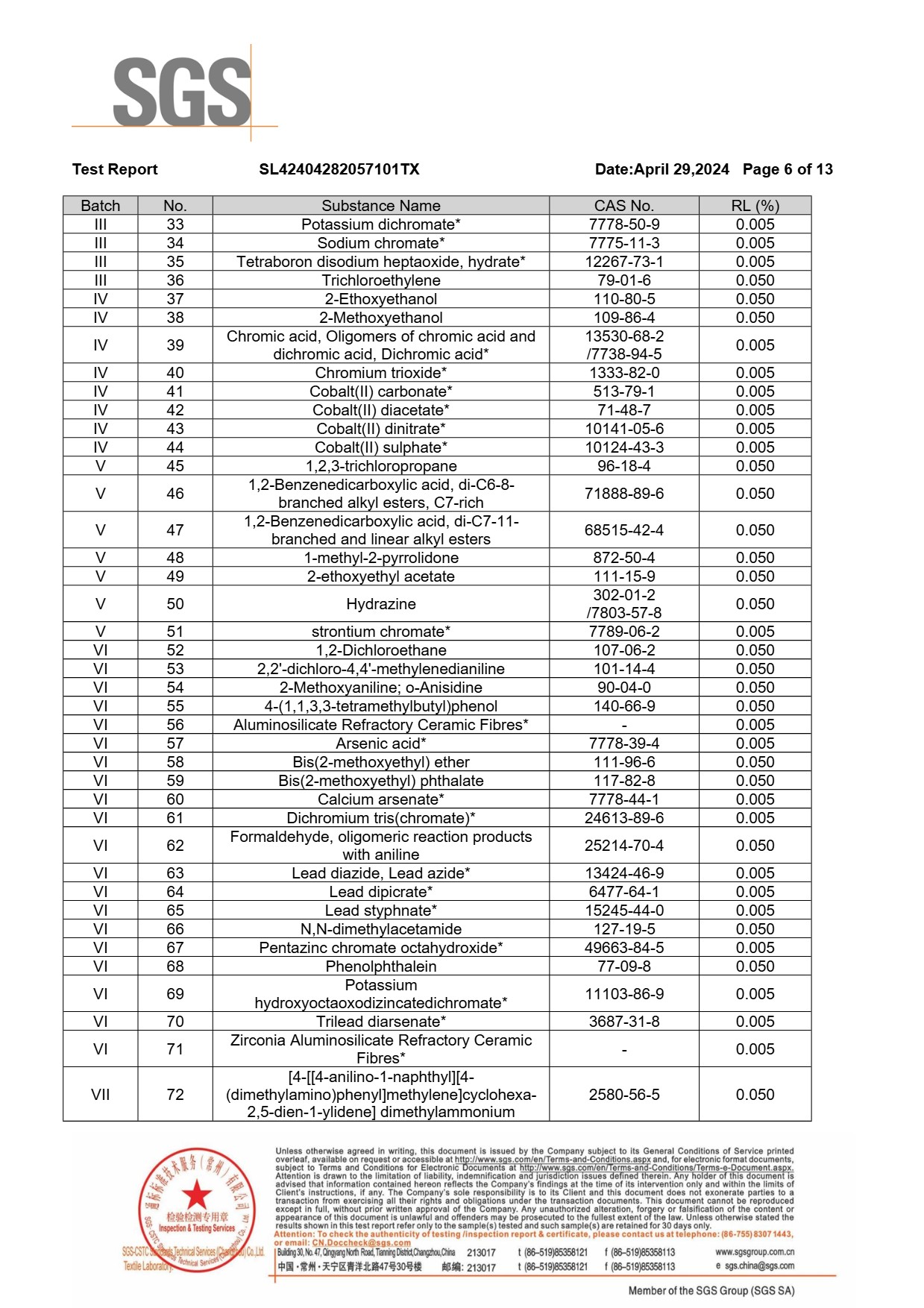
Global regulations, such as the EU's REACH SVHC 240 Substances test (SGS report number SL42404282057101TX), have raised the bar for chemical safety. Leading manufacturers like Wuxi Venus Turf Co., Ltd. (Venusturf) integrate compliance into their production DNA, with a dedicated team of 25 R&D engineers and 30 production lines controlling every stage from yarn extrusion to final packaging.
3. Key Technical Parameters Explained
Below is a breakdown of the most influential technical specs, using Venusturf's product range as real-world examples. Each parameter directly affects a specific performance characteristic.
3.1 Pile Height
Definition: The length of the yarn blade from the backing to the tip, measured in millimeters.
Impact on Performance: Taller piles (40-60mm) offer better shock absorption and a natural look, ideal for football and landscape. Shorter piles (10-20mm) provide low rolling resistance for golf putting greens and tennis courts.
Example: Venusturf's EM250105 Football Grass uses 50mm; the Putt 40 Golf Grass uses 15mm.
3.2 Gauge (Stitch Row Spacing)
Definition: The distance between rows of stitches, usually measured in inches (e.g., 3/8", 5/8").
Impact: A smaller gauge (e.g., 3/8") allows more rows per meter, increasing overall density and hiding the backing. A larger gauge (5/8") is typical for sports turf where drainage is prioritized.
Example: The EM241007 Residential Grass has a 3/8" gauge, balancing density and permeability.
3.3 Stitch Density (Stitches per Square Meter)
Definition: The total number of tufts in one square meter, calculated as stitches per row multiplied by rows per meter.
Impact: Higher density means more fibers, better resilience, and a fuller appearance. However, excessive density can reduce infill retention.
Real Data:
- EM241007: 15,750 stitches/m²
- Putt 40: 63,000 stitches/m² (extremely dense for smooth putting)
- EM250105: 11,340 stitches/m² (optimized for sports with infill)
3.4 Yarn Shape & Material
Definition: Cross-sectional shape (U-shape, C-shape, S-shape, V-shape, diamond) and material composition (100% PE, PE+PP, with or without curled yarn).
Impact: Shape affects stiffness, recovery, and blade slippage. U-shaped with spine monofilament (like EM250105) provides strength and upright recovery. Curled PP fibers add bulk and a thatch layer.
Example: EM24081501-1 Pet Grass uses S-shape Monofil PE + Curled PP for a soft yet durable surface.
3.5 Backing System
Definition: The layers beneath the yarn that lock fibers in place and provide dimensional stability.
Impact: Backing materials (PP, mesh, net, SBR latex, PU glue) determine tuft bind strength, water permeability, and resistance to delamination. PU-based backings (e.g., double PP + PU) offer superior durability and lower VOC emissions compared to traditional latex.
Venusturf Backing Options:
| Model | Backing | Best For |
|---|---|---|
| EM250105 | PP + Mesh + SBR Latex | Football, rugby |
| Putt 40 | Double PP + PU glue | Golf putting greens |
| EM241007 | Double PP + PU glue | Residential / sports |
| EM24071902 | PP + Net + Latex | Commercial landscaping |
4. How Manufacturing Processes Translate Parameters into Quality
Even with identical specs, product quality differs due to process control. Venusturf's vertical integration—from yarn extrusion to coating—allows strict oversight.
4.1 Yarn Extrusion & UV Stabilization
Raw PE/PP pellets are melted and extruded through spinnerets to form monofilaments. UV stabilizers must be added during this stage, not as a post-treatment. Risk: Without sufficient UV protection, the turf will fade and become brittle within 1-2 years. Venusturf uses anti-UV masterbatch and performs accelerated aging tests to ensure color fastness.
4.2 Twisting & Heat Setting
Some applications require twisted yarns for texture or strength. Proper heat setting prevents curling and ensures consistent pile orientation. This step is especially critical for golf and landscape turfs.
4.3 Tufting Precision
High-speed tufting machines must maintain consistent stitch placement across the width. Venusturf's 30 production lines are calibrated to achieve density variations of less than 2%. Any deviation leads to patchy appearance or weak spots.
4.4 Backing Coating & Curing
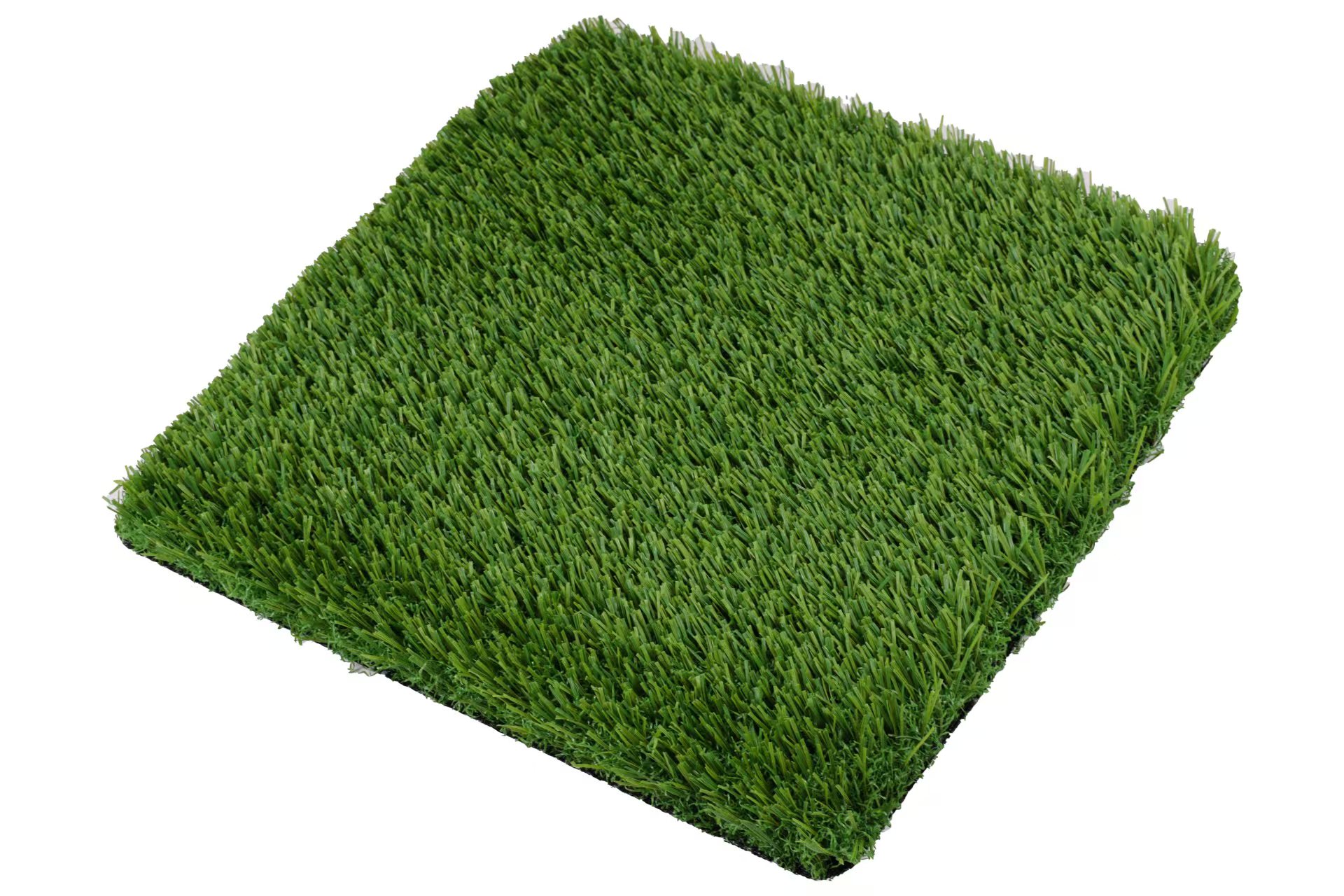
The backing process has the largest impact on product lifespan. SBR latex is applied evenly, then cured at precise temperatures. PU-based backings require even tighter control. Venusturf's coating line (pictured above) uses automated thickness sensors. A weak coating leads to fiber pull-out (tuft bind failure).
4.5 Quality Control & Certification
100% pre-shipment testing includes: tuft bind, UV resistance (Xenon-arc), tensile strength, and chemical composition (SGS REACH SVHC report available). Venusturf's certificates are issued by SGS, confirming compliance with global safety standards.
5. Step-by-Step Guide: How to Evaluate a Supplier's Technical Offerings
- Define Your Application: Identify the use case (football, golf, landscape, pet, etc.). Each has critical parameters.
- Request a Detailed Data Sheet: Compare pile height, gauge, density, yarn type, and backing. Look for specific values (e.g., 15,750 st/m²) not generic ranges.
- Ask About Process: Does the manufacturer extrude yarn? What UV stabilizers are used? What backing technology? Vertical integration is a plus.
- Verify Certifications: Demand third-party test reports (SGS, ISO). Check that the certificate number (e.g., SL42404282057101TX) matches the product.
- Request Samples & Tests: Evaluate feel, color, and backing strength. Ask for tuft bind and UV aging test videos.
- Assess Lead Time & MOQ: Venusturf offers MOQ of 1,000 m², lead time 30-45 days, and FOB delivery.
6. Real-World Use Case: Golf Course in the Philippines
An individual client in the Philippines ordered 10 rolls of Venusturf's Putt 40 (model with 15mm pile, 63,000 st/m², double PP+PU backing) for a golf course installation. After 3 years of tropical weather exposure (high UV, humidity), the turf maintained excellent ball roll consistency and visual color. The low-maintenance requirement (no watering, no mowing) reduced operational costs by an estimated 70%. The client highlighted the turf's athletic performance and visual aesthetics as key results.
Lesson: High-density turf with PU backing and UV-stabilized yarn can withstand harsh climates without performance degradation.
7. Frequently Asked Questions (FAQ)
Q: Is higher density always better?
A: Not necessarily. Football turf typically uses 10,000-12,000 st/m² to allow infill and drainage. Golf greens require >60,000 st/m² for smooth putting. Choose density based on application.
Q: Which backing is best: latex or PU?
A: PU (polyurethane) backing offers superior tuft bind, UV resistance, and low odor. It is recommended for premium sports and luxury landscape turf. Latex is cost-effective but may degrade quicker in wet conditions.
Q: What is the typical lead time for a custom order?
A: Venusturf's standard lead time is 30-45 days for quantities above MOQ (1,000 m²). Custom colors and patterns may add 1-2 weeks.
Q: How can I verify the quality before shipment?
A: Venusturf supports pre-shipment inspection. You can request tuft bind reports, UV test results, and a video of production. Third-party inspections are also welcome.
Q: Does Venusturf offer OEM customizaion?
A: Yes. Customization options include pile height, color, yarn shape, density, backing type, and even packaging instructions. The MOQ for OEM orders is also 1,000 m².
8. Conclusion: Make Informed Procurement Decisions
Technical parameters are not just numbers—they are a blueprint for performance. By understanding what each spec controls and how manufacturing processes bring them to life, procurement managers can avoid costly mistakes. Vertical manufacturers like Venusturf offer a distinct advantage: full control over yarn extrusion, tufting, coating, and quality testing ensures the final product matches the promised data.
Whether you are sourcing Football Grass, Golf Grass, Playground Grass, Pet Grass, or Landscape Grass, apply the step-by-step evaluation framework above. Always demand certified test reports and inspect the production process when possible.
📥 Download the Venusturf Company Brochure
Wuxi Venus Turf Co., Ltd. | No. 888, Sunshine Industrial Park, Chuangxin West Road, Xishan District, Wuxi, Jiangsu, China | Email: info@venusturf.com | Tel: +86-189-6171-8197